How to Start Lake Fishing: Gear, Techniques and Species Guide for Beginners
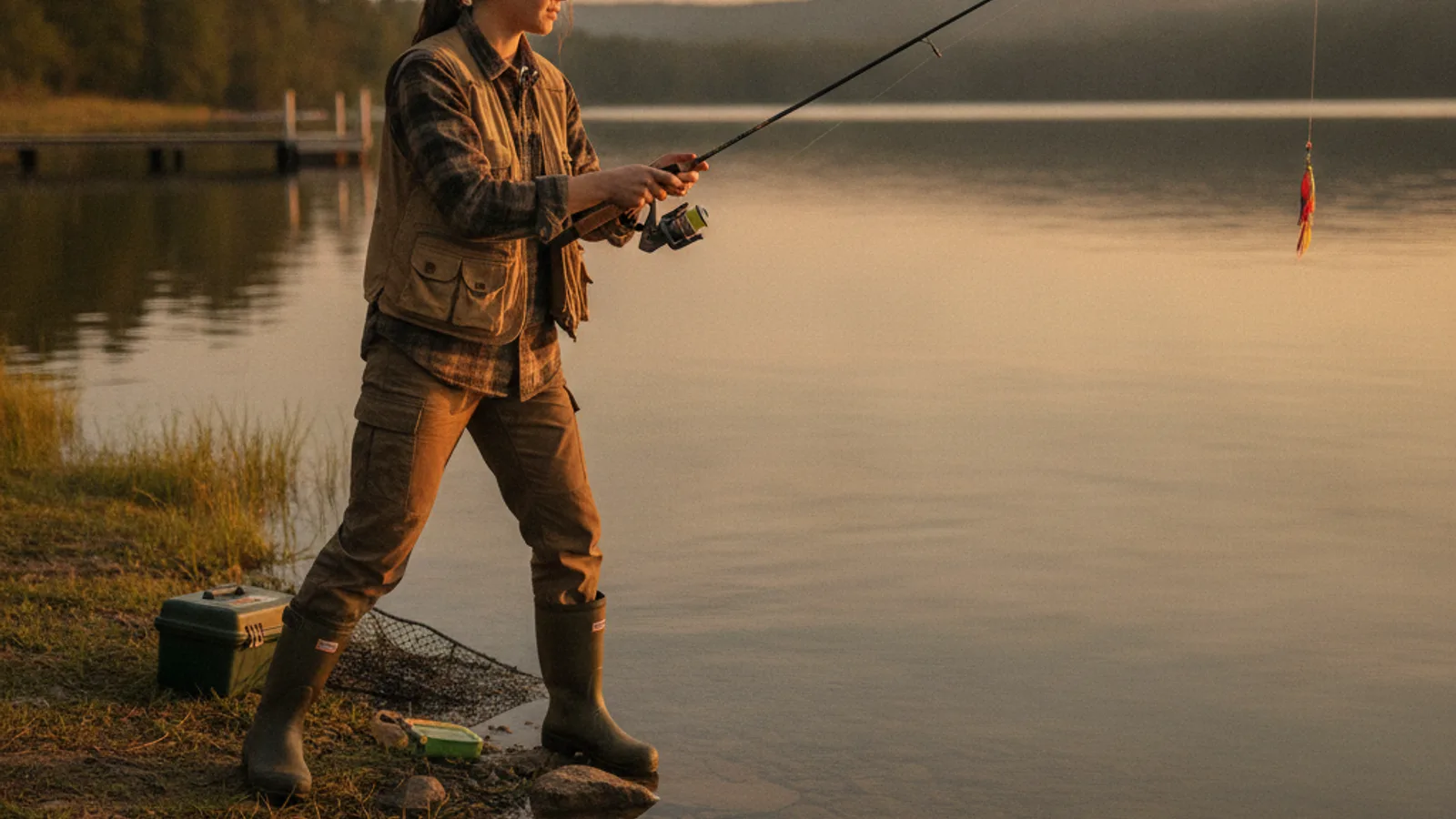
Lake fishing is one of the most accessible and rewarding ways to get into the sport. You don't need a boat, you don't need expensive gear, and there's probably a fishable lake within a short drive of wherever you live. Whether you're taking your kids out for the first time or picking up a rod after years away, this guide covers everything you need to catch fish from a lake.
What You'll Need, Essential Gear
You don't need a truck full of equipment to start lake fishing. Here's the minimum gear list:
Rod and Reel
For beginners, a medium-power spinning combo in the 6'6" to 7' range is the most versatile choice. Spinning reels are easier to cast than baitcasters and handle a wide range of techniques. The Ugly Stik GX2 Spinning Combo is a proven beginner pick under $60 that holds up to years of regular use.
Spool it with 8-10 lb monofilament line. Mono is forgiving, inexpensive, and easy to manage. Berkley Trilene XL is a widely trusted monofilament that handles well for beginners and resists memory coiling. You can upgrade to fluorocarbon or braid later once you're comfortable.
Bait and Tackle
Start with these proven lake fishing baits:
- Live worms: The universal bait. Available at any bait shop or gas station. Works for bass, bluegill, catfish, trout, and crappie.
- Bobber and hook: The simplest and most effective rig for beginners. A bobber and hook starter kit gives you everything you need to set a basic rig. Set the bobber 2-4 feet above a #6 or #8 hook with a split shot weight.
- Small soft plastic grubs: 2-3 inch curly tail grubs on a 1/8 oz jighead catch everything in a lake. White, chartreuse, and smoke are top colors.
- Inline spinners: Rooster Tails and Mepps spinners are almost unfair for beginners. Cast, reel at a steady pace, and fish attack them. Great for trout, bass, and panfish.
Other Essentials
- Fishing license: Required in every state. Buy online before you go, most states offer them digitally.
- Needle-nose pliers: For removing hooks safely. A dedicated fishing plier with a line cutter is more useful than a household pair.
- Small tackle box: A compact tackle box keeps hooks, weights, and lures organized and protects against rust.
- Sunscreen and hat: You'll be near water with reflected UV.
- Cooler or stringer: If you plan to keep fish (check local regulations first).
Where to Find Fish in a Lake
The biggest mistake beginners make is fishing random spots. Fish aren't spread evenly across a lake, they concentrate near specific features. Here's where to look:
Points
Land that extends out into the lake creates points, underwater ridges where the bottom drops from shallow to deep. Fish use points as highways between deep and shallow water. Cast along both sides of a point and across the tip.
Docks and Piers
Docks provide shade, which attracts baitfish and the predators that eat them. Fish the shady side of docks, especially during sunny days. Cast parallel to the dock rather than at it for more natural presentations.
Fallen Trees and Brush
Any wood in the water, fallen trees, stumps, brush piles, holds fish. Bluegill, crappie, and bass all hide around submerged wood. Cast close to the structure and be ready for a bite as your bait sinks.
Weed Lines and Grass
Where vegetation meets open water is called the weed line. Fish patrol these edges looking for food. Cast along the edge rather than into the thickest vegetation. For more on reading water structure, check our reading water guide.
Dam Areas and Riprap
Many lakes have dams with rocky shorelines (riprap). These rocks attract crawfish and baitfish, which in turn attract bass and other predators. Work baits slowly along the rocks, bouncing them off the bottom.
Creek and River Inlets
Where streams enter a lake, they bring fresh water, oxygen, and food. Fish often stack up near inlets, especially after rain. These are consistently productive spots year-round.
The 80/20 rule: About 80% of the fish in a lake are concentrated in 20% of the water. Find structure, and you find fish. Don't waste time casting into featureless open water.
Basic Techniques That Catch Fish
Bobber Fishing
The classic. Clip a bobber onto your line, add a small split shot weight 6 inches above your hook, bait with a worm, and cast near structure. Watch the bobber, when it goes under, wait one second, then set the hook with a quick lift of the rod. This works for bluegill, crappie, perch, and small bass.
Bottom Fishing
Remove the bobber and add a heavier sinker (1/4 to 1/2 oz) above your hook. Cast out and let the bait rest on the bottom. This is the go-to technique for catfish, carp, and larger bass. Use worms, cut bait, or prepared baits like dough balls.
Casting and Retrieving
Tie on an inline spinner or small crankbait, cast it out, and reel it back at a steady pace. Vary your retrieve speed until you find what fish prefer. This is an active, fun technique that covers water quickly and helps you find where fish are holding.
Slow-Rolling Soft Plastics
Thread a curly tail grub onto a jighead, cast it out, let it sink to the bottom, then retrieve it with slow, steady reeling punctuated by occasional pauses. When your line goes slack or you feel a "tick", set the hook. This is one of the most effective techniques for bass in any lake.
Best Times to Fish a Lake
Timing matters more than most beginners realize. Fish are cold-blooded, and their activity is driven by environmental conditions:
- Early morning (dawn to 9 AM): The best overall window. Low light, cooler water, and fish are actively feeding. This is when you should absolutely be on the water.
- Late afternoon (4 PM to dusk): The second-best window. Similar low-light conditions trigger another feeding period.
- Midday (10 AM to 3 PM): The slowest period. Fish move deeper and become less active. If you're fishing midday, target shaded areas and deeper structure.
- Overcast days: Cloud cover extends feeding windows throughout the day. Some of the best lake fishing happens on cloudy, slightly breezy days.
For more detailed timing strategies, read our best fishing times guide and check the Fishn Buddy forecast for solunar feeding windows at your location.
Common Lake Fish and How to Target Them
Bluegill and Sunfish
The most beginner-friendly fish in any lake. Found near docks, weed edges, and shallow brush. Use small hooks (#8 or #10) with pieces of worm under a bobber. They bite aggressively and are fun for kids. Excellent eating when you catch enough for a meal.
Largemouth Bass
The most popular game fish in America. Target them around fallen trees, docks, weed lines, and rocky points. Soft plastic worms (Texas-rigged or on a jighead), spinnerbaits, and topwater lures all work well. Learn more in our bass fishing guide.
Crappie
Schooling fish found around brush piles, submerged timber, and docks. Small jigs (1/16 oz to 1/32 oz) in white, chartreuse, or pink are deadly. Fish vertically near structure or under a bobber. Read our crappie fishing guide for detailed techniques.
Catfish
Bottom feeders that respond well to stink bait, chicken liver, cut shad, or nightcrawlers. Fish on the bottom near deeper holes, channel edges, and dam areas. Early morning and night are the best times for catfish.
Trout
Found in cooler, deeper lakes or stocked public waters. PowerBait (for stocked trout), small spinners, and worms fished under a bobber all produce. Fish deeper water during summer and shallow in spring and fall.
Lake Fishing Tips for Beginners
- Start at public access areas. Most states stock fish near public boat ramps and fishing piers. These spots are productive and beginner-friendly.
- Watch other anglers. If someone is catching fish, note where they're positioned and what they're using. Most anglers are happy to share basic tips.
- Bring multiple bait types. If worms aren't working, try a grub or spinner. Fish can be picky, and having options saves trips.
- Check your state's stocking reports. Many states publish when and where they stock trout, catfish, and other species. Fishing a recently stocked lake dramatically increases your chances.
- Use the Fishn Buddy forecast to check moon phase and solunar data before you go. Even a quick glance helps you pick better days.
- Practice catch and release until you know the regulations. Always check size limits, bag limits, and special restrictions for your lake. A rubber-mesh landing net makes safe release faster and easier.
Find a Lake Near You
Get free fishing forecasts, solunar data, and conditions for lakes and waterways across the country.
Open Fishn Buddy →Frequently Asked Questions
What is the easiest fish to catch in a lake?
Bluegill (and other sunfish species) are the easiest lake fish to catch. They're abundant, aggressive, and will bite a simple worm under a bobber. They're the perfect confidence-builder for beginners and a great way to teach kids to fish.
Do I need a boat to fish a lake?
No. Many of the best lake fishing spots are accessible from shore, docks, piers, dam areas, and creek inlets. Bank fishing can be just as productive as boat fishing, especially on smaller lakes and ponds. If you want to access deeper water without a boat, consider a kayak or float tube.
What is the best season for lake fishing?
Spring and fall are generally the best seasons. Fish are most active when water temperatures are in their preferred range (55-75°F for most species). Summer can be productive early and late in the day, while winter fishing is possible but requires specialized techniques and patience.
FISH SMARTER ⚓
FIND YOUR SPOT →