Pre-Spawn Bass Fishing in April 2026: Where to Find Bass Right Now
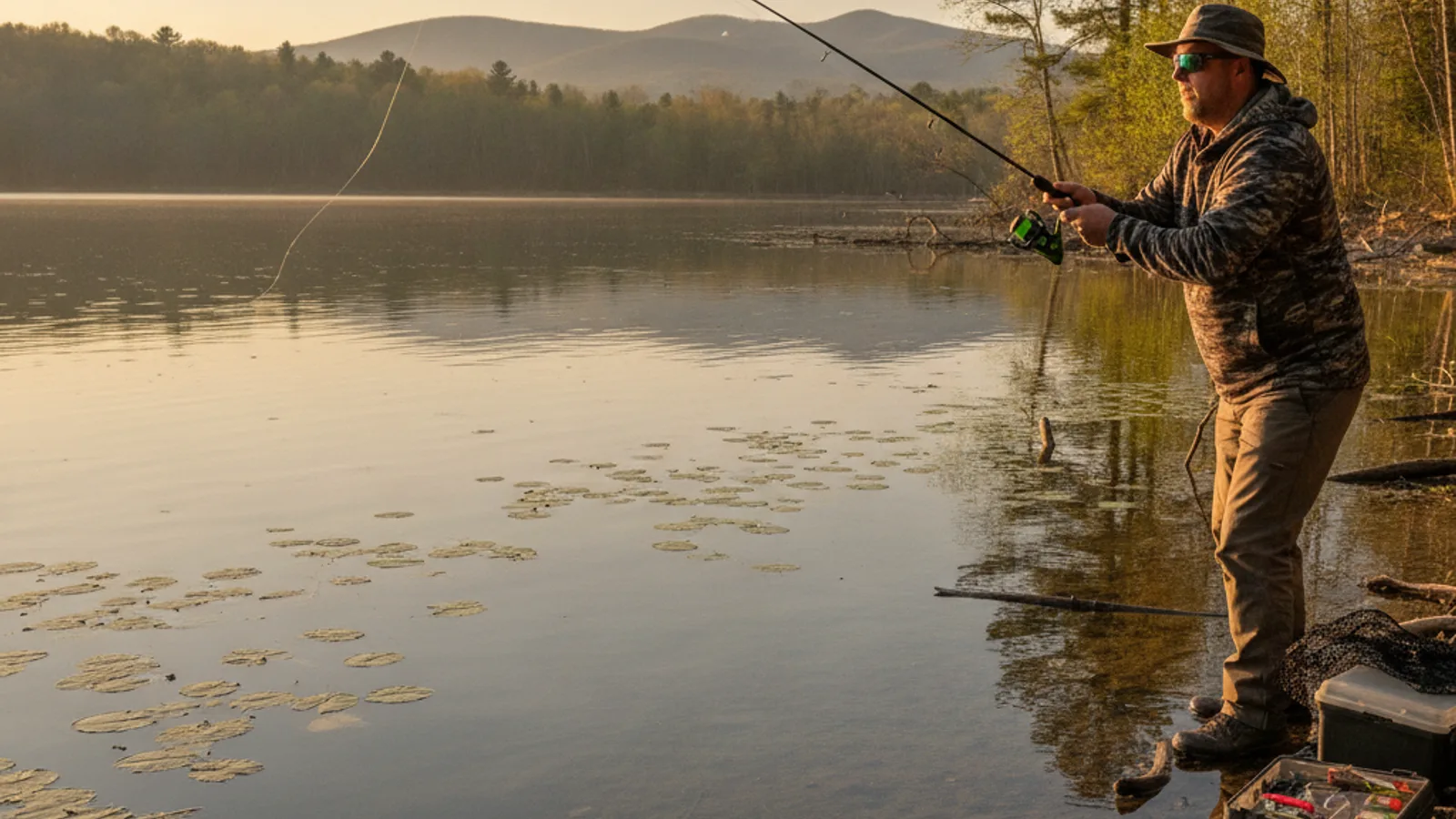
April is the month that separates anglers who understand bass from those who just throw lures and hope. Right now, across most of the country, bass are in the pre-spawn phase, staging on structure near spawning flats, feeding aggressively, and catchable if you know where to look. The biggest bass of the year are caught during this window. Here's exactly how to find and catch them.
Water Temperature: The Only Number That Matters
Forget the date on the calendar. Water temperature dictates everything about pre-spawn bass behavior. Grab a thermometer and check it every trip, it's the single most important piece of information you'll use all spring.
Here's the pre-spawn temperature roadmap:
- 48-52°F, Early pre-spawn. Bass are waking up from winter mode. They've moved from the deepest winter haunts toward the first breaklines near spawning areas. Movement is slow, feeding is sporadic, and everything needs to be presented slowly.
- 52-58°F, Active pre-spawn. This is the transition zone where fishing starts getting good. Bass are staged on secondary structure, points, channel bends, and rock transitions, and feeding windows get longer. Crawfish are becoming active, and bass key on them heavily.
- 58-65°F, Late pre-spawn / pre-spawn peak. This is the money zone. Bass are gorging before moving onto beds. They're aggressive, they're shallow, and they're the heaviest they'll be all year. Trophy hunters: this is your window.
- 65°F+, Spawn imminent. Bass start making beds. Males move up first, followed by the big females. The pre-spawn bite transitions into the spawn pattern.
Pro Tip: Don't just check the surface temperature. On sunny April days, the top few inches can read 5+ degrees warmer than the water at 3-4 feet deep where bass are actually sitting. Dip your thermometer down to get an accurate read.
Where Pre-Spawn Bass Stage
Pre-spawn bass don't randomly scatter across the lake. They follow predictable migration routes from deep winter areas to shallow spawning flats, and they stage on specific types of structure along the way. Find the structure, find the fish.
Secondary Points
The first point inside a spawning cove or pocket, not the main-lake point, but the one just inside the mouth. Bass stack up here because it gives them quick access to both deep water (safety) and shallow flats (spawning). Fish the 6-15 foot depth range on these points. If the point has rock, gravel, or a mix of hard and soft bottom, even better.
Channel Swings
Where a creek or river channel swings close to a flat or bank, bass will use the deeper edge of the channel as a staging highway. They travel along the channel and pull up onto adjacent flats to feed. The inside bend of a channel swing, where the deep water comes closest to the shallow flat, is a classic pre-spawn spot that produces year after year.
Rock Transitions and Chunk Rock Banks
Bass love transitional areas where the bottom composition changes, mud to rock, sand to gravel, chunk rock to pea gravel. These transitions attract crawfish (bass candy during pre-spawn) and provide visual reference points that bass use to navigate. A stretch of chunk rock adjacent to a spawning flat in 4-10 feet of water is a pre-spawn magnet.
Shallow Flats Adjacent to Deep Water
Large, gradually sloping flats that have deep water nearby are prime staging and feeding areas. Bass move onto these flats during warm afternoons to feed, then slide back to deeper water when temperatures drop overnight. Look for flats with scattered cover, isolated stumps, rock piles, or grass clumps, that give bass something to relate to.
Best Baits for Pre-Spawn Bass in April
Your bait selection should match the water temperature and how aggressive the fish are. Here's a breakdown from coldest to warmest conditions:
Jerkbaits (48-58°F)
The suspending jerkbait is the most important pre-spawn bait in your box. The twitch-twitch-pause retrieve mimics a dying baitfish, and the long pause lets cold, sluggish bass close the distance. In water below 55°F, pause 5-10 seconds between twitches. Longer than feels natural. That's the key. As water warms past 55, shorten the pause to 2-3 seconds.
Colors: natural shad patterns in clear water, chartreuse/blue or firetiger in stained water. Top picks include the Megabass Vision 110, Rapala Shadow Rap, and Strike King KVD Jerkbait.
Lipless Crankbaits (52-62°F)
Once water crosses into the low-to-mid 50s and bass start moving onto flats and points, a lipless crankbait ripped through emerging grass or over gravel transitions is devastating. The yo-yo retrieve, rip it up, let it flutter down on a semi-slack line, triggers reaction strikes. Crawfish red and chrome/blue are the two must-have colors.
Crawfish-Pattern Crankbaits and Jigs (55-65°F)
As water warms into the upper 50s and 60s, crawfish become a primary food source for staging bass. A squarebill crankbait in crawfish orange bounced along rocky banks and transitions is deadly. Similarly, a 3/8oz or 1/2oz football jig with a crawfish trailer, dragged slowly along hard bottom, is a big-bass producer. Crawfish patterns work because bass are feeding on actual crawfish in these areas, match the hatch.
Swim Jigs and Chatterbaits (58-65°F)
In the late pre-spawn when bass are actively cruising flats and the shallows, moving baits like swim jigs and chatterbaits cover water efficiently and trigger aggressive strikes. Fish them parallel to the bank in 2-6 feet of water. White/chartreuse for stained water, bluegill or green pumpkin for clear water.
Time of Day Patterns
When you fish matters as much as where you fish during the pre-spawn. The pattern shifts as water warms through April:
- Early April (water in low 50s): Fish from noon to 5 PM. The warmest part of the day concentrates bass activity into a narrow window. Morning is usually dead. Don't waste your time before 11 AM.
- Mid-April (water in mid-to-upper 50s): The window expands. Fish from 10 AM through sunset. Afternoon is still best, but morning starts producing on warm stretches.
- Late April (water approaching 60s): The classic dawn and dusk pattern returns. Bass are active enough that low-light periods produce well. This is when you can start making full-day trips and expect action throughout.
Stack your trips with solunar data for even better timing. A major solunar period falling during the warm afternoon hours in early April is the highest-percentage time to be on the water.
How Weather Fronts Affect Pre-Spawn Bass
Spring means weather fronts cycling through every 3-5 days, and nothing affects pre-spawn bass more dramatically than front passage. Understanding the pattern gives you a massive edge:
- Pre-frontal (falling barometer): This is prime time. Bass sense the pressure change and feed aggressively. The day before a cold front is often the best fishing day of the entire week. Fish fast and cover water, bass are actively hunting.
- Frontal passage (rapid pressure change): Fishing shuts down quickly as the front moves through. Wind shifts, skies clear, and temperature drops. Pack it up or switch to extremely finesse presentations.
- Post-frontal (high, stable pressure): The toughest conditions. Bluebird skies, cold north wind, bass pushed off the shallows and locked-jaw. If you must fish, go deep with finesse, drop shots, Ned rigs, and shaky heads on the staging structure. The bite usually recovers 24-48 hours after the front passes.
- Warm front approaching: Steady south wind and rising temps pull bass shallow and get them feeding. This is when you'll find bass surprisingly shallow, 2-4 feet, well ahead of schedule. A multi-day warm spell in April can push the pre-spawn timeline forward by a week.
Check the barometric pressure guide for a deeper dive on reading pressure changes for fishing.
Regional Breakdown: Where Bass Are Right Now (April 2026)
Southeast (Florida, Georgia, Carolinas, Tennessee, Alabama)
The spawn is underway or nearly complete in most southern waters. Water temps are already in the mid-60s to low 70s. Bass are on beds in shallower lakes and transitioning to post-spawn in deeper reservoirs. If you're in the Southeast, you're targeting bed fish or post-spawn recovery fish, topwater, wacky rigs, and creature baits around spawning flats.
Midwest (Ohio, Indiana, Illinois, Missouri, Minnesota, Wisconsin)
This is peak pre-spawn territory right now. Water temps range from the low 50s (northern Midwest) to upper 50s (southern Midwest). Jerkbaits, lipless crankbaits, and crawfish jigs are the play. Focus on secondary points and channel structure in 6-12 feet. The bite improves daily as water warms, and the next 2-3 weeks are the best fishing window of the year for this region.
Northeast (New York, Pennsylvania, New England)
Still cold. Water temps in most northeastern waters are in the mid-40s to low 50s. Bass are just beginning to move from winter spots toward the first staging areas. Slow jerkbaits, blade baits, and hair jigs are the tools. Focus on the warmest pockets you can find, south-facing coves, dark-bottom bays, and areas near warm-water discharges. The pre-spawn bite will peak here in late April through mid-May.
Check Pre-Spawn Conditions at Your Lake
See solunar periods, weather forecasts, and fishing scores to time your pre-spawn bass trips perfectly.
Check today's fishing forecast →Frequently Asked Questions
What water temperature triggers the pre-spawn for bass?
Bass enter the pre-spawn phase when water temperatures reach 50-55°F and remain in it until temps hit roughly 62-65°F, at which point they move onto beds. The most active feeding window is between 55-62°F, when bass are staging aggressively near spawning flats.
Where do bass stage during the pre-spawn in April?
Pre-spawn bass stage on secondary points, channel swings, rock transitions, and the edges of shallow flats adjacent to spawning areas. Look for structure in 6-15 feet of water that connects deep water to shallow spawning coves. Bass use these areas as highways between their winter haunts and spring beds.
What is the best bait for pre-spawn bass in April?
Suspending jerkbaits are the top producer in 48-55°F water. As temps warm past 55°F, lipless crankbaits, squarebill crankbaits, and swim jigs become more effective. Crawfish-colored jigs are excellent throughout the entire pre-spawn because bass are feeding heavily on crawfish as they prepare to spawn.
Is morning or afternoon better for pre-spawn bass fishing?
In early pre-spawn (water temps in the low 50s), afternoon is typically better because the water has warmed a few degrees throughout the day. As water temps climb into the upper 50s and 60s, morning and evening become equally productive, and the traditional dawn bite kicks in once spawn is imminent.
How do cold fronts affect pre-spawn bass fishing?
Cold fronts are the biggest enemy of pre-spawn bass fishing. A sharp temperature drop pushes bass off the shallows and back toward deeper staging areas. Fishing is typically excellent the day before a front arrives and poor for 1-2 days afterward. Bass will resume pre-spawn movement once conditions stabilize and water temps recover.
FISH SMARTER ⚓
FIND YOUR SPOT →