How to Read a Fishing Forecast, Complete Guide
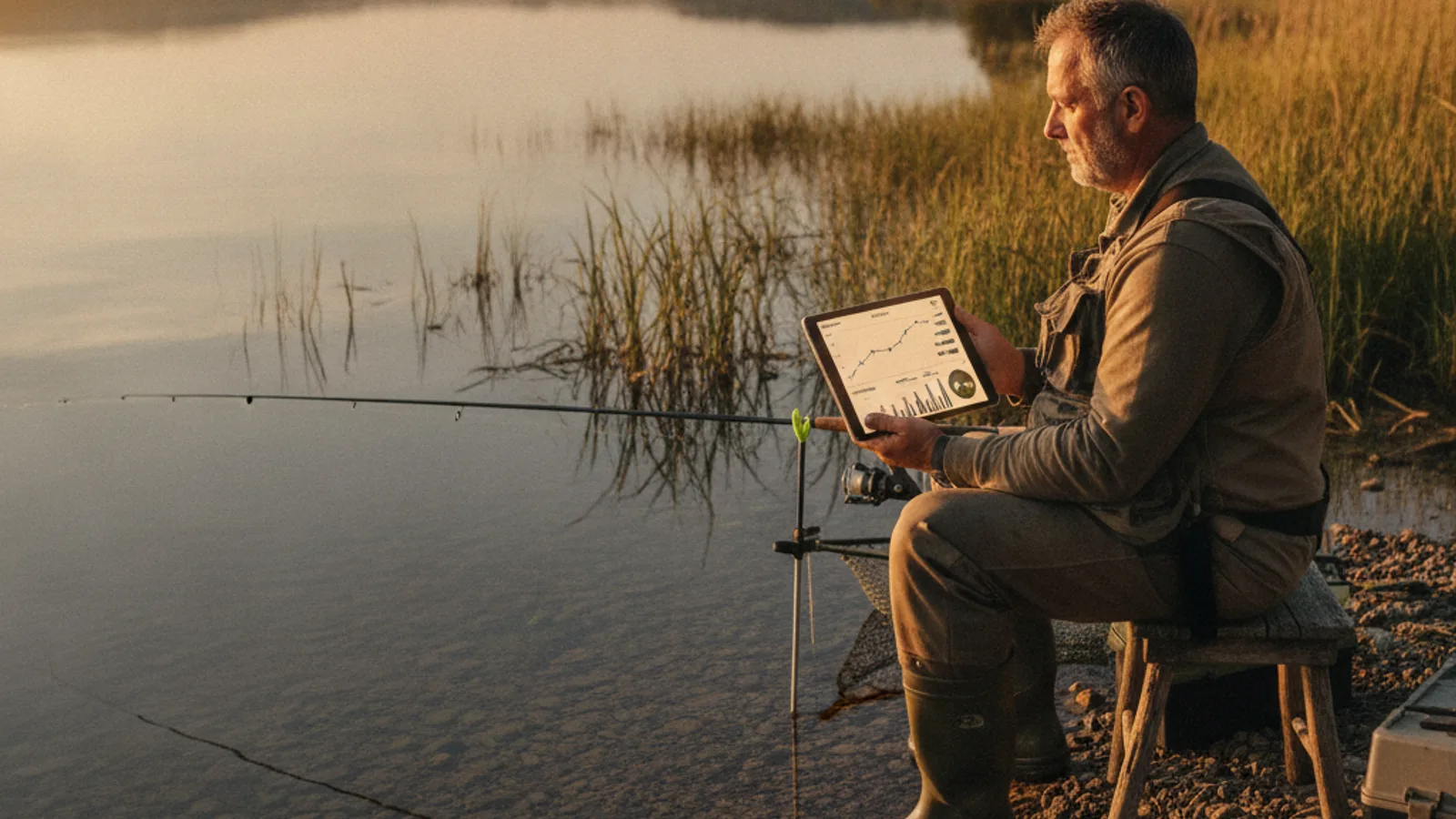
A fishing forecast takes the guesswork out of deciding when to hit the water. Instead of relying on luck, you can use data, solunar periods, barometric pressure, moon phases, tides, and weather conditions, to predict when fish are most likely to feed. But all those numbers and scores can be confusing if you don't know what they mean.
This guide breaks down every component of a fishing forecast so you can read one like a pro and plan trips that actually produce fish.
What Is a Fishing Forecast?
A fishing forecast is a prediction of how active fish will be at a specific location on a given day. It combines multiple natural factors that influence fish behavior into an easy-to-understand rating, typically a score or star system.
Think of it like a weather forecast, but for fishing. Just as you'd check rain probability before a picnic, a fishing forecast tells you the probability of good fishing conditions based on science-backed factors.
Tools like Fishn Buddy generate these forecasts automatically by combining solunar data, weather, tides, and moon phase into a single fishing score for thousands of locations.
Understanding Fishing Scores
Most fishing forecasts use a numerical score or rating system. Here's what the typical ranges mean:
| Score Range | Rating | What It Means |
|---|---|---|
| 90-100 | Outstanding | Multiple favorable factors align, moon phase, weather, tides. Best days of the month. |
| 70-89 | Good | Several positive factors present. Above-average fishing expected. |
| 50-69 | Average | Mixed conditions. Fish will bite, but you may need to work harder. |
| 30-49 | Below Average | Fewer favorable factors. Focus on the best windows within the day. |
| 0-29 | Poor | Most factors unfavorable. Not impossible, but expect slow action. |
Important: A "poor" forecast day doesn't mean you can't catch fish, it means conditions aren't optimal. Skilled anglers catch fish in all conditions. The forecast just helps you pick the best days when you have flexibility.
Solunar Periods, The Core of Any Forecast
The solunar theory, developed by John Alden Knight in the 1920s, is the backbone of most fishing forecasts. It's based on the idea that fish feeding activity peaks during specific positions of the sun and moon.
There are four solunar periods each day:
- Major Period 1: When the moon is directly overhead (moon transit). Lasts approximately 2 hours. This is typically the strongest feeding window.
- Major Period 2: When the moon is directly underfoot (opposite side of Earth). Also about 2 hours.
- Minor Period 1: Moonrise. Lasts approximately 1 hour.
- Minor Period 2: Moonset. Also about 1 hour.
Major periods generally produce stronger feeding activity than minor periods. When a major period coincides with dawn or dusk, fishing can be exceptional. Learn more in our solunar theory deep dive.
Barometric Pressure
Barometric (atmospheric) pressure is one of the most reliable indicators of fish activity. Fish have swim bladders that are sensitive to pressure changes, which directly affects their comfort and behavior.
- Falling pressure (29.60-29.80 inHg): Fish feed aggressively before an approaching storm. This is often the best time to fish.
- Low pressure (below 29.60 inHg): During a storm. Fish typically hold tight to cover and are less active.
- Rising pressure (29.80-30.20 inHg): Post-front conditions. Fish may be sluggish initially but activity increases as pressure stabilizes.
- Stable high pressure (30.00-30.20 inHg): Consistent, fair-weather fishing. Fish feed on regular patterns.
The rate of change matters more than the absolute number. A rapidly falling barometer is a stronger trigger than one that's been steady for days. For a deeper explanation, read our barometric pressure fishing guide.
Moon Phase
The moon phase affects fishing in two main ways: tidal strength and overnight light levels.
- New moon and full moon: Create stronger tides (spring tides) due to aligned gravitational pull. Generally rated as the best fishing days of the month.
- First quarter and last quarter: Produce weaker tides (neap tides). Fishing can still be productive but is typically less predictable.
- Full moon nights: Fish may feed more actively overnight, which can make daytime fishing slower. Plan for early morning starts.
Explore our complete moon phase fishing guide for detailed strategies around each phase.
Tides (Saltwater and Coastal Fishing)
For coastal anglers, tides are arguably the most important factor in a fishing forecast. Moving water concentrates baitfish and triggers predator feeding.
- Incoming (flood) tide: Pushes baitfish and nutrients toward shore. Generally the best tide for inshore fishing.
- Outgoing (ebb) tide: Pulls bait through channels and passes. Great for ambush predators at creek mouths.
- Slack tide: Minimal water movement. Usually the slowest fishing.
- Tide change: The 30 minutes before and after a tide change can produce a burst of feeding activity.
For a detailed walkthrough, read our tide chart reading guide.
Weather Factors
A complete fishing forecast also considers current and upcoming weather conditions:
- Wind: Light to moderate wind (5-15 mph) is generally better than dead calm. Wind creates current, breaks up light penetration, and pushes baitfish. Wind blowing into a shoreline concentrates bait and predators.
- Cloud cover: Overcast days often produce better fishing than bluebird skies. Reduced light makes fish less cautious and more willing to roam and feed.
- Temperature: Rapid temperature changes (especially drops) can slow fishing. Stable temps are preferable.
- Precipitation: Light rain often improves fishing. Heavy downpours can muddy water and scatter fish temporarily.
Putting It All Together, Reading a Forecast
When you open a fishing forecast on Fishn Buddy, here's a systematic way to interpret the data:
- Check the overall score first. Days rated 70+ are worth prioritizing.
- Look at solunar periods. Identify when the major and minor feeding windows fall. Try to be on the water during at least one major period.
- Check the moon phase. New and full moon weeks are typically the best overall windows.
- Review barometric pressure. Look for falling pressure or stable conditions. Avoid the day after a strong cold front.
- Check the tide schedule (coastal locations). Plan to fish moving water, especially the last two hours of an incoming tide.
- Look at wind and weather. A light overcast day with gentle breeze is ideal. Adjust your techniques for conditions.
The golden combination: A major solunar period + falling barometric pressure + incoming tide + overcast skies = the best fishing conditions you'll find. When you see all four align in a forecast, cancel your plans and go fishing.
Common Forecast Mistakes to Avoid
- Relying on a single factor. A full moon alone doesn't guarantee great fishing. It's the combination of factors that matters.
- Ignoring local knowledge. Forecasts provide a baseline, but local patterns (spawning runs, bait migrations) override general data.
- Skipping "bad" forecast days entirely. If a "poor" day is your only day off, go fishing. Adjust techniques, fish slower, target deeper structure, downsize baits.
- Not checking the forecast at all. Many anglers pick random weekends without considering conditions. Even a quick glance at the forecast can help you pick the better day.
Try a Free Fishing Forecast
See solunar periods, moon phase, barometric pressure, and fishing scores for any location.
Open Fishn Buddy →Frequently Asked Questions
How accurate are fishing forecasts?
Fishing forecasts based on solunar theory and weather data are generally 60-70% accurate at predicting peak feeding periods. They won't guarantee you catch fish, but they consistently help anglers identify the best windows. Think of them as improving your odds, not eliminating uncertainty.
Should I trust a fishing forecast over local advice?
Use both. A forecast gives you the scientific baseline, when natural conditions favor feeding. Local advice adds the context, where fish are holding, what they're eating, and how they're behaving that particular season. Together, they're a powerful combination.
Why do different apps give different fishing scores?
Each app weights the factors differently. Some emphasize solunar data, others lean heavily on barometric pressure or tides. The underlying science is the same, but the scoring algorithms vary. Focus on understanding the individual factors rather than fixating on any single score.
FISH SMARTER ⚓
FIND YOUR SPOT →