How to Read a Tide Chart: Beginner's Guide to Tide Tables
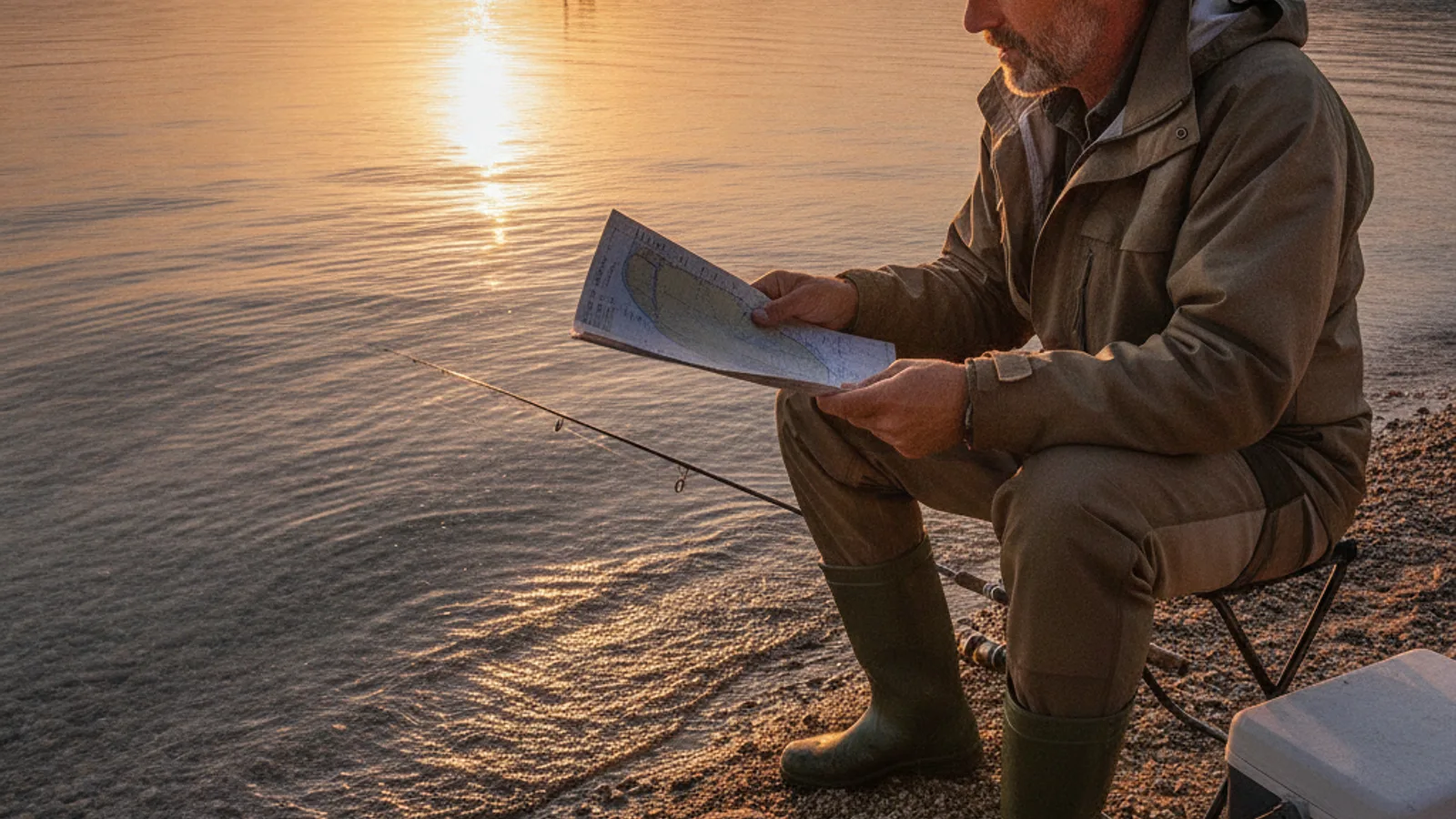
Tide charts might look intimidating at first glance, wavy lines, numbers, and times that seem to mean nothing. But once you understand the basics, reading a tide chart becomes second nature, and it'll transform your fishing success. This beginner-friendly guide breaks down everything you need to know about tide charts, tables, and how to use them for fishing.
What Is a Tide Chart?
A tide chart (also called a tide table or tide graph) shows the predicted rise and fall of water levels at a specific location over time. The data comes from NOAA (National Oceanic and Atmospheric Administration), which operates a network of tide stations across the US coast.
Tide charts come in two main formats:
- Graphical charts: A curved line showing water height over a 24-hour period. The peaks are high tides, the valleys are low tides.
- Tide tables: A simple list showing the exact times and heights of each high and low tide.
Both formats contain the same core information, it's just a matter of visual preference. Fishn Buddy shows both formats for every coastal location.
Understanding Tide Heights
Tide heights are measured in feet above MLLW (Mean Lower Low Water), the average height of the lowest tide recorded over a 19-year period. This is the zero reference point.
- Positive numbers (e.g., 5.2 ft): Water is 5.2 feet above the average lowest tide
- Zero (0.0 ft): Water is at the average lowest tide level
- Negative numbers (e.g., -0.8 ft): Water is below the average lowest tide, these "minus tides" expose areas normally underwater
The difference between a high tide height and the following low tide height is called the tidal range. A bigger range means stronger currents and more water movement, generally better for tide-based fishing.
Reading the Curve
On a graphical tide chart, the shape of the curve tells you a story:
- Steep sections: Water is moving fast. Strong currents. Fish are feeding.
- Flat sections at peaks/valleys: Slack tide. Minimal water movement. Fishing typically slows.
- Rising curve: Incoming (flood) tide, water flowing in from the ocean
- Falling curve: Outgoing (ebb) tide, water draining back to sea
Pro Tip: The steepest part of the curve, roughly the middle third between high and low tide, represents the fastest water movement. This is when fish feed most aggressively. Plan to have your lines in the water during these windows.
Semi-Diurnal vs Diurnal Tides
Not all coastlines experience the same tidal patterns:
Semi-Diurnal Tides (Most Common)
Two high tides and two low tides per day, roughly equal in height. This pattern dominates the US East Coast. You'll see four tidal changes in a 24-hour period, approximately 6 hours apart.
Mixed Semi-Diurnal Tides
Two highs and two lows per day, but with unequal heights. One high tide is significantly higher than the other (called the "higher high" and "lower high"). This is common along the US West Coast and Gulf Coast. The "higher high" tide often produces the best fishing due to stronger currents.
Diurnal Tides
Only one high and one low tide per day. Found in parts of the Gulf of Mexico, particularly along the Louisiana, Mississippi, and Alabama coasts. These areas have smaller tidal ranges, so other factors like wind and barometric pressure play a bigger role in fishing success.
How to Use Tide Charts for Fishing
Step 1: Find Your Station
Use Fishn Buddy to search for tide data at your fishing location. We pull real-time NOAA data for thousands of stations. Pick the station closest to where you'll actually be fishing, tidal timing can differ by 30+ minutes between stations just a few miles apart.
Step 2: Identify the Best Windows
Look for the periods of strongest water movement, the middle section of each incoming and outgoing tide. Cross-reference with moon phase data and solunar periods for the ultimate fishing forecast.
Step 3: Factor in Tidal Range
Compare today's tidal range to the monthly average. Bigger ranges (during spring tides around new and full moons) mean stronger currents and usually better fishing. Smaller ranges (neap tides during quarter moons) mean weaker flow.
Step 4: Adjust for Real Conditions
Tide predictions assume normal weather. Strong winds can push actual water levels 1-2 feet above or below predictions. Onshore winds raise water levels; offshore winds lower them. After heavy rainfall, freshwater runoff can also affect conditions in estuaries.
Remember: Tide charts predict water height at specific stations. If you're fishing between stations, tidal timing will be somewhere in between. Upstream locations in rivers and estuaries experience tides later than stations near the ocean mouth.
Common Tide Chart Terms
- Flood tide: Incoming/rising tide
- Ebb tide: Outgoing/falling tide
- Slack water: Brief period when tide changes direction
- Spring tide: Extra-large tidal range during new/full moons
- Neap tide: Smaller tidal range during quarter moons
- Tidal coefficient: A number indicating the relative strength of a tide
- Datum (MLLW): The zero-reference point for tide measurements
Putting It All Together
Here's a practical example. Say tomorrow's tide chart shows:
- Low tide: 0.3 ft at 5:45 AM
- High tide: 5.8 ft at 12:15 PM
- Low tide: 0.1 ft at 6:30 PM
The morning incoming tide (5:45 AM to 12:15 PM) has a range of 5.5 feet, strong movement. The best fishing window would be roughly 8:00 AM to 11:00 AM (the middle third of the flood). If you're surf fishing, the last two hours before high tide (10:15 AM – 12:15 PM) would put fish closest to shore.
Combine this with a dawn solunar period and you've built a science-backed fishing plan that dramatically increases your odds.
View Tide Charts for Your Location
Free tide charts with NOAA data, solunar periods, and fishing scores for 3,900+ US locations.
Check Tide Charts →Frequently Asked Questions
What do the numbers on a tide chart mean?
They represent predicted water height in feet above mean lower low water (MLLW). A reading of 4.2 means water will be 4.2 feet above the average lowest tide level. Negative numbers mean water below this reference.
How accurate are tide charts?
NOAA tide predictions are usually accurate within 10-15 minutes for timing. Actual heights can differ due to wind, barometric pressure, and storm surge.
Why are there two high tides a day?
The moon's gravity creates a water bulge on the side of Earth facing it, and centrifugal force creates a second bulge on the opposite side. As Earth rotates, most coastal areas pass through both bulges.
What is the best tide chart app for fishing?
Fishn Buddy provides free tide charts with NOAA data for 3,900+ US locations, combined with solunar periods and fishing scores, everything you need to plan fishing around the tides.
FISH SMARTER ⚓
FIND YOUR SPOT →