Solunar Tables for Fishing: Major & Minor Periods Explained (Does It Work?)
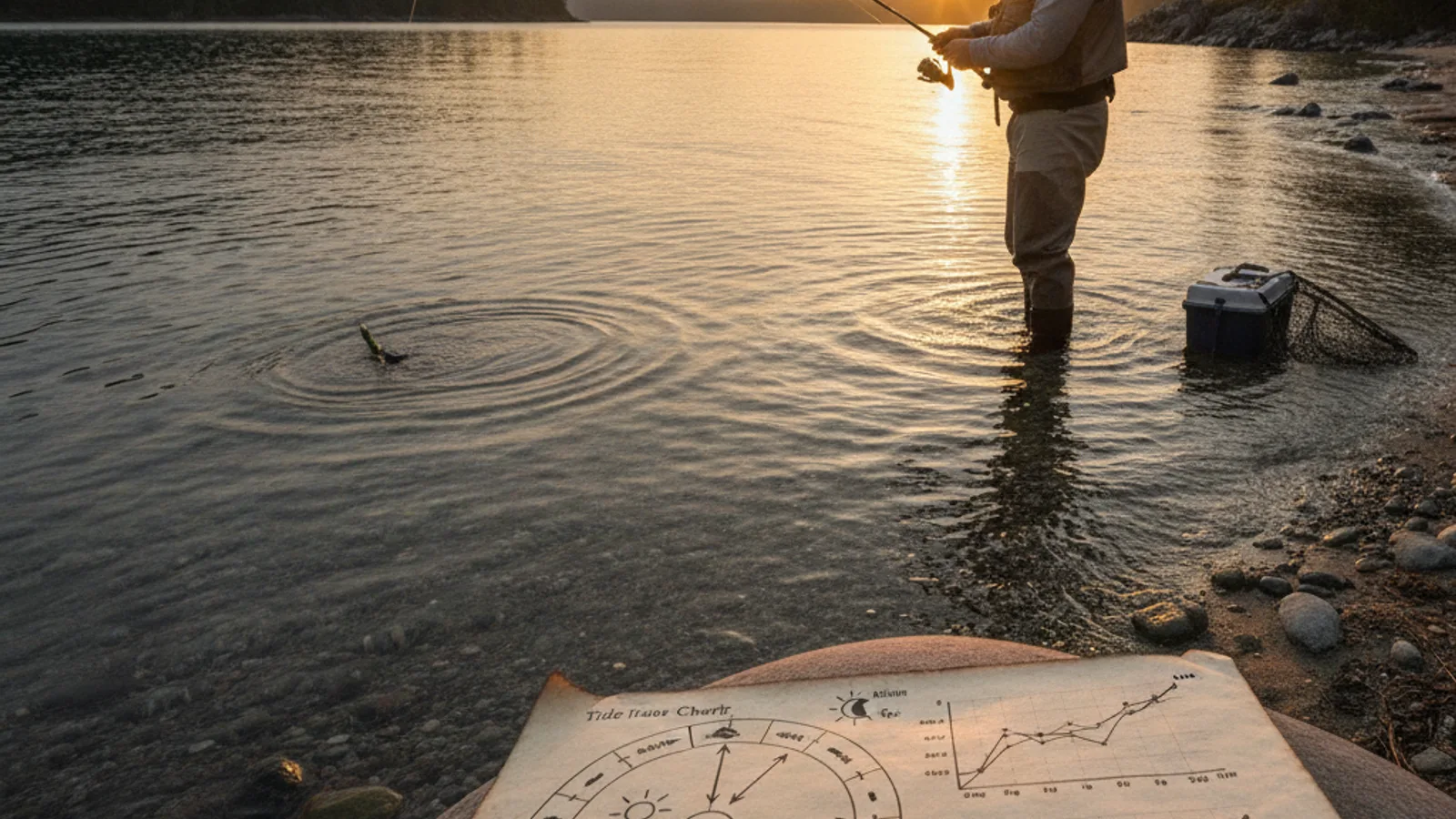
If you've spent any time researching fishing forecasts, you've probably seen terms like "major period," "minor period," and "solunar table." Some anglers swear by solunar forecasts. Others dismiss them as pseudoscience. So what's the truth?
In this guide, we'll break down exactly what the solunar theory is, how it works, what the scientific research actually says, and how to use solunar data to plan better fishing trips.
The Origin of Solunar Theory
Solunar theory was developed by John Alden Knight in 1926. Knight was an avid outdoorsman who noticed that fish and wildlife seemed to follow predictable activity patterns that correlated with the position of the moon and sun.
After years of collecting data from fishing logs, hunting records, and wildlife observations, Knight published his findings as "solunar tables", daily predictions of peak animal activity based on lunar position. The word "solunar" combines sol (sun) and lunar (moon).
Knight's original research analyzed over 200 fishing records and found that 90% of the best catches occurred during solunar periods. While his methodology wouldn't pass modern scientific standards, his observations laid the groundwork for what's become one of the most widely used fishing prediction tools.
⏰ How Solunar Periods Work
Each day has four solunar periods, two major and two minor, determined by the moon's position relative to your location on Earth.
| Period Type | Trigger | Duration | Intensity |
|---|---|---|---|
| Major #1 | Moon directly overhead (transit) | ~2 hours | Peak activity |
| Major #2 | Moon directly underfoot (opposite transit) | ~2 hours | Peak activity |
| Minor #1 | Moonrise | ~1 hour | Moderate activity |
| Minor #2 | Moonset | ~1 hour | Moderate activity |
Major Periods Explained
Major solunar periods are the headline events. They occur when the moon is at its highest point overhead (lunar transit) or at its lowest point below the horizon (lunar underfoot). These are the windows when gravitational influence is theoretically at its peak for your location.
Major periods typically last about 2 hours, centered on the moon transit/underfoot time. So if the moon transits at 2:00 PM, the major period runs roughly from 1:00 PM to 3:00 PM.
Minor Periods Explained
Minor periods occur at moonrise and moonset, the moments when the moon crosses the horizon. These are shorter (about 1 hour) and produce a less dramatic but still measurable increase in fish activity.
Some anglers underestimate minor periods, but they can be productive, especially when they coincide with dawn or dusk, creating a double-whammy of activity triggers.
Key Insight: Solunar times are location-specific. The moon transits at different times depending on your longitude. A solunar table for Port Aransas, TX will show different times than one for Apalachicola, FL.
Moon Phase Amplification
Solunar theory doesn't just look at daily periods, the moon phase amplifies or dampens the effect:
- New Moon: Strongest solunar influence. The sun and moon are on the same side of Earth, combining gravitational pull. Many anglers consider the 3 days around a new moon as the best fishing window of the month.
- Full Moon: Also strong. The sun and moon are on opposite sides of Earth, creating maximum tidal range. Night fishing under a full moon can be exceptional, though daytime bites may start later.
- Quarter Moons: Weakest solunar influence. The sun and moon are at right angles, partially canceling each other out. Solunar periods still exist but are less impactful.
Which Fish Respond Best to Solunar Periods?
Not all species are equally solunar-sensitive. Understanding which fish respond most strongly helps you decide how much weight to put on the table for your target species.
Walleye
The most solunar-responsive freshwater predator. Walleye are light-sensitive and feed in short, intense bursts, often triggered by the same gravitational forces behind solunar theory. Major periods at or near dusk produce the most reliable walleye bites of the day. Night-fishing walleye around new and full moons during a major period is as close to a guarantee as fishing gets.
Largemouth and Smallmouth Bass
Bass respond to major solunar periods throughout the day, not just at dawn and dusk. A major period landing at 10 AM can break a mid-morning lock-down that would otherwise keep fish hugging structure. During summer heat, the major period closest to dawn or dusk is when bass feed most aggressively, but any major period in calm stable conditions can trigger a topwater bite worth chasing.
Lake Trout
Lake trout follow the solunar table more reliably than stream trout do. Stream trout are hatch-driven: they eat when insects are on the water, regardless of the moon's position. Lake trout, hunting deep water for baitfish, align their feeding moves more consistently with major solunar periods, especially in fall and early winter when cold temperatures slow their metabolism and they feed in shorter, more predictable windows.
Crappie
Crappie are underrated solunar responders. During post-cold-front lockdown, when most fish go off the bite entirely, a major solunar period is often the one thing that gets crappie moving. Watch for crappie to suspend slightly higher in the water column and accept faster presentations during major periods.
Catfish
Catfish are the weakest solunar responders among popular freshwater species. They are scent feeders driven more by water temperature, current, and barometric pressure than by the moon's position. New and full moon nights are productive for flathead catfish, but that correlation is likely tied more to darkness and tidal-style current pulses than to solunar position directly.
Saltwater: Redfish, Snook, and Speckled Trout
Tidal current is the dominant feeding trigger in saltwater, and the same lunar forces that drive solunar theory also drive tides. The practical result: solunar major periods that coincide with tide changes are exceptionally productive windows. When the major period falls at slack tide, the effect is muted. Use both the tide chart and the solunar table together; a moving tide during a major period is the saltwater trifecta.
What Does the Science Say?
This is where it gets interesting. Solunar theory has been both supported and questioned by scientific research.
Evidence Supporting Solunar Theory
- A 2013 study in the North American Journal of Fisheries Management found that largemouth bass catch rates were significantly higher during major solunar periods, particularly around new and full moons.
- Research on marine predator movement patterns has consistently shown correlations between lunar cycles and feeding behavior in species like sharks, tuna, and billfish.
- NOAA data on tidal currents confirms that water movement, driven by the same gravitational forces behind solunar theory, directly impacts fish feeding behavior. This is well-established science.
- Multiple tagging studies on redfish and speckled trout in the Gulf of Mexico have shown increased movement and feeding activity during new and full moon phases.
The Skeptic's View
- Some studies have failed to find statistically significant correlations between solunar periods and catch rates, particularly for freshwater species.
- Critics point out that weather, water temperature, and tidal flow are often stronger predictors than solunar position alone.
- The original Knight research lacked rigorous controls and had significant selection bias.
- It's difficult to separate the solunar effect from the tidal effect, since they share the same root cause (lunar gravity).
The Bottom Line: Solunar theory works best as one ingredient in a larger recipe. It's not magic, but it's not nonsense either. The underlying physics, lunar gravitational influence on water and biological systems, is real. The practical question is how much weight to give it compared to tides, weather, and time of day.
How to Use Solunar Forecasts Effectively
Here's how to get the most from solunar data without overthinking it:
1. Stack the Factors
Solunar data is most powerful when it aligns with other positive conditions. A major solunar period that coincides with an incoming tide during dawn? That's a trifecta. A major period during slack tide at noon? Less impressive.
2. Prioritize Major Periods Near New/Full Moons
If you can only fish one day this week, pick the day where a major solunar period aligns with a moving tide during a new or full moon phase. That's your highest-probability window.
3. Don't Ignore Minor Periods
Minor periods at moonrise/moonset can be excellent, especially when they coincide with dawn or dusk. A minor period at 6:30 AM during a sunrise? You'll want to be on the water.
4. Keep a Log
The best way to evaluate solunar theory for your specific waters is to track it. Note the solunar period, tide stage, moon phase, and your catch for each trip. After a season, the data will tell you how much weight to give solunar times at your favorite spots.
5. Use Technology
Modern fishing tools like Fishn Buddy calculate solunar periods automatically and combine them with tide data, weather, and other factors into a single fishing score. This saves you from juggling multiple data sources.
See Today's Solunar Periods
Fishn Buddy calculates solunar major and minor periods for all Gulf Coast locations, combined with real-time tides and weather into an easy-to-read fishing score.
Check Your Location →Solunar Ratings Explained
Most solunar apps and printed solunar calendars assign a daily rating, ranging from "Excellent" to "Poor." Here is how those ratings are calculated and what they mean on the water.
| Rating | What it means | Typical conditions |
|---|---|---|
| Excellent | Major period overlaps dawn or dusk within 3 days of new or full moon | Highest-probability fishing day of the month; prioritize these dates |
| Good | Major period near dawn or dusk, or minor period exactly at dawn/dusk | Above-average bite activity; plan your best spots for the solunar window |
| Fair | Major period falls mid-day or late night; minor periods only during light transitions | Fish at the best natural-light windows and ignore the solunar timing |
| Poor | All periods fall at unusable hours; quarter moon phases; no alignment with dawn or dusk | Rely entirely on weather, tides, and structure; solunar adds nothing today |
The single biggest rating-booster is when a major period lands within 30 minutes of sunrise or sunset. The gravitational effect stacks with the low-light feeding trigger that bass, walleye, and trout already use. That combination is what anglers mean when they say a day "felt electric." The solunar rating quantifies it in advance.
See how solunar periods look in action at Cedar Key, FL, Grand Isle, LA, or Dauphin Island, AL. For species-specific feeding windows across bass, walleye, trout, catfish, and more, see our fishing feeding times by species guide.
Fish Feeding Times and Solunar Windows: The Stack Method
The most productive sessions happen when solunar major periods overlap with natural feeding windows. Neither trigger works in isolation: a major period at noon in August on a clear, still lake rarely fires because heat stress overrides the gravitational effect. The same period at dawn in September is a different story. Here is how the two data sources combine:
| Scenario | Expected Result | Best Approach |
|---|---|---|
| Major period at dawn or dusk | Best of the day; highest bite probability | Fish your most productive structure first, no warm-up casts |
| Major period at dawn + new or full moon | Peak of the month | Plan your longest sessions here; this window produces the most big-fish catches in any given month |
| Minor period at sunrise or sunset | Dawn or dusk window extends 45 to 60 minutes | Stay longer than usual; walleye and crappie keep feeding past when light alone would end the bite |
| Major period + falling barometer (storm 6 to 12 hours out) | Fish feed harder and longer than the period alone suggests | Fish any presentation aggressively; pre-front feeding windows often run well beyond the 2-hour major window |
| Major period + incoming tide (saltwater) | Best saltwater fishing window; tidal current and lunar gravity align | Station at current choke points; predators ambush bait pushed by the tide during the major period |
| Major period in midsummer heat (water above 80 degrees F) | Below average; heat stress overrides gravitational effect in shallow water | Find the thermocline; the bite may still happen deep, not shallow |
| Major period in winter under ice | Short, intense bite; most reliable cold-water feeding trigger | Pre-rig everything; you may have 20 minutes of concentrated action |
Solunar Periods by Season
The interaction between solunar periods and fish behavior shifts as water temperature changes across the calendar. Knowing the seasonal overlay makes the table above actionable on any given day.
Spring (42 to 65 degrees F, March to May)
Pre-spawn aggression largely overrides the solunar schedule. Bass, walleye, and crappie feed broadly throughout the day as water warms. Solunar data works best as a tiebreaker here: if you can only fish one morning this week, pick the one where a major period lands near dawn. But do not skip spring fishing just because the solunar table says "Fair"; pre-spawn fish feed at any rating.
Early Summer (65 to 72 degrees F, June)
Post-spawn recovery narrows the feeding windows back to dawn and dusk. Major solunar periods carry more weight again because the fish are no longer in spawn-fueled all-day feeding mode. A major period at 7 AM in June is a strong session; the same period at 1 PM is mediocre even with good conditions.
Peak Summer (72 to 84 degrees F, July to August)
Feeding windows compress to roughly 90 minutes at dawn and a narrower window at dusk. A major period that overlaps dawn is the highest-value fishing session of the week. Summer night fishing unlocks a second solunar window: walleye, bass, and catfish move shallow after dark, and a major period between 10 PM and 2 AM during a new moon is the trophy window for these species.
Fall (52 to 65 degrees F, September to October)
The most forgiving season. Fish pack on calories before winter and feed actively across broader time windows. Major solunar periods are reliable any hour of the day from September through October. This is the best season to test solunar data: when a major period fires mid-morning on a calm fall day, fish actively strike patterns that would produce nothing in summer.
Winter and Ice (32 to 42 degrees F, November to February)
Metabolism slows and feeding windows shrink to their shortest point of the year. Solunar major periods become the most reliable trigger available because temperature alone would suggest near-zero activity. Ice anglers consistently report that the first and last hour of fishable light, especially when they overlap a major period, produce far more fish than any midday stretch. Pre-rig presentations before the period begins; there is no time to retie when the bite fires.
For a complete breakdown of species-specific daily feeding windows and the full seasonal table, see the fishing feeding times by species guide.
Gear for Making the Most of Solunar Windows
Peak solunar periods are short, 1-2 hours at most. Having the right gear ready means you are not wasting that window rigging up. Three things that matter most:
- A fish finder you can read quickly: Garmin Striker Vivid 5cv shows both bottom structure and suspended fish at a glance so you can position fast when the bite turns on.
- Pre-rigged presentations: keep two rods ready, one with a soft plastic and one with a reaction bait, so you can cover water quickly without retying.
- Low-visibility line: Berkley Trilene XL mono disappears in clear water and works well for both casting and light jigging during low-light solunar peaks.
See the full fish finder guide and fishing line guide for picks by use case.
Frequently Asked Questions
What is a solunar period?
Solunar periods are predicted windows of peak fish and wildlife activity based on the moon's position. Each day has two major periods (~2 hours each, during moon transit and underfoot) and two minor periods (~1 hour each, at moonrise and moonset).
Does the solunar theory actually work for fishing?
Scientific evidence is mixed but generally supportive, especially for saltwater species. Solunar theory works best as one factor among many, combined with tides, weather, and time of day, it can help identify the highest-probability fishing windows.
What is the difference between major and minor solunar periods?
Major periods occur when the moon is directly overhead or underfoot, lasting about 2 hours with the most intense activity. Minor periods occur at moonrise and moonset, lasting about 1 hour with moderate activity. Both can produce good fishing, but major periods are typically more productive.
How do I find solunar times for my fishing location?
Fishn Buddy calculates location-specific solunar periods automatically for all Gulf Coast locations. Visit any location page to see today's major and minor periods alongside tides, weather, and a combined fishing score.
Do solunar tables work for freshwater fishing?
Yes, though the evidence is stronger for some species than others. Walleye and largemouth bass consistently show higher catch rates during major solunar periods in peer-reviewed studies. Stream trout respond more to hatches than to the moon, but lake trout follow major periods reliably. Catfish and bluegill show the weakest freshwater solunar responses. For bass and walleye anglers, treating solunar periods as a secondary planning tool, after weather and tides, adds real value over a season.
What does a solunar rating mean?
A solunar rating summarizes whether the day's periods align with naturally productive fishing conditions. An "Excellent" rating means a major period coincides with dawn or dusk within 3 days of a new or full moon. "Good" means a major period near a light transition, or a minor period exactly at dawn or dusk. "Fair" means the best periods fall mid-day or late night. "Poor" means no solunar period lands at a fishable time, which typically happens around quarter moons when the periods are buried in the overnight and mid-morning slots.
Should I fish during a minor solunar period?
Yes, especially when the minor period coincides with sunrise or sunset. A minor period at first light extends the dawn feeding window by 45 to 60 minutes and often produces the most active bite of the morning for walleye and crappie. On days when the major periods fall overnight or at noon, a well-timed minor is your best solunar window. Minor periods are rarely as explosive as majors, but they are reliable enough to plan around when the major period is at an unfishable hour.
Do solunar tables adjust for my time zone?
Quality solunar tools always calculate times based on your exact location, not just your time zone. The moon transits overhead at a different clock time in western Texas than in coastal Florida, even though both share the Central and Eastern time zones respectively. A generic solunar table that gives a single set of times for a whole state is off by 20 to 40 minutes for users far from the center point. Fishn Buddy calculates location-specific solunar periods based on the actual coordinates of each lake or coastal spot it covers.
Which fish are most responsive to solunar periods?
Walleye are the most consistently solunar-responsive freshwater species, followed by largemouth bass and lake trout. Saltwater species like redfish and snook respond strongly, though the solunar signal is often masked by tidal movement. Crappie are underrated solunar responders, especially during cold-front lockdowns when a major period can break otherwise stubborn fish. Catfish and stream trout are the least influenced by solunar position in freshwater; they respond more to barometric pressure and insect hatches, respectively.
What time are fish most active today?
The two universal windows are dawn (one hour before through one hour after sunrise) and dusk (one hour before through one hour after sunset). Check the major solunar period for your location: if it overlaps either window, that overlap is the highest-probability hour of the day. If the major period falls at noon or overnight, fish the natural light transitions and treat solunar data as a secondary signal. In summer when water exceeds 80 degrees F, dawn is the dominant window even if the major period falls elsewhere, because heat stress overrides the gravitational effect on shallow fish.
How do I combine solunar periods with species-specific feeding charts?
Use the solunar period to narrow the day and hour, then use the species-specific feeding pattern to choose the technique and depth. A major period at dawn with walleye as the target means a jig on a point or current break at first light. The same major period at noon in summer on a largemouth lake shifts your approach to deep cover and slow presentations, because heat-stressed fish feed short and tight. The species chart tells you what the fish will likely do; the solunar table tells you when they are most likely to do it. See the full breakdown at fishing feeding times by species.
Does every fish in the lake feed during a solunar major period?
No. A major solunar period raises the probability of active fish; it does not guarantee that every fish feeds. Solunar timing narrows the window where actively feeding fish are more likely to be found near structure and at shallower, accessible depths. It does not override post-cold-front lockdowns, water temperature extremes above 85 degrees F or below 38 degrees F, or the behavior of species that follow different triggers first. Catfish respond more to barometric pressure and current than to the moon. Stream trout follow insect hatches more than lunar position. Think of solunar periods as a scheduling tool that stacks favorably with other conditions, not a feeding guarantee on its own.
FISH SMARTER ⚓
FIND YOUR SPOT →