Home › Blog › Best Fishing Line 2026
Best Fishing Line 2026: Mono, Fluorocarbon & Braid by Species and Technique
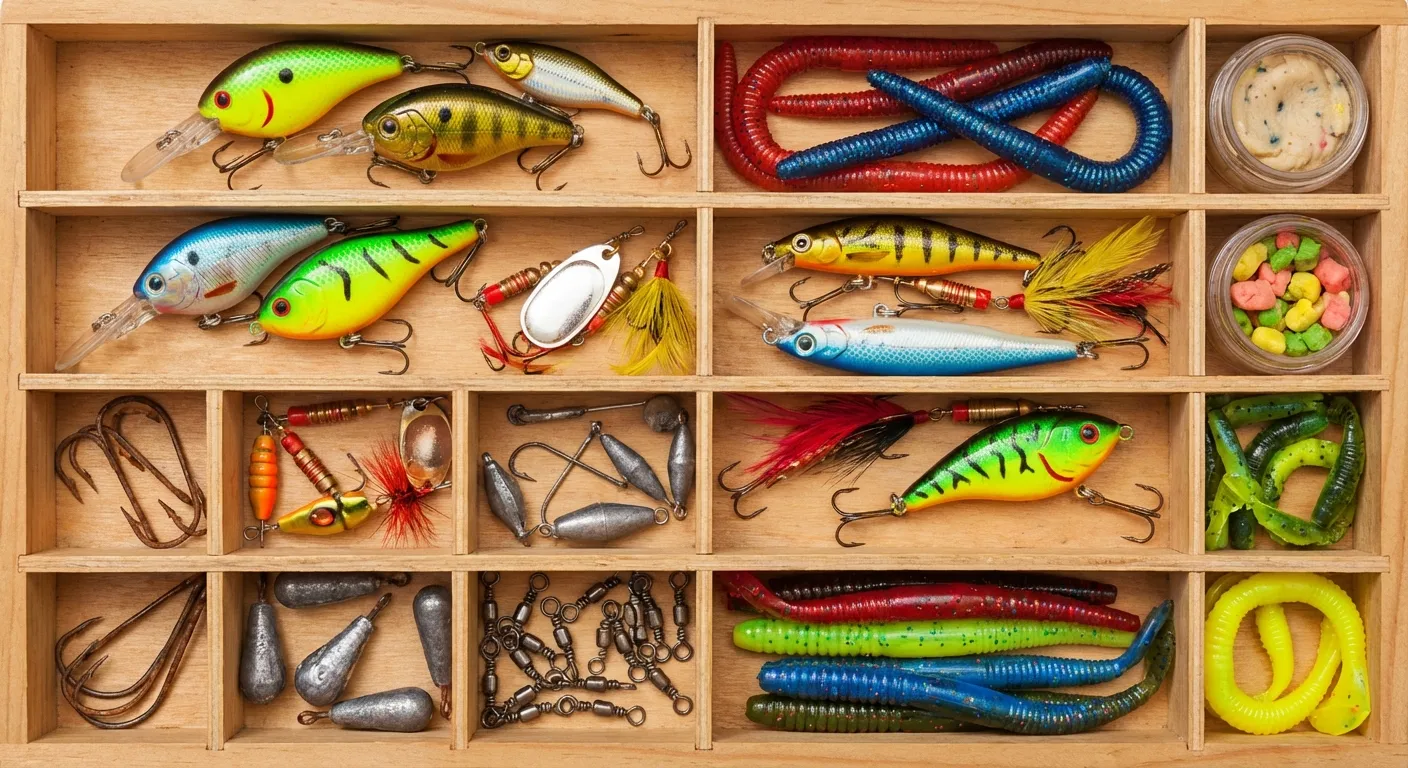
No piece of gear connects you to a fish more directly than the line on your reel. A rod mistake loses a lure. A line mistake loses the fish. Yet most anglers pick up whatever 10 lb mono is at eye level on the peg board and fish it until something breaks. The difference between that approach and a matched line choice by technique and species is real, and it is measurable in fish caught.
This guide covers the three main line types, when each one is correct, and which specific brands perform at each price point. For a quick recommendation, go to quick picks. For a deeper explanation by species, go to how to choose.
Quick Picks by Situation
| Situation | Line Pick | Why | Price |
|---|---|---|---|
| General freshwater, beginners | Berkley Trilene XL Mono | Forgiving stretch, strong knots, floats | $8–14/spool |
| Budget mono | Stren High Impact Mono | Proven brand at budget price, reliable break strength | $5–10/spool |
| Clear water bass, walleye | Seaguar InvizX Fluorocarbon | Near-invisible, low stretch, sinks naturally | $20–30/200yd |
| Heavy cover, grass, docks | PowerPro Spectra Braid | Maximum strength per diameter, zero stretch | $18–30/150yd |
| Value braid, jigging | Sufix 832 Advanced Superline | 8-carrier construction, tight braid, excellent abrasion resistance | $22–35/300yd |
| Finesse spinning, ultralight | Berkley x5 Crystal Braid | Thin diameter for light lures, clear for finesse situations | $10–16/164yd |
Monofilament Fishing Line
Monofilament is a single-strand extruded nylon line. It stretches 15 to 30 percent before breaking, which absorbs sudden shock loads during hooksets and when a big fish makes an unexpected run. It floats, which is useful for topwater lures, surface baits, and helping crankbaits run at their designed depth. It ties knots easily, tolerates an imperfect clinch knot better than any other line type, and costs less per yard than fluorocarbon or braid.
The main limitation of monofilament is that it absorbs UV damage and water over time, which reduces break strength noticeably after a full season. It has more memory than braid, meaning it develops coils after sitting on a spool, and those coils cause casting problems on spinning reels. Change your mono at least once per year, and twice per year if you fish saltwater or leave reels in direct sun.
Berkley Trilene XL
Trilene XL is the standard freshwater monofilament that most fishing guides and tackle shop staff reach for when setting up a beginner's outfit. It is smooth enough to cast well on a spinning reel, strong enough at the knot to hold the listed break strength consistently, and comes in enough test weights (4 lb to 20 lb) to cover every freshwater application from panfish to large pike or muskie.
The "XL" designation stands for extra limp, meaning less memory than standard Trilene. That matters on spinning reels, where a stiff line develops coils that cause loops and bird nests. Green and clear are both reliable. Green disappears faster at depth than you would expect; clear is better for particularly pressured fish in very clear water.
For bass fishing, 10 to 12 lb XL on a spinning rod covers most open-water applications: crankbaits, topwater, jerkbaits, swimbaits, and drop-shot in lighter cover. For a heavier monofilament option for offshore or large catfish, Berkley Big Game Mono (17 to 40 lb) is the same trusted family in a heavy-duty build.
Pros
- Extra-limp formula reduces memory on spinning reels
- Reliable knot strength at listed break strength
- Wide test-weight range covers panfish to muskie
- Available everywhere, consistently in stock
Cons
- UV degradation requires annual respooling for active anglers
- More visible underwater than fluorocarbon in clear water
Stren High Impact Monofilament
Stren is one of the oldest fishing line brands in North America and the High Impact version is built to resist abrasion and shock loads better than standard mono. It is a reliable, cost-effective choice for anglers who want a proven brand at a lower price. The break strength tests to its labeled rating consistently, and it handles standard freshwater knots without slipping.
For heavy cover situations where mono is preferred (catfishing, carp, and heavy-lure baitcasting in open water), Stren High Impact is a sensible choice over premium lines that cost three times as much on the same spool.
Pros
- Reliable brand with decades of track record
- Better abrasion resistance than standard mono for the price
- Consistent knot strength at listed rating
Cons
- More memory than Trilene XL on spinning reels
- Less stretch than some premium mono, meaning less shock absorption
Fluorocarbon Fishing Line
Fluorocarbon has a refractive index close to water, which makes it nearly invisible when submerged. That property alone makes it the preferred line for finesse fishing in clear water and for any application where line visibility is likely spooking fish. Beyond invisibility, fluorocarbon sinks, is stiffer than mono, has less stretch (around 15 to 20 percent), and is more abrasion-resistant than monofilament against rocks, ledges, and rough structure.
The tradeoffs: fluorocarbon is significantly more expensive per yard than mono, requires different knot tying technique (always moisten the knot before cinching, and use a Palomar or Improved Clinch with extra turns), and is stiffer than mono in cold water, which can reduce castability on spinning gear in very cold weather.
Seaguar InvizX Fluorocarbon
Seaguar invented fluorocarbon fishing line in 1971 and the InvizX is their mainstream-use freshwater line. It is softer than most 100-percent fluorocarbon lines, which matters because stiffer fluorocarbon causes problems on spinning reels: the line springs off the reel spool in loops and causes false loops at the guide. InvizX is soft enough to cast off a 2500 to 3000-size spinning reel in 8 to 12 lb test without constant loop management.
For bass drop-shot, shaky head, and finesse jig fishing in clear-water lakes, 6 to 10 lb InvizX is the line most tournament anglers are using when they need to go finesse in 15 to 30 feet of clear water. For walleye jigging, 8 to 10 lb InvizX as a leader tied to 10 to 20 lb braid covers most situations.
For heavy-cover fluorocarbon where you need higher abrasion resistance around rock and laydowns, Seaguar Abrazx is the industrial-grade version of the same brand. For budget fluorocarbon, Berkley Vanish is the widely available entry-level option in most retail stores.
Pros
- Softest cast-friendly 100% fluoro available on spinning gear
- Near-invisible underwater reduces refusals in clear water
- Good abrasion resistance for ledge, rock, and wood cover
- Sinks naturally, improving finesse lure action
Cons
- Significantly more expensive per yard than monofilament
- Knots must be moistened and cinched slowly or they slip
- Stiffens in very cold water, reducing performance below 40°F
Braided Fishing Line
Braided line is made from woven synthetic fibers, typically Dyneema (UHMWPE polyethylene), and has no stretch, small diameter for its break strength, excellent sensitivity, and very long service life. A 30 lb braid is often thinner than 10 lb monofilament, which means more line on the reel, better casting distance, and lures that run deeper at the same retrieve speed.
The zero stretch that makes braid so sensitive also makes it unforgiving during a fight: a fish that makes an unexpected lunge gets no shock absorption from the line, so braid requires a softer rod tip or a drag set slightly looser than you would use with mono. Braid is also highly visible, which is why most anglers who use it in clear water tie a 6 to 18-inch fluorocarbon leader at the terminal end.
Braid requires a monofilament or fluorocarbon backing on the reel spool (or braid-ready spool) to prevent slipping. Use an Arbor Knot with mono backing, then connect braid with a back-to-back Uni-to-Uni or Alberto Knot.
PowerPro Spectra Fiber Braided
PowerPro has been the standard braid for freshwater bass and saltwater anglers for over twenty years. The Spectra fiber construction is tight enough that it does not absorb water, which keeps the line weight consistent and prevents freezing in cold weather. It casts smoothly through guides without the whipping noise that looser braids produce, and the line-to-line diameter is consistent across the full spool, which helps with even winding on level-wind reels.
For bass fishing in heavy cover, 30 to 50 lb PowerPro on a baitcasting reel is the standard setup. For walleye trolling, 10 to 20 lb on a line-counter reel lets you precisely control lure depth and feel bottom contact. For saltwater inshore applications, 20 to 30 lb covers most redfish, snook, and flounder situations. The 15 lb / 150 yd spool is the right entry-point size for freshwater bass spinning applications.
Pros
- Tight Spectra fiber braid casts silently and consistently
- No water absorption, works in cold weather without freezing
- Proven 20-year track record in freshwater and saltwater
- Available in every lb test from 5 to 150
Cons
- High visibility requires a fluorocarbon leader in clear water
- No stretch means rod tip and drag must absorb all shock
- Needs mono backing or braid-ready spool to prevent slipping
Sufix 832 Advanced Superline
The Sufix 832 uses an 8-carrier construction (8 fibers braided together) rather than the 4-carrier design used by most budget braids. The extra carriers make the braid rounder in cross-section, which reduces guide wear, makes the line quieter through guides, and produces a tighter weave with better abrasion resistance for jigging on rock and gravel. The 32 in the name refers to 32 weaves per inch, which is high enough to keep the braid from catching the slightest rough spot on your guides.
For jigging walleye and bass in rocky situations where abrasion is a concern, the 832 outperforms cheaper 4-carrier braids noticeably over a full season. The Camo color is a reasonable compromise between the low-visibility argument and the ability to see the line for strike detection.
Pros
- 8-carrier construction produces a rounder, smoother, more abrasion-resistant braid
- 32 weaves per inch reduces guide wear on light-wire guides
- Available in Ghost (low-visibility) and Camo color options
Cons
- Slightly higher cost per yard than 4-carrier braids
- Still needs a fluoro leader for clear-water finesse applications
Berkley x5 Crystal Braided
The Berkley x5 Crystal is a 5-carrier braid in a clear (Crystal) color, designed for finesse and ultralight applications where braid's sensitivity advantage is needed but the high visibility of standard colored braid is a problem. In 6 to 10 lb test, it is thin enough to load a small 1000 or 2000-size spinning reel to capacity without bulk, casts light finesse lures like drop-shot rigs and small ned heads farther than mono, and provides the sensitivity to feel taps on bottom at 20 feet.
For anglers who want the sensitivity of braid on spinning rods without the high-visibility problem of green or yellow braid, the x5 Crystal paired with a 6 to 8 lb fluorocarbon leader is a strong finesse setup for clear-water bass, trout, and crappie. For a budget alternative to the x5, SpiderWire Stealth in 6 to 10 lb is widely available and covers similar applications at a lower price.
Pros
- Clear color reduces the visibility problem of standard braid
- 5-carrier construction is smoother than 4-carrier on small spinning reels
- Thin diameter loads small 1000-2000 reels to full capacity
- Excellent sensitivity for drop-shot and light bottom contact
Cons
- Crystal color is still visible to an angler looking down into clear water
- Not a replacement for a fluoro leader in high-pressure clear water situations
How to Choose: Line Weight and Type by Species
Bass (Largemouth and Smallmouth)
Bass anglers typically carry three setups: 8 to 12 lb monofilament on a spinning rod for topwater, crankbaits, and jerkbaits; 6 to 10 lb fluorocarbon on a spinning rod for finesse techniques (drop-shot, ned rig, shaky head); and 30 to 50 lb braid on a baitcasting rod for heavy cover (frogs over grass, flipping jigs, punching mats). See the best bass lures guide for technique-specific recommendations that match each line type.
Walleye
Walleye jigging on rock calls for 10 to 17 lb braid with a 6 to 10 lb fluorocarbon leader. Walleye trolling uses 10 to 17 lb monofilament directly (the stretch acts as a shock absorber). For live-bait rigging in clear water, 6 to 8 lb fluorocarbon main line or leader is the standard choice. See the best walleye lures guide for trolling crank depth charts by line diameter.
Panfish (Crappie, Bluegill, Perch)
Light 4 to 6 lb monofilament on an ultralight spinning rod is the standard panfish setup. For crappie fishing in clear water around brush and docks, 6 lb fluorocarbon main line or a fluorocarbon leader reduces refusals. For vertical jigging over brush piles, 10 lb braid with a 6 lb fluoro leader provides sensitivity without spooking fish. Check the crappie fishing tips page for presentation specifics.
Trout (Stream and Lake)
Stream trout fishing in small rivers and creeks calls for 4 to 8 lb fluorocarbon or 4 to 8 lb mono, with fluorocarbon winning in clear, low-gradient streams where fish have long time to inspect a bait before striking. For trolling on lakes for salmon and lake trout, 10 to 17 lb monofilament with its stretch tolerance is a standard choice on downrigger setups.
Catfish and Carp
Heavy-duty bottom fishing for catfish and carp calls for 17 to 30 lb monofilament or 30 to 60 lb braid as main line, often with a 17 to 30 lb mono or fluorocarbon leader for abrasion resistance on gravel and rock. Stretch is an advantage for catfish because they take time to engulf bait and a stiff braid with zero stretch can cause premature pull-out of the bait before the hook is set. See the pond fishing bait guide for catfish setup specifics.
Line Knots: The Link That Breaks First
The knot, not the line itself, is almost always the weak point in any break-off. A perfect Improved Clinch Knot tests at 95 to 100 percent of the line's rated break strength. A rushed, dry-tightened clinch on fluorocarbon tests at 40 to 60 percent. Three rules that make knots hold:
- Moisten every knot before cinching. Dry nylon and fluorocarbon generates heat as you pull it tight, which weakens the line at the cinch point. A quick lick or dip in the water lowers friction enough to seat the knot cleanly.
- Use the right knot for the line type. Palomar Knot for braid (simple, strong, reliable). Improved Clinch or Palomar for mono. Palomar or Uni Knot for fluorocarbon. Never use a basic overhand knot on fluoro or braid.
- Pull steadily, not with a jerk. Seat the knot with a slow, even pull to full tension. Test by pulling hard before you fish. A knot that slips under load in your hand will definitely slip under a fish.
For a visual on 8 essential fishing knots including the Uni-to-Uni for braid-to-leader connections, see the fishing knots guide.
Frequently Asked Questions
What is the best fishing line for beginners?
Monofilament is the best fishing line for beginners. It stretches, which absorbs hook sets and reduces the chance of breaking off fish. It floats, which helps with surface presentations and visibility. It handles knots forgivingly, meaning a slightly loose improved clinch knot will still hold rather than slipping. Berkley Trilene XL in 8 to 12 lb test on a spinning reel is the standard recommendation for freshwater beginners. The main downside of mono is that it absorbs water over time and loses strength if left on the reel for a full season, so respool once a year.
What is the best fishing line for bass?
The answer depends on technique. For finesse presentations in clear water, 6 to 10 lb fluorocarbon is the best choice because it is nearly invisible underwater and sinks, which matches natural prey movement on drop-shots and shaky heads. For fishing heavy cover, grass, and docks, 30 to 50 lb braided line gives you the strength to pull fish out of structure without stretch and a small diameter that lets lures run deeper. For topwater fishing and general spinning applications, 8 to 12 lb monofilament works well and is forgiving on open-face reels. Most bass anglers carry all three: braid as main line on baitcasters for power fishing, fluoro for finesse spinning rods, and mono for topwater and crankbaits.
Does fishing line color matter?
In most freshwater situations, fishing line color matters less than diameter, stretch, and visibility underwater. Fish do not see the line the same way your eyes do above water: at depth, high-visibility yellow or green line appears as a blur in their peripheral vision, not a clear warning stripe. That said, in clear, calm water with pressured fish, clear fluorocarbon or clear monofilament does reduce refusals on finesse presentations. High-visibility line is genuinely useful for the angler: you can see a moving line indicate a bite before you feel it, and you can track your lure position more accurately. For most fishing situations, choose line color that helps you see the bite, then use a clear fluorocarbon leader if visibility is a concern.
How often should you replace fishing line?
Monofilament should be replaced at least once per season for active anglers, and more often if you fish saltwater or leave line in direct sunlight frequently. UV light and salt degrade mono quickly, reducing break strength below the listed rating. Fluorocarbon lasts longer than mono but develops memory and stiffness after a full season of use. Braided line is the most durable and can last two to three seasons if you inspect it regularly and cut back any abraded sections. A reliable test: if the last 10 to 15 feet of your line looks kinked, is discolored, or snaps easily when you try to break it by hand, replace the line. Good line is cheap compared to losing a trophy fish.
What lb test fishing line should I use for walleye?
Most walleye fishing situations call for 6 to 10 lb monofilament or 8 to 12 lb fluorocarbon as a main line or leader. Walleye have relatively good eyesight in clear water, which makes low-visibility fluorocarbon useful for daytime fishing. For trolling with crankbaits, 10 to 14 lb monofilament is common because the stretch acts as a shock absorber during long trolling runs. For jigging on bottom, 10 to 20 lb braid with a 6 to 10 lb fluorocarbon leader gives the sensitivity to feel light bites and the low visibility needed near the bait. Avoid heavy line above 17 lb in clear water jigging situations, as it will reduce bite frequency noticeably.