Home › Blog › Best Walleye Lures 2026
Best Walleye Lures 2026: Trolling Cranks, Jigs, Blade Baits & Harnesses
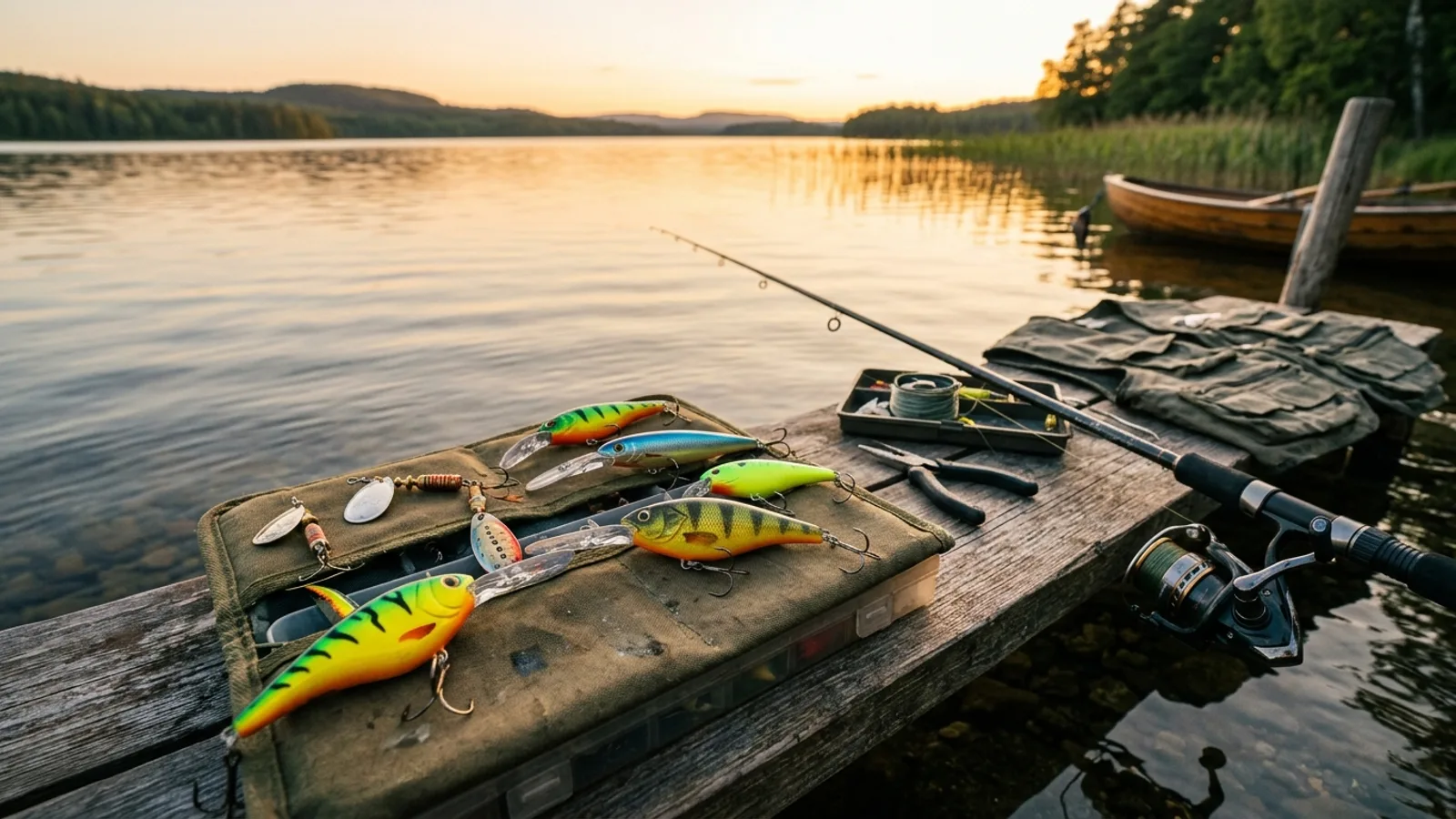
Walleye are the most technique-driven fish in the Midwest. The same fish that crushes a trolled crankbait at 2.2 mph in July will only eat a jig crawled along the bottom in April, and only a Jigging Rap through the ice in January. That’s why a walleye box isn’t one lure, it’s a small system: crankbaits for covering water, jigs for precision, blade baits and harnesses for the in-between days.
This guide is built around how walleye are actually caught on Lake Erie, Lake Michigan, and the inland lakes of Michigan, Wisconsin, and Minnesota. Every pick is a proven, currently-sold model, no boutique baits you can’t find. Want a quick answer? Jump to quick picks.
At a Glance
 Bandit Lures Bandit Walleye Deep Sbtb
 Rapala Down Deep Husky Jerk Jerkbait, Deep Diving Hard...
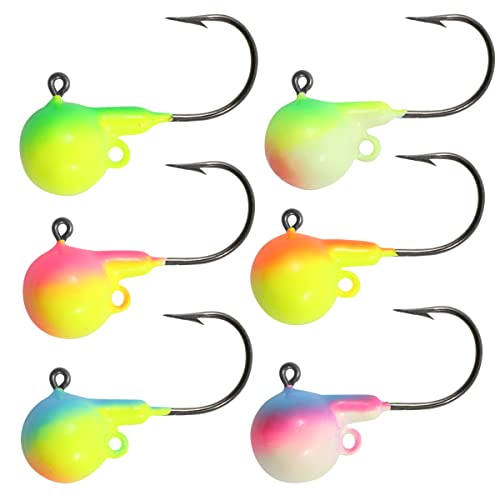 Northland Tackle Fire-Ball Jig
 Heddon Sonar Blade Bait Chrome, 1 7/8"
 Northland Tackle BAITFISH Spinner Harness / 60" Snell...
 Rapala Shad Rap 05 Fishing Lures
Product images and titles from Amazon. As an Amazon Associate we earn from qualifying purchases.
Quick Picks by Technique
| Technique | Best Pick | Why | Price |
|---|---|---|---|
| Trolling (all-around) | Berkley Flicker Shad (I own this one; it has earned its spot.) | Cheap, deadly, runs true out of the box | $5–8 |
| Deep trolling | Bandit Walleye Deep | Hits 27 ft unassisted, Erie staple | $8–10 |
| Cold-water trolling | Rapala Down Deep Husky Jerk | Slow-speed action, internal rattle | $9–12 |
| Jigging | Northland Fire-Ball Jig | Short-shank design made for live bait | $4–6/pack |
| Blade bait | Heddon Sonar | Classic vibration bait, casts a mile | $5–7 |
| Crawler harness | Northland Baitfish Spinner Harness | Proven blades, quality hooks, ready to fish | $4–6 |
| Ice / vertical | Rapala Jigging Rap (I own this one; it has earned its spot.) | The classic winter walleye bait | $7–10 |
| Casting inland lakes | Rapala Shad Rap (I own this one; it has earned its spot.) | 50 years of catching inland walleye | $9–12 |
Trolling Crankbaits
On big water, trolling is how limits get filled. Lake Erie’s western and central basins are essentially a crankbait factory from May through September: find the bait on your fish finder, match the depth with the right diver and lead length, and repeat. These three baits cover the whole season.
Berkley Flicker Shad
The Flicker Shad is the most cost-effective serious walleye crankbait on the market. It has a tight, fast wobble that walleye key on in warm water, runs true straight out of the package (rare at this price), and comes in every Great Lakes color that matters: Slick Purple Candy, Firetiger, Racy Shad, and the flashy chrome patterns. Size 5 and 7 are the walleye workhorses; the 7 dives to roughly 11–13 ft on a standard lead.
Because they’re $5–8 each, you can actually afford to run a proper 6-rod spread with color variety, and losing one to a snag doesn’t hurt. A Flicker Shad multi-pack assortment is the single best value in walleye trolling.
Pros
- Half the price of comparable cranks
- Tuned at the factory, runs straight
- Huge color range in Great Lakes patterns
- Multi-packs make building a spread cheap
Cons
- Stock hooks are adequate, not great
- Limited max depth without snap weights
Bandit Walleye Deep
When Erie walleye slide out over the deep flats in mid-summer, the Bandit Walleye Deep is the bait the charter fleet reaches for. Its oversized bill drives it to roughly 27 ft on a long lead without any added weight, deeper than almost anything else in the class, and it keeps a tight, walleye-friendly wiggle at speed. It also runs clean at 2.5+ mph, which lets you cover water and pick off aggressive fish.
Colors matter here: chrome/purple, wonderbread, and the custom-style painted patterns dominate on Erie. Buy a spread of three or four colors and let the fish tell you which rod keeps firing.
Pros
- Reaches 25–27 ft with no extra hardware
- Stable at faster trolling speeds
- Proven Lake Erie color lineup
Cons
- Big bill makes it overkill for shallow inland lakes
- Popular colors sell out during the summer run
Rapala Down Deep Husky Jerk
Early spring and late fall, when water temps are in the 40s and walleye want a slow, rolling minnow instead of a hard-thumping shad, the Down Deep Husky Jerk is the answer. It keeps its action at speeds as slow as 1.2 mph, suspends on the pause, and its internal rattle draws fish in the stained water that’s typical after spring blows. It reaches roughly 20 ft on the troll.
This is the bait for the April–May night bite off the Michigan piers and the November trophy troll, when the biggest walleye of the year are caught by the people willing to freeze for them.
Pros
- Holds action at very slow speeds
- Suspends, ideal for cold, neutral fish
- Rattle helps in stained spring water
Cons
- Less effective at summer trolling speeds
- Costs more than a Flicker Shad
Jigs
Trolling wins on big water, but on rivers, reefs, and inland lakes, the jig is king. Spring walleye stack in current and on rocky spawning structure where a jig tipped with a minnow or crawler is the highest-percentage presentation there is.
Northland Fire-Ball Jig
The Fire-Ball is designed specifically for live bait: a short-shank, wide-gap hook that lets a minnow ride naturally and hooks short-striking walleye that a long-shank jig misses. There’s also a second eyelet for adding a stinger hook, which matters on the days walleye are nipping tails. The compact round head fishes vertically as well as it casts.
Stock 1/8 oz for shallow water and rivers with light current, 1/4 oz as the everyday size, and 3/8 oz for deep water or heavy current like the Detroit River spring run. Glow, chartreuse, and orange are the classic stained-water colors; pink and purple shine on clear water. Buy multi-packs, you will donate jigs to the rocks and that’s fine.
Pros
- Short-shank hook built for minnows
- Stinger eyelet for short-strike days
- Cheap enough to lose without pain
Cons
- Less ideal for plastics than a long-shank jig
- Round head snags more than stand-up styles in rock
Pair jigs with soft plastics when bait shops are closed or bait dies in summer heat: a Berkley PowerBait Ripple Shad or Gulp! Minnow on a 1/4 oz head is a legitimate minnow substitute, not a compromise.
Blade Baits
Heddon Sonar
The Sonar has been vibrating walleye into biting for decades and it still belongs in every box. Blade baits mimic a dying shad with a hard vibration that walleye feel through their lateral line, which makes them lethal in cold or dirty water when fish can’t see well. Rip it off the bottom, let it flutter down on a semi-slack line, and hang on, most hits come on the fall.
The 1/2 oz size is the walleye standard for 15–30 ft; carry 1/4 oz for shallower flats. This is a premier late-fall bait on Saginaw Bay and the Detroit River, and it doubles as a vertical bait over deep schools in summer. Three eyelet positions let you tune the vibration from tight to wide.
Pros
- Casts far and sinks fast, covers deep water quickly
- Deadly in cold and stained water
- Three line ties to adjust the action
- Under $7
Cons
- Treble hooks foul the line on slack falls
- Metal edge chews up light leaders, check knots often
Crawler Harnesses
Northland Baitfish Spinner Harness
When summer walleye get picky, a nightcrawler behind a spinning blade at 1.0–1.4 mph is hard to beat. Northland’s pre-tied harnesses use quality hooks, proven holographic Baitfish-Image blades, and beads that are actually color-matched instead of random. Colada, perch, and firetiger patterns cover the Great Lakes; hammered gold and copper are the inland-lake classics.
Run them behind bottom bouncers (1 oz per 10 ft of depth) along breaks and reef edges, or behind inline weights over suspended fish. Harnesses are consumables, blades get chewed, snells get nicked, so buy several packs and re-rig without guilt. If you prefer tying your own, a harness-making blade kit pays for itself in a season.
Pros
- Quality components, ready to fish out of the pack
- Holographic blades genuinely out-flash plain metal
- The top summer presentation for neutral fish
Cons
- Requires live crawlers, plan bait logistics
- Slow presentation, covers less water than cranks
Ice & Vertical Jigging
Rapala Jigging Rap
No bait owns a season like the Jigging Rap owns winter. Snap it up a foot and the fins swim it in a wide circle as it glides back to center, a motion nothing else replicates and walleye cannot leave alone. It has also broken out of the ice world: vertically jigging a #7 or #9 over deep summer schools (a technique bass anglers made famous on the Great Lakes) flat-out catches walleye when trolling doesn’t.
The #5 (2”) and #7 (2-3/4”) are the core walleye sizes. Glow patterns for low light and first ice, chrome blue and perch for daytime clear water. Tip the center treble with a minnow head when fish rise on your flasher or sonar but won’t commit.
Pros
- The proven winter walleye bait for 50+ years
- Doubles as a deadly open-water vertical bait
- Wide size and glow color range
Cons
- Snaggy in rock and wood
- Aggressive snaps tangle the line on the center treble
Casting Inland Lakes
Rapala Shad Rap
Before the trolling arms race, there was the Shad Rap, and on inland lakes it has never stopped working. The balsa body gives it a subtle, natural wobble that pressured inland walleye still eat when louder plastic cranks get ignored. Cast it along weed edges and drop-offs at dusk, or long-line it behind the boat on a quiet lake where a full trolling spread is overkill.
The #5 and #7 are the walleye sizes; perch, crawdad, and silver/black have been catching Michigan and Wisconsin inland walleye since the 1980s. It’s equally at home behind a fishing kayak, one rod, one bait, no boards needed.
Pros
- Subtle balsa action pressured fish still eat
- Casts and trolls equally well
- Timeless perch and shad patterns
Cons
- Balsa is fragile around rocks and toothy fish
- Light body is hard to cast into wind
Walleye Lure Color Selection by Water and Light
Water clarity and light conditions are the two variables that drive walleye lure color selection more than any other factor. Walleye have exceptional low-light vision because of a reflective layer behind the retina called the tapetum lucidum, which amplifies available light and makes them most active at dawn, dusk, and after dark. Their color perception at depth and in stained water is limited, which is why contrast and silhouette often matter more than exact color match. The table below summarizes the most consistent color choices by condition, based on widely used guidance from Great Lakes trolling and inland walleye fisheries.
| Water Clarity | Sky/Light Condition | Top Colors | Avoid |
|---|---|---|---|
| Clear (4+ ft visibility) | Bright sun | Chrome, silver/black, perch, natural shad | Solid dark, neon |
| Clear (4+ ft visibility) | Overcast | Firetiger, chartreuse, gold, bright orange | Chrome alone |
| Lightly stained (2 to 4 ft) | Any | Chartreuse/orange, wonderbread, purple/chrome | Natural silver alone |
| Stained (under 2 ft) | Any | Hot pink, bright chartreuse, clown, orange-gold | Subtle naturals |
| Any | Dawn and dusk | Glow orange, glow pink, clown, firetiger | Chrome (low contrast) |
| Any | Night | Black, dark purple, glow-tipped, dark green | Light natural colors |
For trolling, a practical starting spread is one chrome or silver bait, one natural perch or shad pattern, and one loud pattern such as firetiger or clown. When the fish vote for one over the others within the first 30 minutes, match the remaining rods to what is producing. In stained water after rain, go loud across all rods immediately rather than starting with naturals and switching later.
Night Fishing for Walleye: When and What to Throw
Walleye are one of the few freshwater species where the most consistent fishing of the day happens after dark. Their tapetum lucidum makes them far more effective predators at night than most forage species, so they push shallow to feed aggressively in water that holds bluegill, perch, and shad. In lakes and reservoirs, this means walleye that were suspended in 25 feet of water at noon move to rocky points, gravel bars, and shallow weed edges between 8 and 10 feet from late evening through midnight. In rivers, walleye feed hard on wing dams and current seams at night when boat traffic stops and the water surface calms.
For night fishing, lure selection shifts away from natural colors and toward high-contrast patterns. Dark colors like black and dark purple create a stronger silhouette against the surface than chrome or silver baits do, which is why a black Jigging Rap or a dark purple jointed minnow bait often outfishes the same lure in a natural color two to one at night. For trolling, glow-tipped crankbaits and crawler harnesses with a glow-orange or glow-red bead attract walleye from a wider radius than non-glow patterns in low-light conditions. Charge the glow finish with a flashlight every 10 to 15 minutes.
For casting at night, a minnow bait with a rattle retrieved slowly over rocky points is the most consistent approach. Cast parallel to the shoreline rather than perpendicular; a parallel retrieve keeps the bait in the walleye's feeding lane longer. For river walleye at night, quarter-cast a 1/4 oz jig tipped with a minnow upstream of wing dams and current breaks, let it swing through the seam, and hold at the downstream edge on a tight line. Most strikes at night come on the swing or on a dead hold.
For rig setups that pair with night-fishing minnow presentations, see the walleye rigs guide for slip sinker, bottom bouncer, and Lindy rig options that cover both casting and slow-trolling approaches in rivers and lakes.
How to Choose: Match the Lure to the Calendar
- Ice-out to late spring: jigs with minnows on rivers and reefs, slow-trolled Down Deep Husky Jerks at night near shore.
- Early summer: Flicker Shads and Shad Raps over 10–20 ft, crawler harnesses on bottom bouncers along the breaks.
- Mid-summer (Erie prime time): Bandit Walleye Deeps and weighted Flicker Shads for suspended fish 30–50 ft down. Check bathymetry before you launch, our Lake Michigan depth chart and state lake pages help you find the basins and breaks that hold summer fish.
- Fall: blade baits and big jigs on deep structure, then back to slow minnow-profile cranks as water cools. The biggest fish of the year eat in November.
- Winter: Jigging Raps, backed by a spoon and a deadstick minnow.
Essential Terminal Tackle & Accessories
- Off Shore Tackle planer boards, the standard for spreading trolling lines away from the boat. Walleye spook from boat noise in clear water; boards put baits where the fish are.
- Snap weights, clip-on weights that take shallow divers down to suspended summer fish without lead core line.
- Line counter reel, repeatable lead lengths are the whole game in trolling. When one rod fires, you need to duplicate it exactly.
- 10 lb fluorocarbon leader, walleye are line-shy in clear water. A 3–6 ft fluoro leader ahead of braid noticeably increases bites.
- Stinger hooks, pre-tied trailing trebles for jigs on short-strike days. Cheap insurance that converts taps into fish.
- 3700-size crankbait trays, trolling baits with trebles turn into a bird’s nest without dedicated trays.
- Replacement treble hooks, upgrade budget cranks and swap rusted hooks. Sharp hooks matter more than lure color.
Frequently Asked Questions
What is the best all-around walleye lure?
If you can only carry one lure, make it a 1/4 oz jig tipped with a minnow or half a nightcrawler. Jigs catch walleye in rivers, lakes, and reservoirs, spring through fall. For trolling open water like Lake Erie, a Berkley Flicker Shad or Bandit Walleye Deep covers the most situations.
What colors work best for walleye on Lake Erie?
Erie regulars run a three-color rotation: one chrome or purple bait, one natural silver/black or perch pattern, and one loud pattern like clown, firetiger, or wonderbread. Water clarity decides the winner. In stained water after a blow, go bright and rattling; in clear summer water, go natural and chrome.
How deep should I troll crankbaits for walleye?
Match the depth of the bait schools on your fish finder, not the bottom. On Lake Erie, summer walleye often suspend 30–50 ft down over deeper water. Use a dive chart to pick a lure and lead length, and add snap weights or lead core when unassisted divers can’t reach the fish.
Are crawler harnesses better than crankbaits for walleye?
Neither is better everywhere. Harnesses shine at slow speeds (0.8–1.5 mph) and in warm water when walleye want live bait. Crankbaits cover water faster (1.8–2.5 mph) and select for bigger, more aggressive fish. Many Great Lakes trollers run both in the same spread until the fish vote.
What size Jigging Rap should I use for walleye?
The #5 (2”) and #7 (2-3/4”) are the standard walleye sizes. Use the #5 for finicky fish and shallower water, the #7 for deep water, current, or when perch keep stealing the bait. Through the ice, tip the bottom treble with a minnow head for stubborn fish.
Related Fishing Guides
- Best Walleye Rigs 2026: Lindy Rig, Bottom Bouncer and Jig Setups
- Best Fish Finders 2026: Tested for Kayak, Bass Boat & Ice Fishing
- Best Fishing Kayaks 2026: Top Picks for Every Angler & Budget
- Best Fishing Rod & Reel Combos 2026: Spinning, Baitcasting & More
- Best Fishing Apps & Tools 2026
- Spring Fishing Guide 2026