Spring Fishing Guide 2026: Best Species to Target by Month
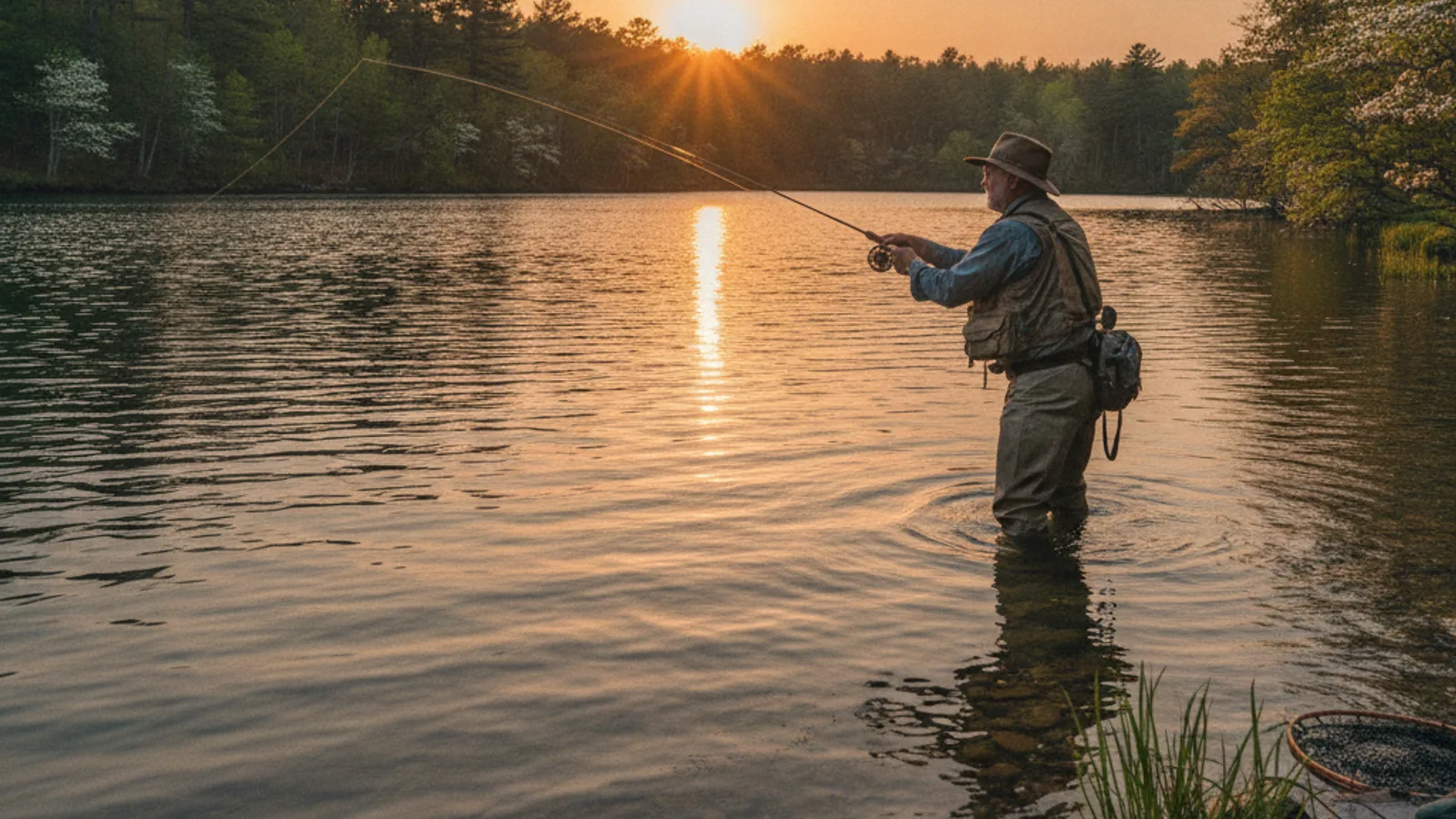
Spring is the most dynamic fishing season of the year. From ice-out in March to warm-water patterns in June, every week brings new opportunities as different species activate on different schedules. This month-by-month guide tells you exactly what to target, where to find it, and how to catch it.
March: The Early Bite
March is about patience and opportunity. Water temperatures are climbing from the 30s into the mid-40s in northern states, while southern anglers are already seeing temps in the 50s and 60s. The fish that bite first are the ones that never fully shut down over winter.
Trout (Prime Time)
March is the start of stocking season in most states. Departments of Natural Resources begin dumping thousands of rainbows and browns into lakes, ponds, and tailraces. Freshly stocked trout are aggressive and naive.
- Gear: Ultralight spinning rod (4-6lb test), size 8-12 hooks
- Baits: PowerBait (chartreuse and rainbow), small Rooster Tails (#1-2), live worms under a bobber
- Where: Stocked ponds, put-and-take lakes, tailraces below dams
- Tip: Check your state's stocking schedule online, fish within 48 hours of a fresh stock for easiest catches
Walleye (Spawning Run)
Walleye spawn early, often when water temps are still in the low 40s. They run up rivers, stack below dams, and crowd rocky shorelines. The walleye spawn is one of the most concentrated fishing opportunities of the year.
- Gear: Medium-light spinning rod, 6-8lb fluorocarbon
- Baits: Jig and minnow (1/8-1/4oz), hair jigs, Rapala Husky Jerks in perch or shad patterns
- Where: River mouths, dam tailraces, rocky points and shoals
- Tip: Fish at night or low light, walleye eyes are built for it
Crappie (Starting to Move)
In southern states, crappie are already staging in deeper water near spawning flats. In the North, they're still in winter haunts but beginning to shift. Full crappie guide →
March Pro Tip: Focus on the warmest water you can find. South-facing banks, dark-bottomed bays, and areas near warm-water discharges can be 5-10°F warmer than the main lake, and that's where the fish are.
April: The Transition
April is when spring fishing truly explodes. Water temps climb through the 50s and into the low 60s. Multiple species are active simultaneously, making it the most versatile month of the year.
Bass (Pre-Spawn Staging)
This is trophy bass season. Big females are staged on secondary points, creek channel bends, and transitions between deep and shallow water. They're feeding heavily to prepare for spawning. More on bass timing →
- Gear: Medium-heavy baitcasting rod, 12-15lb fluorocarbon
- Baits: Jerkbaits (Megabass Vision 110), lipless crankbaits (Strike King Red Eye Shad), squarebill crankbaits in crawfish patterns
- Where: Secondary points, channel swings near flats, riprap banks
- Tip: Focus on 45° banks where deep water meets spawning flats, bass use these as highways
Crappie (Spawning)
Crappie spawn earlier than bass, typically when water hits 56-64°F. They pile into shallow brush, stake beds, and laydowns in enormous numbers. This is the easiest crappie fishing of the year.
- Gear: Ultralight or light spinning rod, 4-6lb line
- Baits: 1/16oz jigs (chartreuse/white, pink/white), live minnows under slip bobber
- Where: Brush piles in 2-6ft, fallen trees along flat banks, stake beds, boat docks
- Tip: Use a slip bobber set to keep your bait 12-18 inches off the bottom in brush
Walleye (Post-Spawn Recovery)
After spawning, walleye scatter and can be tough for a week or two. Then they settle into predictable spring patterns, windblown shorelines, emerging weed edges, and rocky transitions.
Trout (Peak Stocking)
April is peak stocking month nationwide. Wild streams are also producing well as water temps enter the 45-55°F sweet spot. Nymphing with stonefly and mayfly patterns is deadly on wild streams.
May: Peak Spring
May is the month everything comes together. Water temps are solidly in the 60s for most of the country. This is the single best month of the year for total fishing quality across species.
Bass (Spawn and Post-Spawn)
Early May sees bass moving onto beds in 1-4 feet of water. By mid-to-late May, many have finished spawning and are transitioning to post-spawn patterns. Find bass staging areas on depth maps →
- Spawning bass: Texas-rigged creature baits (green pumpkin, white) slowly worked near visible beds
- Post-spawn bass: Topwater starts working, buzzbaits, Whopper Ploppers, and walking baits early morning over shallow flats
- Where: Protected coves and pockets with hard bottom for spawners; main lake points and grass lines for post-spawn
Crappie (Post-Spawn)
Crappie move off the banks and suspend over deeper structure, brush piles in 8-15 feet, bridge pilings, and channel ledges. Spider rigging with multiple poles or vertical jigging works well.
Walleye (Spring Pattern)
Walleye are fully recovered and feeding aggressively on emerging weed flats and rocky shorelines. Crawler harnesses, crankbaits, and slip bobber rigs with leeches are all productive.
Catfish (Ramping Up)
Channel catfish become increasingly active as water warms past 60°F. Cut shad, chicken liver, and prepared baits fished on the bottom near channel bends, holes, and riprap produce well.
May Pro Tip: Watch the weather. May brings frequent fronts. Fish aggressively on the falling barometer (24 hours before a front), then switch to finesse presentations for the 1-2 days of high pressure that follow.
June: Summer Transition
June bridges spring and summer. Water temps climb through the 70s, and fish settle into summer patterns. Early morning and evening become the prime windows as midday surface temps get too warm for many species.
Bass (Post-Spawn to Summer)
The post-spawn topwater bite is some of the most fun fishing of the year. By mid-June, bass are moving to summer structure, main lake points, ledges, offshore humps, and deep grass. Finding fish on structure →
- Early June: Topwater (buzzbaits, frogs, poppers) at dawn, swim jigs and ChatterBaits along grass edges midday
- Late June: Deep cranking ledges, Carolina rigs on points, drop shots on offshore brush piles
Trout (Go Deep or High)
Stocked trout in warmwater lakes will be deep, find the thermocline (usually 15-25ft) and fish just above it. Wild trout streams are best fished early morning before water temps climb. Mountain streams stay productive all day.
Panfish (Spawning Beds)
Bluegill and other sunfish spawn in June when water hits 70-80°F. They make visible beds in sandy or gravelly shallows. Small jigs, worms, and crickets produce fast action. Great for kids →
Catfish (Prime Time)
Channel cats and flatheads are fully active. Night fishing with cut bait, live bluegill (where legal), or stink baits near deep holes and channel bends is excellent. Night fishing tips →
Essential Spring Gear Checklist
- Thermometer: A $10 digital water thermometer is the most important spring fishing tool, check it every trip
- Polarized sunglasses: Essential for sight fishing beds and spotting shallow structure
- Rain gear: Spring means rain. A quality rain suit keeps you fishing when others go home
- Layered clothing: Mornings can be 40°F, afternoons 70°F, dress in removable layers
- Landing net: Spring fish are heavy with eggs, net them to prevent break-offs and reduce stress
Reading Conditions for Spring Success
Spring fishing success depends on reading conditions correctly. Here's what to monitor:
- Water temperature: The single most important variable. Temperature guide by species →
- Barometric pressure: Fish the falling barometer before fronts. Barometric pressure guide →
- Moon phase: New and full moon periods create stronger feeding windows. Moon phase guide →
- Water clarity: Stained water warms faster, throw brighter colors. Clear water, downsize and use natural colors
- Wind: Wind pushes warm surface water and baitfish toward windblown shores, fish there
Plan Your Spring Trips with Real-Time Data
Check solunar periods, weather, and conditions at your favorite fishing spot.
Check fishing conditions near you →Frequently Asked Questions
What is the best month for spring fishing?
May is the single best month overall, multiple species are active, water temps are ideal, and both spawning and post-spawn fish are catchable. But the best month for a specific species varies: March for walleye, April for crappie, and May-June for bass.
What water temperature triggers the spring bite?
Most gamefish species become noticeably more active once water passes 50°F. Crappie spawn at 56-64°F, bass at 62-68°F, and walleye at 42-50°F. A digital thermometer is the most valuable $10 tool you can own in spring.
Should I fish shallow or deep in spring?
Progressively shallower as spring advances. In March, fish are often still in 15-25ft of water. By April-May, spawning activity pushes most species into 1-8ft. By June, fish split, some go deep for summer, others stay shallow for the bluegill spawn.
Is spring fishing better after rain?
Yes, warm spring rain raises water temperature, adds stain that makes fish less wary, and washes food into the water. The day after a warm rain is often the best fishing day of the spring. Cold rain has the opposite effect. More on weather and fishing →
FISH SMARTER ⚓
FIND YOUR SPOT →