Home › Blog › Best Fish Finders 2026
Best Fish Finders 2026: Picks by Use Case
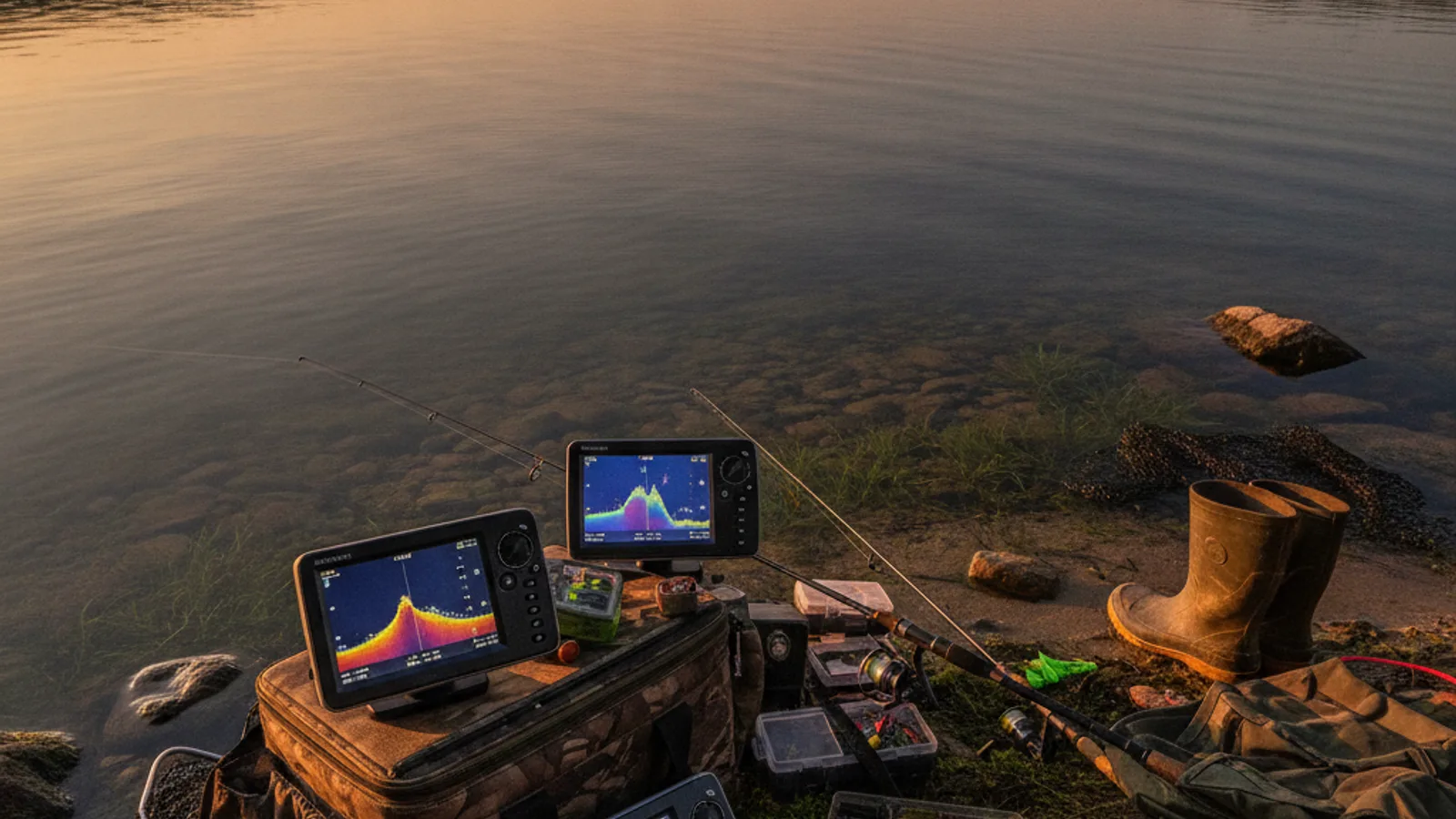
The fish finder market is dominated by four brands, Garmin, Lowrance, Humminbird, and Helix, and almost every “best of” list ranks them differently because there’s no single best unit. The right finder depends entirely on where you fish, what depths you target, and what boat or kayak you’re mounting on.
This guide is organized by use case. If you want a quick answer: jump to quick picks.
At a Glance
 Garmin Striker Vivid 5cv, Easy-to-Use 5-inch Color...
 Humminbird Helix 7 Chirp MEGA DI GPS G4 Fish Finder...
 HDS-9 Live - 9-inch Fish Finder with Active Imaging 3...
 Marcum LX-7 Ice Fishing Sonar System/Fishfinder - LX-7
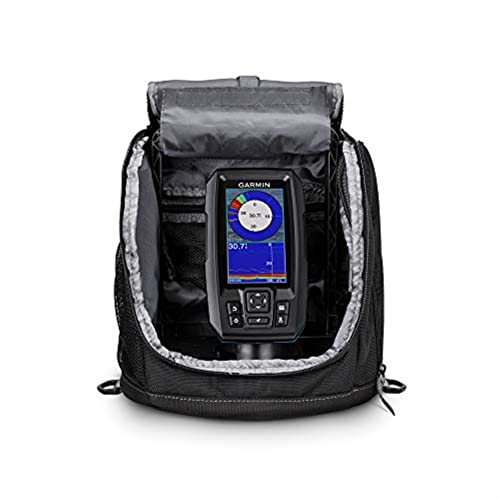 Garmin Striker Plus 4 Ice Fishing Bundle, Includes...
 Echomap 74Cv UHD with U.S. BlueChart G3 and GT24UHD-TM...
Product images and titles from Amazon. As an Amazon Associate we earn from qualifying purchases.
Quick Picks by Use Case
| Use case | Best Pick | Why | Price |
|---|---|---|---|
| Kayak / small boat | Garmin Striker Vivid 5cv | Best display in $200 range, GPS, CHIRP+ClearVu | $200-260 |
| Bass boat (mid-tier) | Humminbird Helix 7 CHIRP MEGA DI | MEGA imaging, Lakemaster compatible | $550-700 |
| Bass boat (premium) | Lowrance HDS Live 9 (I own this one; it has earned its spot.) | FishReveal, ActiveTarget compatible, networks | $1500-2000 |
| Ice fishing (flasher) | MarCum LX-7 | Best display + zoom in flasher class | $650-800 |
| Ice fishing (LCD) | Garmin Striker 4 Ice Bundle | Affordable, GPS waypoints | $200-280 |
| Saltwater inshore | Garmin ECHOMAP UHD 74cv | Coastal charts, IPX7 waterproof | $700-900 |
| Beginner / under $150 | Lowrance HOOK Reveal 5 | Auto-tuning sonar, simple UI | $140-180 |
Kayak Fish Finders
Kayak finders need to be small, battery-friendly, and either splash-proof or fully waterproof. You can’t run a starting battery on a kayak, so power consumption matters more than on a powered boat. Most kayak setups run a 7Ah or 10Ah lithium battery in a dry bag.
Garmin Striker Vivid 5cv
5-inch screen with vivid color (the “Vivid” line is brighter than the standard Striker), built-in CHIRP sonar, ClearVu down-imaging, and GPS waypoint marking. Best display we’ve seen at the $200 mark.
Pros
- Bright enough to read in direct sun
- GPS for marking productive spots
- Includes CHIRP transducer
Cons
- No mapping (waypoints only)
- 4-pin transducer connector limits upgrades
Mounting: Use a RAM ball mount with a transducer arm. Don’t shoot through the hull on a kayak unless it’s a flat polyethylene hull, air pockets in foam-filled hulls block sonar.
Bass Boat Fish Finders (Mid-Tier)
Mid-tier bass boat finders ($500-800) hit the value sweet spot. You get serious imaging tech, side-imaging, down-imaging, MEGA frequencies, without the $1500+ premium-tier price tag.
Humminbird Helix 7 CHIRP MEGA DI GPS G4N
7-inch screen, MEGA Down Imaging (best resolution at distance under 80 ft), CHIRP sonar, GPS, and AutoChart Live mapping. Compatible with LakeMaster premium maps.
The MEGA imaging tier (1.2 MHz) is the differentiator, you can identify individual fish vs. structure at distances where standard down-imaging blurs everything together.
Check current price →Garmin ECHOMAP UHD 74cv
7-inch UHD screen, Garmin’s ClearVu and SideVu, and pre-loaded with detailed Quickdraw Contours map data. Includes Garmin Navionics charts (one-year subscription).
Check current price →Bass Boat Fish Finders (Premium)
Premium fish finders ($1200-3000+) add live forward-looking sonar (Garmin LiveScope, Lowrance ActiveTarget, Humminbird MEGA Live), 9-12 inch displays, and full networking with multiple transducers. Tournament anglers run these. For most weekend bass fishermen, mid-tier is enough.
Lowrance HDS Live 9
9-inch full-touch display, FishReveal (overlays sonar returns on down-imaging for instant fish ID), networks with multiple HDS units, and supports ActiveTarget live sonar (sold separately).
Best ecosystem if you plan to add live sonar later, ActiveTarget integration is the cleanest in the industry.
Check current price →Garmin ECHOMAP Ultra 102sv with LiveScope Plus bundle
If you want LiveScope (the live forward-looking sonar that’s revolutionized tournament bass fishing), this is the best entry point. 10-inch display, full LiveScope Plus transducer included.
Check current price →Ice Fishing Fish Finders
Ice fishing splits into two camps: flashers (analog-style circular display showing depth and fish in real-time) and LCD units (essentially regular fish finders adapted for ice). Flashers are still preferred for tournament ice anglers because the response time is faster than LCDs.
MarCum LX-7
Best display in flasher class, 8-inch diagonal screen with both flasher view and graph view modes. Adjustable zoom on bottom 3 ft and 6 ft (essential for distinguishing your jig from fish). 12V lithium battery in carrying case.
Check current price →Garmin Striker 4 Ice Fishing Bundle
4-inch CHIRP sonar with ice fishing transducer and portable carrying case. GPS waypoint marking for finding productive holes again. Lithium battery included.
Not as fast-response as a true flasher, but offers GPS, a real advantage for marking spots across miles of frozen lake.
Check current price →Saltwater Fish Finders
Saltwater finders need higher waterproofing rating (IPX7 minimum), corrosion-resistant transducer cables, and ideally NMEA 2000 networking for integration with chartplotters and GPS. Coastal charts (NOAA) are standard.
Garmin ECHOMAP UHD 74cv (Saltwater Charts Edition)
Same hardware as the bass boat version but ships with detailed Garmin Navionics+ saltwater charts including marina data and depth contours. IPX7 waterproof rating.
Check current price →How to Choose: The Decision Framework
Six questions to answer before buying:
- What boat are you mounting on? Kayak/jon boat = 4-5 inch screen. Bass boat = 7-9 inch. Center console = 9-12 inch.
- What’s your max depth? Under 100 ft = 200 kHz traditional sonar is enough. 100-300 ft = CHIRP sonar pays off. 300+ ft = need a unit with low-frequency CHIRP (50-83 kHz).
- Do you want side-imaging? Side-imaging is the single biggest accuracy upgrade for fishing structure. Worth it for bass, walleye, crappie. Less critical for trolling open water.
- Do you need maps or just waypoints? Mapping units cost 30-50% more. If you fish the same 2-3 lakes, just mark waypoints. If you travel and fish unfamiliar water, get mapping.
- Will you add live sonar later? If yes, buy a unit that supports your future ecosystem (Garmin LiveScope, Lowrance ActiveTarget, Humminbird MEGA Live).
- What’s your real budget? Add 30-40% to the unit’s sticker price for the transducer mount, battery, fuse, wiring, and mounting hardware.
Accessories You’ll Need
- 12V 10Ah lithium battery, for kayaks. Run time: 8-12 hours per charge.
- RAM mount fish finder mount, the standard for kayak and small-boat mounting.
- Transducer arm for kayak, deploys the transducer in the water without permanent installation.
- Sun cover for fish finder, protects the screen between trips. UV damages displays over years.
- Marine-grade wire + fuse kit, for proper installation. Don’t use auto-grade wire on a boat.
How to Read Your Fish Finder: What the Display Shows You
Buying the right unit matters less than knowing how to interpret what it shows. Fish finders output sonar data that takes a little learning to read correctly.
Fish arches
When a fish swims through the sonar cone, it enters one edge, passes through the center (strongest signal, returns the brightest mark), and exits the other edge. The result on the screen is an arch. A complete arch means the fish passed cleanly through the full cone. A partial arch or a dot means the fish was at the cone's edge or was stationary. Arches only appear when the boat is moving; at anchor, fish appear as horizontal lines or blips depending on unit speed.
Hard vs. soft bottom
A hard bottom (rock, gravel, packed sand) returns a sharp, thin, bright line. A soft bottom (silt, mud, heavy vegetation) returns a thicker, fuzzier line because the sonar signal penetrates and scatters in the substrate. A double bottom (two parallel lines) indicates a layer of different density, often fine silt over a denser base. Walleye and bass hold differently over hard vs. soft bottom, so recognizing this saves time on the water.
Thermoclines
A thermocline is a depth zone where water temperature drops sharply. On sonar, it appears as a horizontal haze or a broken return band across the full screen at a consistent depth. During summer stratification, most gamefish stack above the thermocline (the oxygenated layer) or along its upper edge. Spotting a thermocline at 22 ft tells you not to drop below 22 ft when fishing open-water summer conditions.
Side-imaging shadows
Side-imaging renders a near-photographic image of the bottom beside the boat. Structure appears in detail that traditional down-sonar cannot capture. Learn to read shadows: an object with a long shadow is tall (like a vertical brush pile); a flat shadow indicates a low-profile object (like a mat of grass or a flat rock ledge). The brighter the return, the denser the object.
Transducer Installation: Placement and Common Mistakes
The transducer is the sensor that sends and receives sonar pulses. Poor placement is the most common reason a new fish finder underperforms or blanks at speed.
Bass boat and jon boat
Mount the transducer on the starboard (right) side of the transom, at least 15 inches from the engine's lower unit to stay out of its turbulence. The face of the transducer should be level with or very slightly below the bottom of the hull, never angled up or down more than a few degrees. Avoid mounting behind any hull ribs, steps, or strakes that create aeration. At speed, a few air bubbles past the face will blank the sonar; a consistent stream of bubbles means the placement is wrong. Move 2-3 inches at a time until the screen stays clean above 20 mph.
Kayak
Most kayak installs use a transducer arm that deploys the sensor over the side into calm water, bracketed to a scupper hole or gunwale rail. This is preferable to shooting through the hull unless you have a flat-bottom polyethylene kayak with no air gap. Hollow or foam-filled hulls block sonar. Power from a 7Ah or 10Ah lithium battery in a dry bag; draw is typically 0.4-0.8 amps at 12V, giving 8-12 hours per charge on a 7Ah battery.
Ice fishing
Lower the transducer directly into the hole with the cable. Coil excess cable loosely to avoid kinks that degrade the signal wire. Most ice flashers include a foam float that suspends the transducer just below the ice surface. Keep the hole clear of ice chips, which scatter signal at the cone edge and create false returns.
Frequently Asked Questions
Are expensive fish finders worth it?
For tournament fishermen, yes, live sonar (LiveScope, ActiveTarget) is genuinely game-changing. For weekend anglers fishing under 50 ft of water, a $200-400 unit (Garmin Striker Vivid 5cv, Lowrance HOOK Reveal 7) catches 90% of the value. The diminishing returns above $800 are real.
What’s the difference between CHIRP and traditional sonar?
Traditional sonar transmits a single frequency (typically 200 kHz). CHIRP (Compressed High Intensity Radar Pulse) sweeps through a range of frequencies (e.g., 150-240 kHz). Result: better target separation in deep water and clearer fish-from-structure distinction. Almost every modern unit at $200+ now has CHIRP.
Do I need side-imaging?
If you fish structure (rock piles, weed lines, brush piles), yes, side-imaging maps a 240-ft swath next to your boat in detail no traditional sonar can match. If you troll open water for pelagic fish, no, you just need to know depth and find bait balls.
How deep can fish finders see?
Most CHIRP units in the $300-800 range read clearly to 250-400 ft. Premium units with low-frequency CHIRP (50 kHz) can read to 1000 ft+. For freshwater fishing in the US, 400 ft of range covers virtually every lake.
Can I install a fish finder myself?
Yes. Most kayak installs are 30-60 minutes. Bass boat installs (running wire from battery to console, mounting transducer to transom) are 2-4 hours. Watch the brand’s installation videos before starting, getting the transducer angle right is critical for sonar quality.
What is the difference between down-imaging and side-imaging?
Down-imaging uses a very narrow, flat sonar beam aimed straight down to produce a nearly photographic image of what is directly below the boat. Side-imaging fires similar beams out to each side, mapping a wide swath of bottom (up to 150 ft per side on most units) as you move. Down-imaging is better for seeing fish in the water column directly below you. Side-imaging is better for locating structure, weed edges, and brush piles that may be away from your current track. Most mid-range and premium units include both in a combo transducer.
What is LiveScope and is it worth the cost?
LiveScope (Garmin), ActiveTarget (Lowrance), and MEGA Live (Humminbird) are live forward-looking sonars that show fish moving in real time in front of and below the boat, at ranges of 50-150 ft, rather than just what the transducer has already passed over. Tournament anglers credit live sonar with fundamentally changing how bass fishing is practiced. The cost is significant: a LiveScope Plus system runs $1,200-1,600 above the fish finder's base price. For competitive anglers fishing clear or deep water, it measurably changes catch rates. For casual or shore anglers, it is a luxury rather than a necessity at this stage of the technology's price curve.