Surf Fishing Tips: Beginner's Guide to Gear, Technique & Best Conditions
Affiliate disclosure: Fishn Buddy earns a small commission on qualifying Amazon purchases at no extra cost to you. We only recommend gear we'd actually use. Links use tag twfishnbuddy-20.
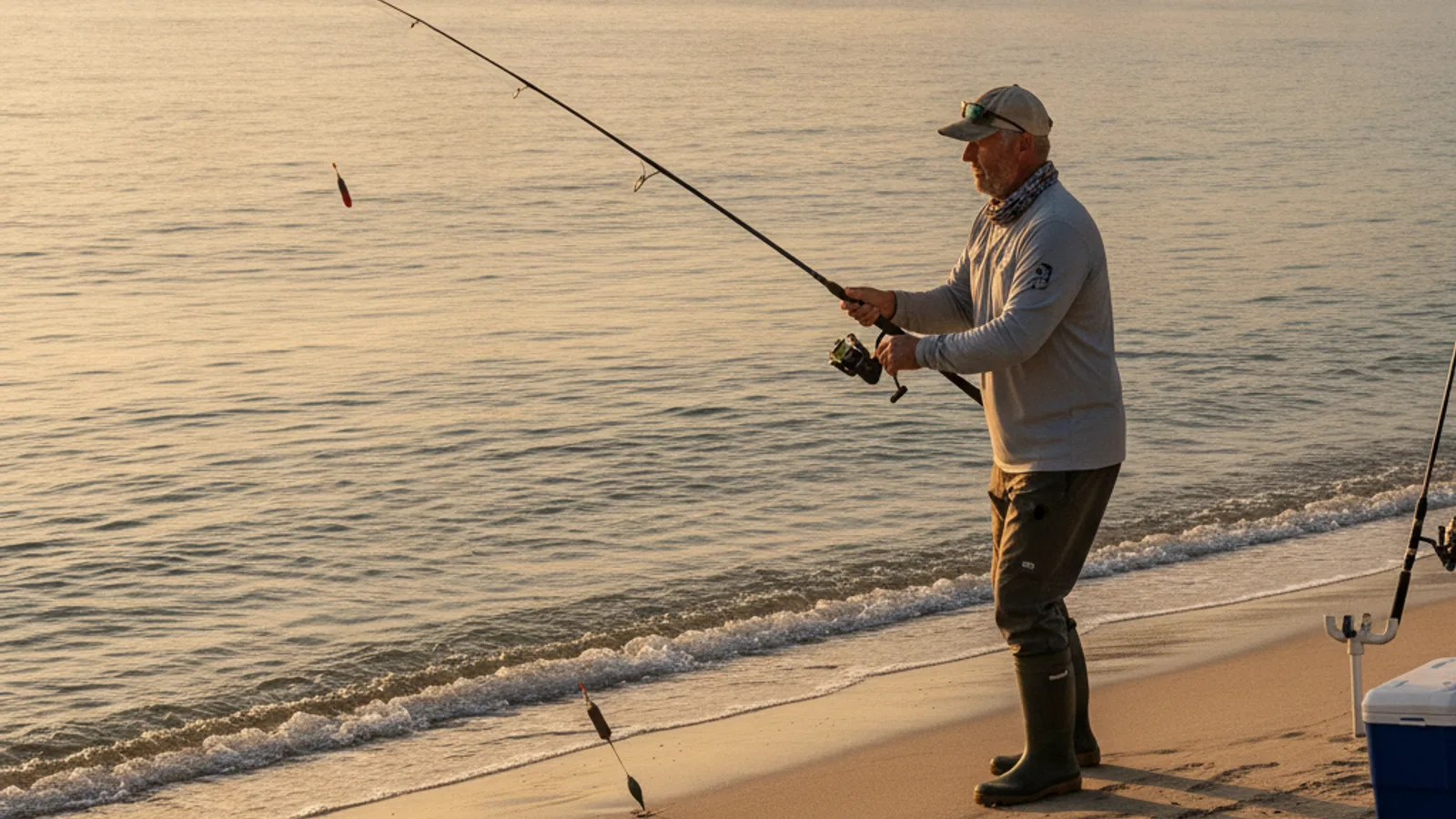
Surf fishing is one of the most accessible and rewarding ways to fish saltwater. No boat, no dock fees, no reservations, just you, your rod, and miles of open beach. Whether you're targeting pompano in Florida, striped bass in the Northeast, or redfish along the Gulf Coast, these surf fishing tips will help you catch more fish from shore.
Essential Surf Fishing Gear
Rod and Reel
Surf fishing demands longer rods than typical saltwater setups. A 9-10 foot medium-heavy spinning rod is the sweet spot for beginners, long enough to cast past the breakers, but not so long it's unwieldy. Pair it with a 5000-6000 size spinning reel rated for saltwater.
Spool with 20-30 lb braided line and attach a 30-40 lb fluorocarbon shock leader. The shock leader absorbs the impact of power casts and resists abrasion from sand and shells. Connect them with a reliable knot like the FG or Alberto.
Sand Spikes (Rod Holders)
PVC or aluminum sand spikes let you plant your rod in the sand while waiting for a bite. Essential for bait fishing, you can set multiple rods and cover different zones. Push them deep into the sand at a slight angle so the rod tip stays up.
Tackle and Rigs
- Pompano rig (double drop): Two hooks above a pyramid sinker, the go-to for pompano, whiting, and croaker
- Fish-finder rig: Sliding sinker above a swivel with a leader to the hook, great for redfish, flounder, and drum
- Pyramid sinkers: 2-4 oz depending on current. They grip the sand better than round weights.
- Circle hooks: Sizes 1/0-4/0 for catch and release friendly fishing
Budget Setup: You can start surf fishing for under $150. A 10-foot combo ($80-100), a bag of pompano rigs ($5), pyramid sinkers ($8), and sand fleas you dig yourself (free). The beach doesn't charge admission.
Reading the Beach
The beach isn't a flat, featureless expanse, it's full of underwater structure that holds fish. Learning to "read" the beach is the single most important surf fishing skill.
Troughs
Troughs are the deeper channels between sandbars and the shore. Fish cruise through troughs looking for food. You can spot them by looking for darker water (deeper) between areas of breaking waves (shallow sandbars). Cast into troughs, not over them.
Cuts and Channels
Gaps in sandbars where water flows through during tide changes. These cuts funnel bait and create ambush points for predators. Look for areas where waves break on either side but water flows smoothly through the middle. These are prime casting targets.
Points and Jetties
Where the beach angles or where man-made structures extend into the water, current patterns change and bait concentrates. These areas consistently hold more fish than featureless stretches of beach.
Scout at Low Tide
Visit your beach at low tide before fishing. You'll see sandbars, troughs, cuts, and structure that are invisible at high water. Take mental notes or photos, these features shift slowly and will still be there when the water comes back up.
Best Conditions for Surf Fishing
Tide
The incoming tide is your best friend in the surf. As water rises, it pushes bait against the shore and fills troughs where predators feed. The last 2 hours of the incoming tide are consistently the most productive. Plan your session around this window using tide charts.
Time of Day
Dawn and dusk are prime time. Low light emboldens predatory fish to move into shallow water to feed. The golden hour, the first 60-90 minutes after sunrise, often produces the best action of the day. Night surf fishing can also be excellent, especially around full moons.
Water Clarity
Slightly murky water (you can see 2-3 feet down) is often better than crystal clear conditions. In clear water, fish can see your line and become wary. After a storm stirs things up, the water can be too dirty. Look for that sweet spot of light turbidity.
Wind and Waves
A light onshore wind (5-15 mph) churns up the water, stirs up crabs and sand fleas, and creates feeding conditions. Heavy surf makes fishing difficult and dangerous. Calm, glassy conditions can work but often require lighter tackle and more subtle presentations.
Barometric Pressure
A falling barometer before a front often triggers aggressive feeding in the surf. The day before a storm can produce exceptional surf fishing. Rising pressure after a front passes typically slows things down for 24-48 hours.
Best Surf Fishing Bait
- Sand fleas: Dig them from the wash zone, the #1 pompano bait. Free and incredibly effective.
- Fresh shrimp: Dead or alive, threaded on a hook. Works for almost everything in the surf.
- Cut mullet: Strips or chunks for redfish, bluefish, and larger predators.
- Fishbites: Artificial bait strips that release scent. Great backup when natural bait isn't available.
- Clams: Northeast surf fishing staple for striped bass and fluke.
For more options, check our complete saltwater bait guide.
Surf Fishing Technique
The Cast
Surf casting requires smooth, controlled power, not brute force. Start with the rod behind you at about 45 degrees, shift your weight from back foot to front, and let the rod do the work. The long rod acts as a lever, generating distance without excessive effort. Practice in an open field before hitting the beach.
Working the Water
Cast to different distances to find where fish are holding. Start close (just past the shorebreak), then work your way out. Many beginners cast as far as possible and miss fish feeding 30 feet from shore. Cover the inner trough first.
Detecting Bites
With bait on the bottom, watch your rod tip for movement. A series of short taps usually means small fish or crabs. A steady pull or the rod loading up means a real bite. With circle hooks, don't set the hook, just reel tight and let the hook do its job.
Species You'll Catch
- Pompano: The prize catch of surf fishing. Found along Gulf and Atlantic beaches in warm water.
- Whiting: Abundant, easy to catch, and excellent eating. Great confidence-builder for beginners.
- Redfish: Cruise the surf zone, especially in fall. Fight hard and taste great.
- Bluefish: Aggressive feeders that attack anything. Common along the Atlantic coast.
- Striped Bass: The king of Northeast surf fishing. Fall runs bring trophy fish to the beach.
- Flounder: Lie in wait along the edges of troughs and cuts.
Plan Your Surf Fishing Session
Check tides, weather, and fishing conditions at your beach, free for 3,900+ coastal locations.
Check Beach Conditions →Frequently Asked Questions
What size rod do I need for surf fishing?
A 9-10 foot medium-heavy spinning rod is ideal. The extra length helps cast beyond breaking waves. Pair with a 5000-6000 size reel and 20-30 lb braid.
What is the best tide for surf fishing?
The last two hours of the incoming tide and the first hour after high tide. High water pushes baitfish against shore and fills troughs where predators feed.
Do I need waders for surf fishing?
Not required, but they extend your casting range. In warm weather, wade in shorts. In cooler weather, neoprene waders keep you comfortable and let you reach productive water beyond the shorebreak.
What is the best bait for surf fishing?
Sand fleas, cut mullet, fresh shrimp, and Fishbites are top choices. Sand fleas are especially effective for pompano and whiting, and they're free to dig.
Surf Fishing Gear Toolkit
Everything you need to start surf fishing from a single Amazon order:
- 9-10 ft Medium-Heavy Surf Rod, the foundation; Penn Battle and Ugly Stik are reliable starter options
- 5000-6000 Saltwater Spinning Reel, sealed bearings are essential in salt spray
- 20-30 lb Braided Line, thinner diameter than mono for longer casts
- 40 lb Fluorocarbon Leader, shock leader for heavy casts, abrasion resistance on sand and shells
- Pompano / Double Drop Rigs, pre-tied with floats, ready to fish right away
- Pyramid Sinkers (2-4 oz assortment), grip the sand better than bank sinkers in current
- Aluminum Sand Spikes (2-pack), hold two rods simultaneously while you wait for a bite
- Fishbites Artificial Bait, synthetic scent strips when fresh bait isn't available; stays on the hook in heavy surf
See also: Best Fishing Rod & Reel Combos 2026, our full gear comparison for freshwater and inshore saltwater setups.
FISH SMARTER ⚓
FIND YOUR SPOT →