Best Fishing Times by Moon Phase, Complete Lunar Guide
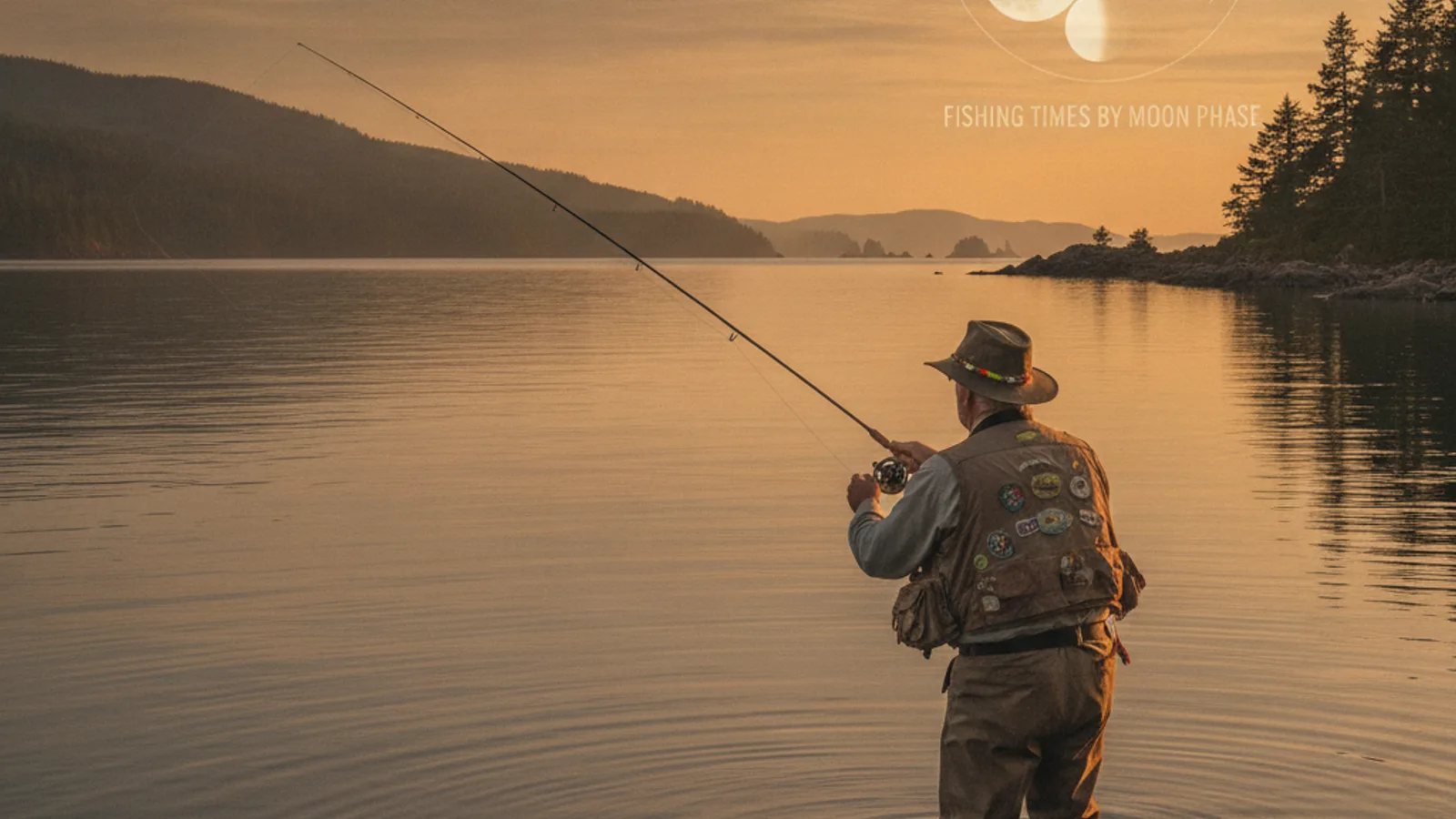
Experienced anglers have tracked the connection between the moon and fishing success for centuries. Whether it's the gravitational pull on tides, the amount of nighttime light, or something more subtle, the moon phase is one of the most reliable predictors of fish feeding activity.
This guide explains exactly how each moon phase affects fishing, when the best feeding windows occur, and how to use this knowledge to plan more productive trips.
Why the Moon Affects Fishing
The moon influences fishing through three primary mechanisms:
- Gravitational pull and tides: The moon's gravity creates tidal movements in oceans, bays, and even large lakes. Stronger tides mean more water movement, which pushes baitfish and triggers feeding.
- Light levels: A bright full moon illuminates the water at night, allowing fish to feed after dark. This can shift feeding patterns, fish that gorge all night may be less active at dawn.
- Biological rhythms: Many aquatic organisms, from plankton to crustaceans, have reproductive cycles tied to lunar periods. These cycles create waves of food availability that fish key in on.
The solunar theory builds on these principles, identifying specific daily feeding windows based on the moon's position relative to your location.
Fishing by Moon Phase, Phase by Phase
New Moon, Best Overall Phase
Fishing rating:
The new moon is widely considered the best moon phase for fishing. Here's why:
- The sun and moon are on the same side of Earth, creating the strongest combined gravitational pull
- Spring tides (highest highs, lowest lows) create maximum water movement
- Dark nights mean fish can't feed effectively after dark, so they're hungrier during the day
- Solunar major periods during a new moon are at their peak intensity
Best strategy: Focus on dawn and dusk. Fish the major solunar periods aggressively. Use reaction baits that create vibration and flash, the increased tidal current makes fish more willing to chase.
First Quarter, Transitional Phase
Fishing rating:
The first quarter (half moon, right side illuminated) falls between the new and full moon. Conditions are moderate:
- Tides are weaker (neap tides), less water movement overall
- Some nighttime illumination but not enough to dramatically shift daytime feeding
- Fish activity is more sporadic and less predictable
Best strategy: Concentrate on early morning and late afternoon. Fish slower presentations near structure. The reduced tidal movement means fish won't roam as far, so target ambush points.
Full Moon, Trophy Phase
Fishing rating:
The full moon is the second-best phase overall, but it requires an adjusted approach:
- Strong spring tides again, maximum water movement like the new moon
- Bright nights allow extended nighttime feeding, especially for bass, walleye, and catfish
- Daytime fishing can be slower because fish fed heavily overnight
- Many trophy fish (especially largemouth bass) are caught during full moon nights
Best strategy: Consider night fishing if regulations allow. For daytime trips, fish the first hour of light, bass that fed all night often take one last meal at dawn. Use slower, more subtle presentations as fish may be less aggressive.
Last Quarter, Challenging Phase
Fishing rating:
The last quarter (half moon, left side illuminated) is generally the most challenging phase:
- Neap tides return, minimal water movement
- Moon rises around midnight, providing some late-night feeding opportunity
- Daytime activity tends to be concentrated in shorter windows
Best strategy: Focus tightly on the solunar major and minor periods, they become your primary feeding windows. Fish structure-oriented presentations (jigs, drop shots, bottom baits) as fish tend to stay near cover.
The 3-Day Rule
The most productive fishing typically occurs in the three days surrounding a new or full moon, the day before, the day of, and the day after. This is when tidal influence and gravitational pull are at their strongest.
If you can only fish a few days per month, target these six days (three around each major phase) for the best results. Many tournament anglers specifically schedule their practice and competition days around these windows.
Pro tip: The Fishn Buddy forecast shows you moon phase data and solunar periods for any date. Use it to identify the best 6 days of any month before requesting time off work.
Moon Phase + Time of Day = Peak Windows
The moon phase sets the overall conditions, but the time of day determines your specific fishing windows. Here's how they interact:
Dawn + New Moon = Best Window of the Month
Fish are hungry from a dark night with no moonlight feeding. The first solunar major period of the day during a new moon is statistically the most productive window in any given month.
Dawn + Full Moon = Depends on Night Activity
If fish fed heavily under bright moonlight, dawn can be slow. But if it was cloudy overnight (blocking moonlight), dawn fishing can be excellent even during a full moon.
Midday Solunar Periods
During new and full moons, the major solunar periods (moon overhead and moon underfoot) can produce surprising midday action. Don't write off the hours between 10 AM and 2 PM if a major period falls there.
Dusk Feeding
The last hour of light is productive in all moon phases. During first and last quarter moons, when other windows are less reliable, dusk becomes your highest-percentage opportunity.
Moon Phase Effects by Species
Different species respond to moon phases in different ways:
- Largemouth bass: Most affected by moon phase. New moon produces the most consistent daytime action. Full moon produces the biggest fish but often at night.
- Smallmouth bass: Less moon-sensitive than largemouth. Weather and water temperature tend to override lunar factors.
- Walleye: Excellent full moon species. Their superior night vision gives them an advantage under bright moonlight.
- Crappie: Strong new moon preference. Crappie move shallow and feed aggressively during dark new moon nights and the following mornings.
- Catfish: Feed actively during both new and full moons. Full moon channel catfish fishing can be spectacular.
- Saltwater species: Strongly tied to tidal movement, making new and full moons (spring tides) consistently the best periods for redfish, snook, tarpon, and striped bass.
Moon Phase and Spawning
Many fish species use moon phases as spawning triggers:
- Bass: Often move onto beds during the full moon closest to when water temperatures reach 62-68°F. The bright nights allow them to guard nests more effectively.
- Crappie: Tend to spawn around the new moon in spring, moving into the darkest, shallowest areas.
- Redfish and snook: Spawn on new and full moons during summer and fall, using the strong tidal flows to distribute eggs.
Understanding these spawning connections helps you target pre-spawn feeding binges, often the best fishing of the entire year. Check our spring fishing guide for seasonal timing.
How to Use Moon Phase Data Practically
- Check the calendar. Open Fishn Buddy and look at the moon phase for the next 2-4 weeks. Identify new and full moon dates.
- Plan around the 3-day windows. If possible, schedule trips for the day before, day of, or day after new/full moons.
- Cross-reference with weather. A new moon + approaching front (falling barometric pressure) is the absolute best combination. Read more in our pressure guide.
- Check solunar times. On your chosen day, identify major and minor periods. Plan to be on the water at least 30 minutes before the first major period.
- Adjust for full moon nights. On full moons, consider starting earlier (pre-dawn) or fishing at night if possible.
Check Moon Phase & Solunar Times
Free moon phase data and solunar feeding periods for any fishing location.
Open Fishn Buddy →Want this worked out for your water each week? Hit "Save this lake" on any lake page to build your own list, then get a Friday email with the weekend outlook for exactly those waters. Free, no account.
Frequently Asked Questions
Which moon phase is best for fishing?
The new moon is the best moon phase for daytime fishing, with the full moon a close second for night fishing. Both produce stronger gravitational pull and more fish activity than the quarter phases, and the effect peaks the day before, the day of, and the day after the exact phase.
Is the new moon or full moon better for fishing?
For daytime fishing, the new moon is generally better because fish can't feed at night (too dark) and are hungrier during the day. For night fishing, the full moon is superior, bright conditions let predators like walleye and bass hunt effectively. Both produce stronger tides than quarter phases.
How many days does a moon phase affect fishing?
The strongest effects last about 3 days, the day before, day of, and day after the exact new or full moon. Some anglers extend this window to 5 days (2 before, day of, 2 after), but the closer to the exact phase, the stronger the influence.
Does moon phase matter for freshwater fishing?
Yes. While the tidal effect is minimal on most freshwater lakes, the gravitational pull still influences fish biology and feeding patterns. Studies have shown that bass tournament weights correlate positively with new and full moon phases even on landlocked lakes.
FISH SMARTER ⚓
FIND YOUR SPOT →

