Home › Blog › Best Polarized Sunglasses for Fishing 2026
Best Polarized Sunglasses for Fishing 2026: 8 Top Picks by Lens & Budget
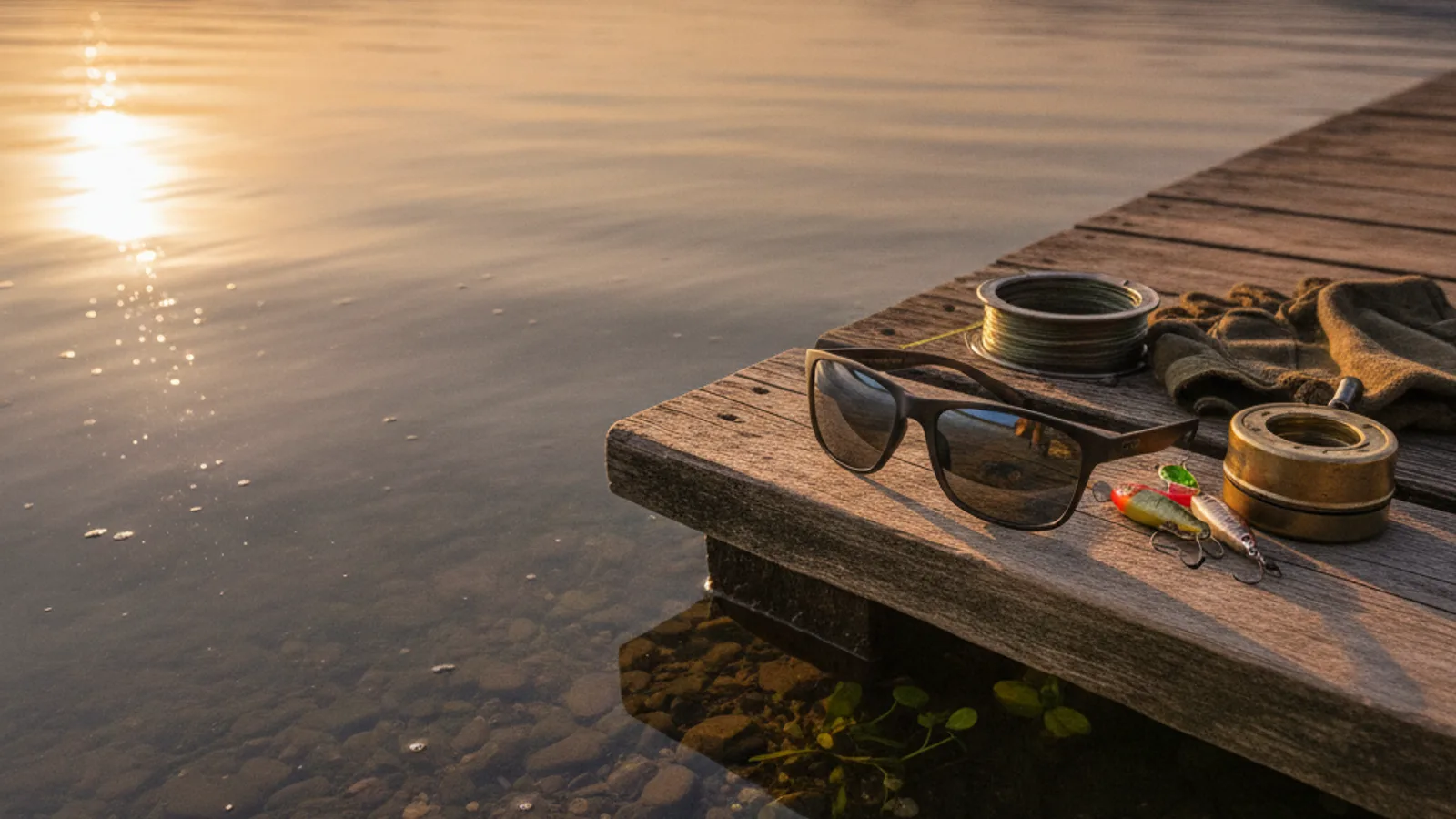
Polarized sunglasses are not accessories for fishing, they’re functional gear. The polarizing filter cuts horizontal glare off the water surface, which is what lets you see fish, bottom structure, and depth changes instead of a mirror of the sky. A good pair turns murky-looking water into readable terrain.
The problem is the range is enormous: from $25 budget polycarbonate to $300 glass lenses engineered specifically for the light conditions on flats, offshore, or trout streams. This guide explains what matters, what doesn’t, and gives you eight specific picks across every use case. Jump to quick picks table to cut to the answer.
At a Glance
 Oakley Turbine Sunglasses Polished Clear/PRIZM Deep...
 Smith Optics womens Guides Choice Sunglasses, Matte...
 Rheos Eddies Floating Polarized Sunglasses | 100% UV...
 Wiley X Tide Plrzd Blu/Grn Blk Gloss
Product images and titles from Amazon. As an Amazon Associate we earn from qualifying purchases.
Quick Picks by Use Case
| Use case | Best Pick | Why | Price range |
|---|---|---|---|
| Best overall (freshwater/inshore) | Costa Del Mar Fantail Pro 580P | 580 lens tech, lightweight, versatile across conditions | $160–190 |
| Best budget (under $40) | KastKing Toccoa Polarized | Polarized polycarbonate, UV400, fishing-specific wrap | $25–40 |
| Best mid-range ($100–160) | Oakley Turbine Prizm Deep Water Polarized | Prizm lens boosts blue/green contrast, O-Matter frame | $130–165 |
| Best for offshore/open water | Maui Jim Peahi HCL Bronze | PolarizedPlus2 glass, maximum glare control on blue water | $245–295 |
| Best for bass/sight fishing | Costa Del Mar Blackfin 580G | Glass lens, amber tint reads shallow water structure | $200–235 |
| Best for trout/fly fishing | Smith Optics Guide’s Choice ChromaPop | ChromaPop amber, unmatched contrast in moving water | $205–250 |
| Best floating (kayak/wading) | Rheos Eddies Floating Polarized | Floats face-up if dropped; lightweight, UV400 | $65–85 |
| Best wraparound coverage | Wiley X Tide Polarized | ANSI Z87.1 safety rating, full-coverage wrap for wind/spray | $80–110 |
What to Look For
Polarization Quality
All polarized lenses reduce glare, but there’s a wide range in how well they let you see into the water. Entry-level polarized ($20–50) use a surface-applied polarizing film, effective for glare reduction but limited water penetration. Premium options (Costa 580, Maui Jim PolarizedPlus2, Smith ChromaPop) use lens construction that filters specific wavelengths, giving noticeably better clarity at depth and at different sun angles. You can test this by looking into clear shallow water at a 45-degree angle, premium lenses show bottom detail where cheaper ones still show significant reflection.
Lens Material: Glass vs. Polycarbonate
Glass lenses are heavier but optically superior, minimal distortion, scratch-resistant, and the polarizing layer is laminated between glass layers so it doesn’t degrade. Polycarbonate (plastic) is lighter, impact-resistant, and less expensive, but can develop micro-scratches and has slightly more distortion. For casual anglers or anyone who’s hard on gear, polycarbonate is the practical choice. For sight-fishing guides or anyone spending 150+ days a year on water, glass pays for itself in longevity and visual clarity.
Lens Color Guide
| Lens Color | Best For | Avoid When |
|---|---|---|
| Amber / Brown | Bass, shallow freshwater, variable light | Full offshore sun (can feel washed out) |
| Gray / Gray Mirror | Offshore, bright sun, natural color perception | Overcast or low-light; low contrast |
| Copper / Rose | Overcast, grass beds, low light, trout streams | Bright midday sun (too much light passes through) |
| Blue Mirror | Open ocean, bluewater trolling | Inshore or freshwater (distorts water color) |
| Green Mirror | All-purpose freshwater, mixed conditions | No strong avoidance; versatile |
Frame Fit and Coverage
Wrap-style frames (frames that curve around the face) block peripheral light and wind. This matters offshore or on windy days, light leaking around flat frames causes eye strain over time. Anglers who wear prescription glasses should look for clip-over fishing polarized lenses or frames that fit over prescription eyewear. A rubber nose pad and rubberized temple tips are worth looking for if you sweat heavily or spend time in spray.
Best Overall: Costa Del Mar Fantail Pro 580P
Costa Del Mar Fantail Pro 580P
Costa’s 580 lens technology blocks the specific wavelengths (580nm) responsible for the most fatiguing water glare. The Fantail Pro uses 580P (polycarbonate) rather than glass, keeping weight down while delivering noticeably better water penetration than non-580 lenses. The large lens shape provides good coverage without being a full wraparound, making it comfortable for all-day wear. Available in multiple 580P tint/mirror combinations, the Green Mirror and Sunrise Silver are the two most popular fishing tints.
Best for: Freshwater bass, inshore saltwater, redfish, snook, all-day boat fishing
Price range: $160–190
Pros
- 580P technology, noticeably better water penetration than standard polarized
- Lightweight polycarbonate (less head fatigue on long days)
- Wide lens shape, good coverage
- Multiple tint options for different water types
- Costa warranty covers manufacturer defects
Cons
- Polycarbonate scratches faster than Costa’s 580G glass option
- Premium price vs. non-Costa alternatives
- Frame can feel large on smaller faces
Best Budget Under $40: KastKing Toccoa Polarized
KastKing Toccoa Polarized Fishing Sunglasses
KastKing is a fishing-specific brand (rods, reels, line), and their sunglasses are built with the same value-first ethos. The Toccoa uses a polarized polycarbonate lens with UV400 coating, a TR90 nylon frame (lightweight and flexible), and a semi-wraparound profile. At $25–35, it delivers real polarization at a price point where losing them overboard doesn’t hurt. The TAC (Tri-Acetate Cellulose) lens construction provides genuine glare reduction, not just tinted plastic pretending to be polarized.
Best for: Anglers new to polarized fishing glasses, kayak anglers worried about drops, kids/youth, backup pair
Price range: $25–40
Pros
- Genuine polarized TAC lens, not just tinted plastic
- UV400 protection
- TR90 flexible frame handles impacts and heat
- Low price means no anxiety about loss overboard
- Multiple color options
Cons
- Water penetration inferior to premium 580/ChromaPop lenses
- Polycarbonate will scratch with regular use
- Not suitable for serious sight fishing
Best Mid-Range: Oakley Turbine Prizm Deep Water Polarized
Oakley Turbine Prizm Deep Water Polarized
Oakley’s Prizm Deep Water lens is engineered to enhance the blue and green color contrast that defines offshore and freshwater environments. Combined with polarization, it reduces glare while boosting visibility into the water column. The Turbine frame uses O-Matter (Oakley’s proprietary stress-resistant nylon), a semi-wrap profile, and Unobtainium rubber nose and temple pads that grip better when wet, a small detail that matters when you’re sweating through the afternoon. Accessible price vs. Costa or Maui Jim glass without a significant performance penalty for most uses.
Best for: Freshwater, inshore, pier fishing; anglers who want Oakley build quality without the premium glass price
Price range: $130–165
Pros
- Prizm lens enhances blue/green contrast meaningfully
- Unobtainium nose and temple pads grip when wet
- O-Matter frame is impact-resistant and lightweight
- Lower cost than Costa/Maui Jim glass options
- Oakley warranty coverage
Cons
- Polycarbonate lens, not as clear as glass at depth
- Prizm Deep Water tint can feel dark in overcast conditions
- Not Costa/Maui Jim level for serious sight fishing
Best Offshore Glass Lens: Maui Jim Peahi HCL Bronze
Maui Jim Peahi Polarized
Named after the famous big-wave break on Maui, the Peahi is Maui Jim’s flagship offshore performance frame. PolarizedPlus2 glass lenses deliver premium anti-glare performance on open water where the sun angle and water reflection are brutal for hours at a stretch. The HCL Bronze (High Contrast Lens) option adds a warm tint that enhances depth perception, useful for reading swells and spotting color changes in the water that indicate baitfish or temperature breaks. High-wrap coverage and a durable Grilamid frame built for salt and UV exposure.
Best for: Offshore trolling, deep-sea fishing, extended days in full sun on blue water
Price range: $245–295
Pros
- PolarizedPlus2 glass, premium clarity and glare reduction
- HCL Bronze tint enhances depth and contrast in open water
- Wraparound coverage blocks peripheral glare
- Grilamid frame withstands saltwater corrosion and UV
- Maui Jim warranty is strong (covers manufacturing defects)
Cons
- Significant price investment
- Heavy glass lenses vs. polycarbonate competitors
- Wraparound style not ideal for those who dislike full coverage
Best for Bass & Sight Fishing: Costa Del Mar Blackfin 580G
Costa Del Mar Blackfin 580G
The 580G suffix means glass lens, Costa’s highest-performance tier. The Blackfin frame pairs it with an amber or sunrise silver tint that is widely considered the gold standard for reading shallow freshwater. Amber pushes green and brown contrast, letting you distinguish bass from shadow against a dark bottom. The tight wraparound reduces peripheral distraction that makes it harder to track moving fish in shallow cover. Guides who sight-fish for bass, redfish, and tarpon in clear-water flats overwhelmingly run glass Costa options, with the Blackfin frame among the most popular.
Best for: Bass sight fishing, flats redfish/tarpon, clear-water shallow lakes and rivers
Price range: $200–235
Pros
- 580G glass lens, best water penetration in the Costa lineup
- Amber tint is optimized for freshwater structure visibility
- Scratch-resistant glass lasts years longer than polycarbonate
- Close-to-face fit blocks peripheral glare on shallow flats
Cons
- Glass is heavier, noticeable on very long days
- Close fit can feel less comfortable with certain face shapes
- Premium price; requires microfiber pouch storage to avoid scratches
Best for Trout & Fly Fishing: Smith Optics Guide’s Choice ChromaPop
Smith Optics Guide’s Choice ChromaPop Polarized
Smith’s ChromaPop technology targets a similar problem to Costa’s 580 system, filtering specific wavelengths where color confusion occurs, but is optimized for the amber and green range that dominates trout streams, river runs, and gin-clear mountain lakes. The Guide’s Choice frame is large and has excellent peripheral coverage, which matters when you’re reading a river for 8 hours tracking fish movement in fast-changing light (sun behind clouds, dappled tree cover, glare off rapids). The ChromaPop Amber lens in particular is exceptional for spotting trout in broken water where color contrast between fish, rocks, and substrate is subtle.
Best for: Fly fishing, trout in rivers and streams, low-light mornings and overcast days
Price range: $205–250
Pros
- ChromaPop Amber is outstanding in moving water and variable light
- Large lens area with excellent peripheral coverage
- Lightweight frame, comfortable for long days on foot
- Excellent low-light performance for early morning and dusk fishing
Cons
- Less optimized for full offshore conditions vs. Costa/Maui Jim
- Large frame may feel oversized on smaller faces
- ChromaPop adds significant cost vs. standard polarized options
Best Floating Sunglasses: Rheos Eddies Floating Polarized
Rheos Eddies Floating Polarized Sunglasses
Rheos builds sunglasses specifically to float face-up if they go overboard, a feature that sounds gimmicky until you’ve watched a $200 pair of Costa glasses sink in 12 feet of water. Rheos uses a foam-core construction in the frame and temples to achieve positive buoyancy. The Eddies model has a clean rectangular shape with polarized polycarbonate lenses, UV400 protection, and a comfortable fit. They won’t replace Costa or Maui Jim for sight-fishing performance, but for kayak anglers, waders, and anyone fishing from a canoe or small watercraft where drops are frequent, they’re the smart choice.
Best for: Kayak fishing, wading, canoe, any situation where sunglasses are likely to hit the water
Price range: $65–85
Pros
- Floats face-up, recoverable after any overboard drop
- Lightweight foam-core frame, comfortable for all-day wear
- Polarized UV400 polycarbonate lens
- Mid-range price, losing them still hurts less than Costa
- Multiple frame and lens color options
Cons
- Foam frame less durable than standard TR90 nylon frames
- Lens performance well below Costa/Smith/Maui Jim
- Frame bulk from buoyant construction can be visible
Best Wraparound Coverage: Wiley X Tide Polarized
Wiley X Tide Polarized
Wiley X originated in military and tactical eyewear, which means their frames are overbuilt for harsh conditions. The Tide meets ANSI Z87.1 safety standards, impact-resistant polycarbonate lenses that can take a hook strike, a flying sinker, or direct sun for 12 hours without degrading. The wraparound profile is tighter than most fishing sunglasses, eliminating almost all peripheral light intrusion. This matters offshore and in open boats where wind and spray come from all directions. Not the most fashion-forward frame, but for serious functionality in rough conditions, it holds up to gear that costs twice as much.
Best for: Offshore, surf fishing, open-water pier fishing, windy conditions, anyone who needs safety-rated eyewear
Price range: $80–110
Pros
- ANSI Z87.1 impact-rated, handles hook strikes and debris
- Full wraparound eliminates peripheral light intrusion
- Extremely durable frame construction
- Good price for the protection level
- Polarized polycarbonate with UV400
Cons
- Tactical/utilitarian aesthetic, not subtle off the water
- Tighter wraparound can feel claustrophobic vs. open frames
- Lens clarity below premium glass options
Accessories Worth Adding
- Neoprene sunglass retainer strap, Keeps glasses on your neck when you’re fighting fish, pulling lures off weeds, or leaning over the gunwale. Essential for non-floating pairs.
- Lens cleaning kit (microfiber + spray), Never wipe polarized lenses with a shirt; fabric scratches the polarizing coating. A microfiber cloth and spray solution are the only safe options, especially for glass lenses.
- Hard-shell sunglass case, If you’re spending $150+ on lenses, a $10 hard case prevents the scratches that destroy optical clarity and justify buying again. Soft pouches are not adequate protection in a tackle bag.
- Anti-fog lens spray, For cold-morning fishing or moving from air-conditioned boat cabins to hot humid air. Fogging on wraparound frames is worse; a quick spray before the session eliminates it.
Frequently Asked Questions
Are polarized sunglasses really worth it for fishing?
Yes, for fishing, polarization is not optional, it’s functional gear. Standard lenses reduce overall brightness; polarized lenses filter out horizontally-reflected glare from water surfaces. That difference is what lets you see fish, structure, and bottom contours through the water instead of seeing only a mirror of the sky. Anglers who sight-fish for bass, trout, or redfish cannot do it effectively without polarization. Even for non-sight-fishing (offshore, pier, or trolling), polarized lenses reduce the eye strain from hours of squinting into reflected sun.
What lens color is best for bass fishing?
Amber, copper, or brown lenses are the standard choice for bass fishing. These colors enhance contrast in the green and brown tones of freshwater environments, grass, wood, rocks, making it easier to distinguish structure and spot fish against a dark bottom. Amber works well across lighting conditions, from bright midday to overcast. Avoid gray lenses for inshore bass work; gray is accurate for color but doesn’t boost contrast the way amber does.
Costa Del Mar vs Maui Jim, which is better for fishing?
Both are premium fishing sunglasses and the difference comes down to use case. Costa’s 580 glass lenses are engineered specifically for fishing, they block the yellow light wavelengths (580nm) that create the most glare on water, giving unusually strong water penetration for sight fishing. Maui Jim’s PolarizedPlus2 technology offers exceptional color enhancement and clarity, particularly impressive for offshore use. If your priority is reading shallow water (flats, bass sight fishing, trout streams), Costa has a slight edge. For offshore fishing, Maui Jim competes closely.
What lens color is best for offshore fishing?
Gray or gray-with-blue-mirror is the standard for offshore fishing. Gray lenses reduce overall light intensity without shifting colors, which is what you want on open blue water in full sun. Blue mirror coatings on a gray base reduce surface glare specifically at the angles you encounter on ocean water. Costa’s Gray Silver Mirror and Maui Jim’s HCL Bronze on HT glass are two of the most common offshore choices among tournament anglers.
How long do quality polarized fishing sunglasses last?
Premium polarized fishing sunglasses with glass lenses (Costa, Maui Jim, Smith) typically last 5–10+ years with proper care, glass doesn’t scratch easily and the polarizing film is embedded between glass layers. Polycarbonate lenses typically show noticeable scratches within 2–4 years of regular outdoor use. The real cost-per-year math often favors spending more up front: a $200 glass pair lasting 8 years costs $25/year, while replacing $40 polycarbonate pairs every 18 months costs $32/year and delivers worse optics the whole time.
Related guides: Best Fishing Rod & Reel Combos 2026 · Best Fishing Kayaks 2026 · Best Fish Finders 2026