Home › Blog › Best Trout Lures 2026
Best Trout Lures 2026: Spinners, PowerBait, Crankbaits and Spoons for Streams and Lakes
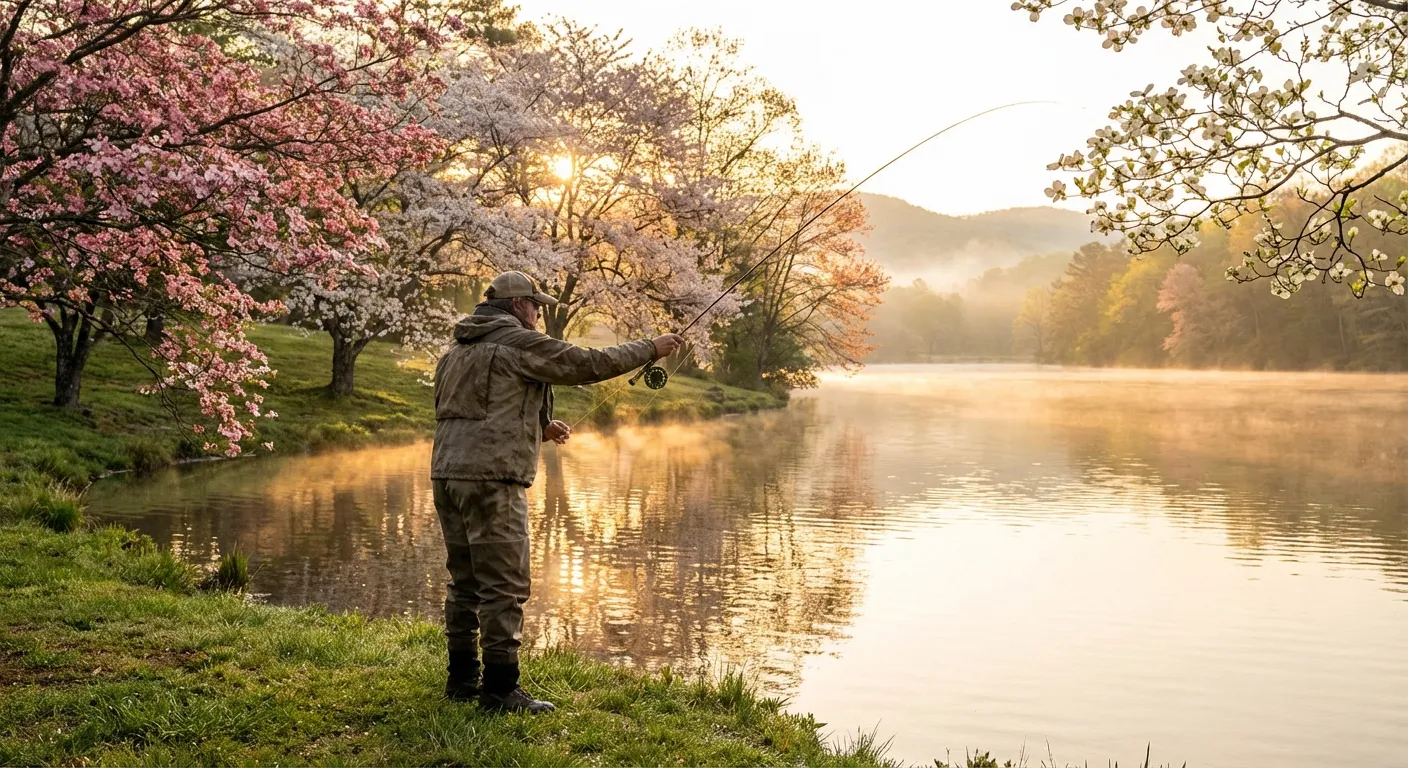
Trout are the third most-targeted freshwater species in North America, and they are also among the most lure-selective. A spinner that produces limits in a stocked tailwater might get zero strikes in a high-country creek where wild cutthroat are eating size-18 midges. A floating crankbait that hammers brown trout in a limestone spring creek does nothing in a murky reservoir. Matching the lure to the water type is as important as picking the right hook size.
The eight picks below cover the full range of trout fishing: inline spinners for streams, Berkley PowerBait for stocked fish in still water, small floating crankbaits for lakes and larger rivers, sinking crankbaits for deep pools and tailwaters, and casting spoons for reservoirs and alpine lakes. Each section explains where the lure excels, what size and color to start with, and what it will not do well. Jump to Quick Picks for a summary table.
Quick Picks: Best Trout Lures 2026
| Pick | Lure | Best Water | Price |
|---|---|---|---|
| Best Overall Spinner | Panther Martin Classic | All streams and rivers | $7–10 |
| Best for Small Creeks | Rooster Tail Original 1/16oz | Small creeks under 20 ft wide | $6–9 |
| Best French Blade | Mepps Aglia #2 | River runs and pocket water | $6–9 |
| Best for Stocked Trout | Berkley PowerBait Natural Glitter | Lakes and ponds with stocked rainbows | $5–7 |
| Best Floating Crankbait | Rapala Original Floating #5 | Lakes and larger rivers | $8–12 |
| Best Sinking Crankbait | Rapala Shad Rap 05 | Deep pools and tailwaters | $9–14 |
| Best Spoon | Acme Kastmaster 1/4oz Silver | Reservoirs and alpine lakes | $5–8 |
| Best for Lake Trout | Blue Fox Classic Vibrax 1/4oz | Deep reservoirs and natural lakes | $7–10 |
Best Inline Spinners for Trout
Inline spinners are the most versatile trout lures in freshwater. The rotating blade creates flash and vibration that triggers strikes from both wild and stocked fish across a huge range of conditions. Three patterns dominate: the Panther Martin for all-around use, the Rooster Tail for small creeks, and the Mepps Aglia for current-heavy water.
Panther Martin Classic Spinner (1/4 oz, Gold/Yellow Dot)
The Panther Martin has a unique fixed-shaft design that spins its blade at extremely slow retrieve speeds, making it the best choice when trout are lethargic in cold water or pressured conditions. Where a standard spinner needs a moderate retrieve to keep the blade spinning, a Panther Martin turns at nearly a crawl, which keeps it in the strike zone longer on each retrieve. The 1/4 oz size covers the widest range of stream widths and depths. The Gold body with Yellow Dot is the historically most productive pattern in both clear and slightly stained water; Black/Yellow is the go-to in turbid or high-water conditions.
Pros
- Fixed-shaft design spins at very slow speeds
- Works in cold water when other spinners do not
- Heavy enough to cast accurately on ultralight gear
- Consistent producer on both wild and stocked trout
Cons
- Treble hook is not ideal for catch-and-release in small streams
- Less snag-resistant than single-hook versions
Worden's Rooster Tail Original (1/16 oz)
The Rooster Tail's hackle-wrapped hook is what sets it apart. As the blade spins, water pushes through the hackle feathers, creating a pulsing motion that mimics a struggling insect or small minnow. In streams under 20 feet wide with tight quarters, the 1/16 oz size is light enough to drift naturally and heavy enough to cast on a 4 lb monofilament setup without spinning your line. White, yellow, and chartreuse work year-round; brown and olive patterns produce well in streams with heavy insect activity. Replace the treble with a single barbless hook for streams with catch-and-release regulations.
Pros
- Hackle creates lifelike pulsing motion
- 1/16 oz is castable on very light line
- Multiple color patterns for different conditions
- Available in single-hook versions for C&R water
Cons
- Too light for wide, fast rivers where heavier lures are needed
- Hackle wears down with heavy use
Mepps Aglia #2 (1/6 oz)
The Mepps Aglia uses a French-style oval blade that spins at a wider angle than the Panther Martin's in-line blade, creating more water resistance and more vibration. This makes it the better choice in fast current, where the extra resistance keeps the blade spinning even when the lure swings across a strong seam. Cast across and slightly downstream, mend the line to slow the swing, and let the Aglia pendulum through the run. The #2 size in plain gold or silver is the universal starting point; #3 in natural bucktail works well in rivers with brown trout over 14 inches.
Pros
- French blade spins in strong current
- More vibration than in-line designs
- Works on the swing, no stripping required
- Available with treble or dressed single hook
Cons
- More blade resistance makes it harder to fish very slowly
- Not as castable as heavier spinners on ultralight setups
Best Soft Bait: Berkley PowerBait for Stocked Trout
For stocked rainbow trout in lakes, ponds, and put-and-take streams, Berkley PowerBait is genuinely in a different category from any lure. Hatchery-raised fish are conditioned to sink-and-float pellet food; PowerBait's scent and floating presentation mimics that experience in a way spinners and crankbaits do not.
Berkley PowerBait Natural Glitter Trout Bait (Rainbow or Chartreuse)
Pinch a pea-sized ball of PowerBait onto a size 14 or 16 treble hook and fish it on a slip-sinker rig: a 1/4 oz egg sinker stopped by a swivel 18 to 24 inches above the hook. The PowerBait floats the hook off the bottom at the trout's eye level while the sinker anchors the rig. Cast to the middle of the lake or near any structure feature and leave it alone. Rainbow and Chartreuse Glitter are the highest-percentage colors in clear water; Cheese and Garlic flavors can outperform in lakes with very heavy angling pressure where fish have been caught and released many times on standard colors.
Pros
- Dramatically outperforms lures on stocked fish
- Floating rig presents bait at the trout's eye level
- Scent draws fish from a distance in still water
- Inexpensive and lasts through multiple outings
Cons
- Wild trout in high-pressure water largely ignore it
- Treble hook makes barbless fishing more complicated
- Works poorly in current; use spinners in moving water instead
Pair PowerBait with 4 lb fluorocarbon leader rather than monofilament: the near-invisibility underwater reduces strike refusals in clear lake water. Tie a small snap swivel at the sinker to prevent line twist when retrieving across wind-driven surface drift.
Best Crankbaits for Trout
Small floating and sinking crankbaits produce trophy brown trout and larger rainbows in rivers and lakes that have enough forage baitfish to make a 2-inch lure look like a meal. Minnow-profile crankbaits outperform round-bodied designs for trout: the slender profile more closely matches the baitfish shapes (emeralds, sculpins, dace) that large trout target.
Rapala Original Floating #5 (Gold or Rainbow Trout)
The Rapala Original has been catching trout since 1936 and remains one of the most effective minnow-imitator patterns ever made. The #5 size (5 cm, 1/8 oz) is the standard for stream brown trout and medium-sized rainbows; scale up to the #7 (7 cm) for bigger fish in larger water. Cast across current, let the lure swing downstream, then retrieve with short twitches and pauses. On the pause, the lure floats up and wobbles to a stop, triggering the most strikes. In lakes, a slow stop-and-go retrieve or a long pause after each twitch produces fish that a constant retrieve misses.
Pros
- Lifelike minnow profile produces trophy trout
- Pause-and-float action is nearly impossible to replicate with other lures
- Works in current and still water
- Multiple finishes match regional baitfish
Cons
- Three treble hooks are easy to tangle in heavy cover
- Balsa construction is fragile; one hard rock strike can kill it
- More expensive per lure than spinners
Rapala Shad Rap 05
The Shad Rap sinks on a pause rather than floating, which lets you work it at a consistent depth through deep pools and tailwaters where a floating crankbait would pop back to the surface during each pause. In rivers, cast the Shad Rap upstream of a deep run and retrieve at moderate speed to run it near the bottom through the entire length of the pool. In reservoirs, a trolling presentation at 1.5 to 2.5 mph along a depth contour line covering 8 to 15 feet produces lake trout and large browns that are holding on baitfish schools. The shad profile is a close match for emerald shiners and other common forage in both warm and cold water.
Pros
- Sinking design holds depth on a slow retrieve or pause
- Works for trolling in lakes and reservoirs
- Shad profile matches common trout forage
- Covers deep pools that floating crankbaits cannot reach
Cons
- Sinks too fast in very shallow water
- Less effective with the twitch-pause technique than floating models
Best Spoons for Trout
Casting spoons are the underrated pick for trout fishing in reservoirs, alpine lakes, and large rivers. Their long casting distance, simple retrieve, and flashing action make them ideal when trout are feeding on baitfish in open water and you need to cover more ground than a spinner allows.
Acme Kastmaster 1/4oz (Silver)
The Kastmaster's dense, compact body casts significantly farther than a similarly-weighted spinner, making it the best choice for reaching trout holding in open water in lakes and reservoirs. The angled cut of the spoon creates an erratic wobble that mimics a fleeing minnow. Cast as far as you can, count down to the desired depth (roughly 1 foot per second at a moderate sink rate), then retrieve at a steady moderate pace. Vary the speed to change the action: faster creates a tighter wobble, slower creates a wider, more rolling action. Silver is the universal starting color; add a strip of red tape near the hook for a quick-change attractor color when the bite goes cold.
Pros
- Excellent casting distance on light gear
- Erratic, natural wobble with no rod action needed
- Effective in reservoirs and alpine lakes
- Less expensive than crankbaits
Cons
- Less versatile in moving water than spinners
- Plain treble hook; no action on the hook itself
Blue Fox Classic Vibrax 1/4oz
The Vibrax uses a weighted body with a free-spinning bell inside that creates a continuous vibration even when the spinner blade stalls. This sub-blade vibration is what makes the Vibrax productive on lake trout and larger rainbows in deep reservoirs where fish are holding at 15 to 30 feet and need a lure that calls them up from a distance. The gold/red and blue/white patterns both produce. Cast as far as possible, let the lure sink to the depth of your target, and use a slow, steady retrieve. When lake trout are your target, go up to the 3/8 or 1/2 oz size and work it closer to the bottom.
Pros
- Internal vibrating system produces vibration at slow speeds
- Works at greater depths than most spinners
- Productive on lake trout and large rainbows
- Saltwater versions available for sea-run trout
Cons
- Heavier than most trout spinners; requires a medium-ultralight rod to cast
- Internal bearing system can wear out with heavy use
Gear to Fish These Lures Effectively
A proper trout setup matters as much as the lure choice. All eight picks above are designed for ultralight to light tackle: a 5.5 to 6.5 foot ultralight spinning rod and reel combo paired with 4 lb monofilament or fluorocarbon covers everything from small creek spinners to reservoir crankbaits. Use a size 10 or 12 snap swivel between the line and spinner or spoon to prevent line twist without adding visible hardware to crankbaits (tie crankbaits direct or use a loop knot).
For catch-and-release in streams, a rubber mesh landing net with a shallow hoop prevents gill injury and removes the need to handle fish. See our ultralight rod guide for spinning and casting setups matched to trout fishing. Check our spring trout fishing spots guide and the Wyoming trout guide for destination ideas.
Frequently Asked Questions
What are the best trout lures for streams?
For moving water, inline spinners are the most versatile option. Panther Martin spinners in 1/8 to 1/4 oz and Rooster Tail originals in 1/16 to 1/8 oz work in everything from small mountain creeks to larger tailwater rivers. Cast upstream and retrieve just fast enough to keep the blade spinning. In faster pocket water, small spoons like the Acme Kastmaster also produce well because they can be worked in tight seams where spinners get caught by the current.
What is the best trout bait for stocked trout?
Berkley PowerBait Natural Glitter Trout Bait is the most effective lure for recently stocked rainbow trout in still water. Stocked fish were raised on pellet food and respond to the scent and color of PowerBait in ways that wild fish often do not. Fish a small ball of PowerBait on a size 14 to 16 treble hook on a floating rig with a 1/4 oz egg sinker 18 to 24 inches up the line. Rainbow, yellow, and chartreuse are the most consistent colors.
What size spinner is best for trout?
For most trout fishing, 1/16 to 1/4 oz is the right weight range. In small creeks under 15 feet wide, 1/16 to 1/8 oz spinners give you the control to cast accurately without overpowering the water. In medium rivers and reservoirs, 1/8 to 1/4 oz is the standard. For large river brown trout and lake trout, 1/4 to 3/8 oz spinners produce larger strikes.
Do spoons work for trout?
Yes, spoons are underused for trout and extremely effective in the right conditions. The Acme Kastmaster is a reliable choice for casting long distances in reservoirs and high-altitude lakes where trout feed on minnows in open water. In rivers, small spoons can be yo-yoed vertically in deep holes where spinners would snag the bottom. Silver and gold are the standard colors.
What is the best trout lure for cold water?
In cold water (below about 50 degrees F), trout are lethargic and will not chase a fast-moving lure. The best cold-water presentations are a slow-rolled spinner at barely above stall speed, a Rapala Original Floating retrieved with a twitch-and-pause rhythm, or a small Berkley PowerBait rig fished motionless on the bottom. The pause is critical in cold water: a spinner or crankbait paused for two to three seconds after a twitch triggers strikes from fish that would ignore a constantly moving lure.
As an Amazon Associate, Fishn Buddy earns from qualifying purchases. Product availability and prices may vary.