Home › Blog › Best Fishing Rods 2026
Best Fishing Rods 2026: Spinning, Casting and Ultralight Picks by Budget
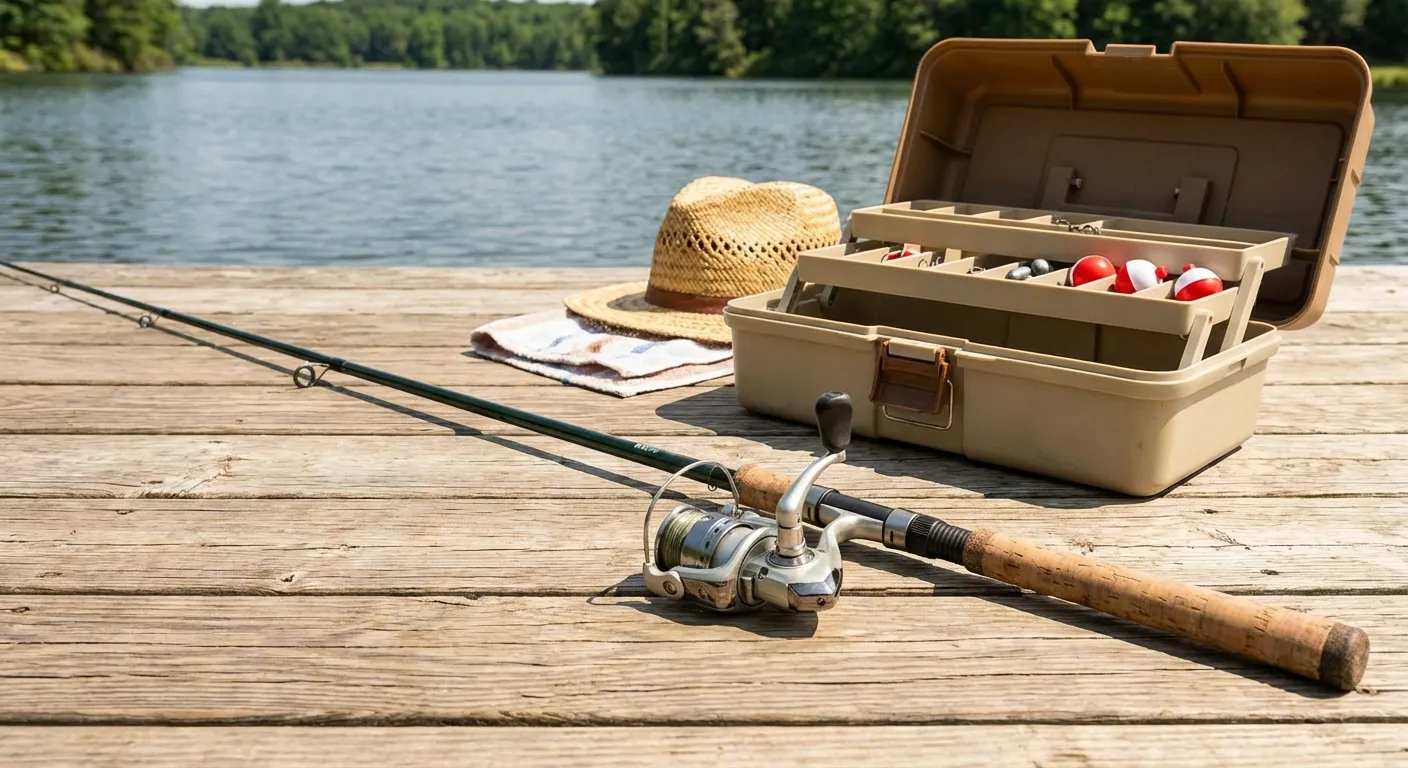
The rod matters more than most anglers think. A reel can always be swapped; the rod is the sensor between your hand and the lure, and the wrong power or action makes even excellent technique feel off. This guide covers the best fishing rods of 2026 across spinning and baitcasting styles, organized by budget and use case.
Quick Picks
| Pick | Best For | Power / Action | Price Range |
|---|---|---|---|
| Ugly Stik GX2 7' Spinning | Best budget spinning rod | Medium / Moderate Fast | $30-40 |
| Fenwick Eagle 7' Spinning | Best budget upgrade spinning | Medium / Fast | $45-60 |
| St. Croix Triumph 7' Spinning | Best mid-range spinning | Medium / Fast | $80-120 |
| Ugly Stik Camo 6'6" Ultralight | Best ultralight (panfish/trout) | Ultralight / Moderate Fast | $35-50 |
| Ugly Stik GX2 7' Casting | Best budget baitcasting rod | Medium Heavy / Moderate Fast | $35-45 |
| Abu Garcia Vendetta 7' Casting | Best beginner-friendly casting rod | Medium Heavy / Fast | $45-60 |
| St. Croix Mojo Bass 7'1" Casting | Best mid-range baitcasting rod | Medium Heavy / Fast | $90-130 |
| Penn Battalion 7' Spinning | Best all-purpose spinning value | Medium / Moderate Fast | $45-65 |
1. Ugly Stik GX2 7-Foot Spinning Rod, Best Budget Pick
Ugly Stik GX2 Spinning Rod (7-foot, Medium)
The Ugly Stik GX2 is the most widely fished budget rod in North America, and the 7-foot medium remains the standard recommendation for beginners and experienced anglers who want a spare rod without worrying about it. The blank is fiberglass-graphite composite, not pure graphite, which makes it more forgiving and nearly indestructible at the cost of some sensitivity. The signature Clear Tip design (clear fiberglass at the tip) absorbs shock and prevents tip breakage during transport, a real advantage over cheaper all-graphite rods.
Line rating is 6-15 lb test, appropriate for most freshwater scenarios. The moderate-fast action means the rod loads through the top third and provides a slight cushion when fighting fish, keeping hooks pinned on headshakes better than a pure fast-action blank. At its price point, nothing competes for durability. A 7-foot medium pairs well with a 2500-3000 spinning reel and 8-12 lb fluorocarbon or braid with a fluoro leader.
Pros
- Nearly indestructible fiberglass-graphite blank
- Clear Tip prevents tip breakage
- Very low price, excellent rod for the money
- Widely available, easy to replace or add a second
Cons
- Lower sensitivity than pure graphite rods
- Heavier blank than premium graphite options
- Moderate-fast action not ideal for all techniques
2. Fenwick Eagle 7-Foot Spinning Rod, Best Budget Upgrade
Fenwick Eagle Spinning Rod (7-foot, Medium)
The Fenwick Eagle is the step-up rod for anglers who want more blank sensitivity without paying mid-range prices. The blank is 24-ton graphite, lighter and more sensitive than the Ugly Stik GX2's composite construction, and the guides use aluminum oxide inserts that handle braided line without groove wear. The fast action tip is noticeably crisper on light jig work, giving better feedback on subtle bites that the GX2's softer action masks.
Weight-rated for 6-14 lb test, the Eagle handles the same lure range as the GX2 but with a livelier cast. Fenwick's cork-and-EVA split grip keeps hand fatigue low on a full day of casting. For anglers fishing drop shots, Ned rigs, or walleye jigging where bit detection matters, the Eagle is a meaningful upgrade over the GX2 without crossing into the $80+ mid-range price point.
Pros
- 24-ton graphite blank, lighter and more sensitive than GX2
- Aluminum oxide guides rated for braid
- Fast tip gives clear feedback on subtle bites
- Cork-EVA split grip reduces hand fatigue
Cons
- Not as tough as fiberglass-composite Ugly Stik
- Fast action less forgiving with crankbaits
- Some size variants have limited stock
3. St. Croix Triumph 7-Foot Spinning Rod, Best Mid-Range
St. Croix Triumph Spinning Rod (7-foot, Medium)
St. Croix's Triumph series is where the brand's Park Falls, Wisconsin manufacturing quality becomes accessible without a premium price. The blank is SCII graphite with a Fuji reel seat and Fuji aluminum oxide guides, the same hardware used on rods costing twice as much. The fast action is crisp at the tip and adds real sensitivity gain over composite blanks. Weight rating is 6-12 lb test with a lure range of 1/8 to 5/8 oz.
For walleye, crappie, and finesse bass work, the Triumph 7' medium is a rod you can genuinely feel fish on. The split-grip design keeps it lighter in-hand than a full cork grip, and the Fuji seat has no wobble or slop at the reel foot. Life expectancy on a rod this well-constructed is 10-15 years with normal care. St. Croix's five-year warranty is also the best in class at this price point.
Pros
- SCII graphite blank, real sensitivity jump over composite
- Fuji reel seat and guides, hardware from the $200 tier
- 5-year warranty, US manufacturer support
- Fast action ideal for jigs and finesse plastics
Cons
- Narrower lure range (1/8 to 5/8 oz) than composite rods
- Costs 2-3x more than Ugly Stik GX2
- Fast action needs moderate-action rod alongside for cranking
4. Ugly Stik Camo 6-Foot-6 Ultralight Rod, Best Panfish and Trout Pick
Ugly Stik Camo Spinning Rod (6-foot-6, Ultralight)
Ultralight rods exist to make small fish feel large. A 6-inch bluegill on an ultralight outfit is a genuine challenge; on a medium-heavy rod it barely bends the blank. The Ugly Stik Camo Ultralight carries the same indestructible fiberglass-graphite composite construction as the GX2 line, rated for 2-8 lb test, with a 6'6" length that handles the small-stream and dock scenarios where ultralight shines.
The 6'6" length is the sweet spot for panfishing: long enough to drop baits under docks and over log jams, short enough to cast accurately in tight quarters. The soft slow-to-moderate action is specifically designed to protect light line and thin wire hooks during the fight. This is the rod for crappie, bluegill, stream trout, and smaller walleye in shallow water. For anything bigger, step up to a medium power.
Pros
- Ultralight power amplifies small-fish fights
- 2-8 lb line rating covers panfish and stream trout
- 6'6" handles tight quarters better than a 7-footer
- Composite construction nearly indestructible
Cons
- Too light for bass in heavy cover
- Low sensitivity relative to graphite ultralights
- Slow action makes setting hooks on aggressive strikers harder
5. Ugly Stik GX2 7-Foot Casting Rod, Best Budget Baitcasting Rod
Ugly Stik GX2 Casting Rod (7-foot, Medium Heavy)
The casting version of the GX2 keeps the same fiberglass-graphite composite blank and Clear Tip design but is built with a pistol-grip trigger handle for baitcasting reels. Medium-heavy power and moderate-fast action covers the most common bass techniques: jigs, Texas-rigged worms, crankbaits, and spinnerbaits. Line rating is 10-20 lb test, appropriate for 12-15 lb fluorocarbon or 30-50 lb braid.
For anglers learning to cast a baitcaster, the GX2 casting rod is the forgiving practice partner. The composite blank absorbs the jerky strokes of early casting without twisting or feeling like the rod is fighting you. When the reel's braking is dialed in and the cast starts feeling smooth, the GX2's moderate-fast action provides enough sensitivity to fish jigs effectively while the cushioned tip keeps crankbait treble hooks pinned.
Pros
- Forgiving blank ideal for learning baitcaster technique
- Medium-heavy covers most freshwater bass scenarios
- Indestructible build withstands transport and accidental impacts
- Pairs affordably with entry-level baitcasters
Cons
- Lower sensitivity than graphite alternatives
- Heavier than graphite rods in the same power class
- Not specialized enough for finesse or heavy-cover flipping
6. Abu Garcia Vendetta 7-Foot Casting Rod, Best Beginner Baitcasting Option
Abu Garcia Vendetta Casting Rod (7-foot, Medium Heavy)
The Abu Garcia Vendetta offers a lighter graphite blank than the GX2 at a slightly higher price, which translates to improved blank sensitivity without a steep learning curve on the casting side. The medium-heavy fast action is the most common bass rod setup for a reason: it drives hooks on the strike, provides directional sensitivity through the blank, and works across jigs, weighted plastics, and soft-tipped search baits. Line weight: 12-20 lb test.
Abu Garcia built the Vendetta to pair specifically with their baitcasting reels, and the reel seat hardware reflects that: the trigger and seat fit Abu Garcia Revo and Ambassador frames snugly without rattle. The split-grip EVA handle is durable and comfortable without the weight of full cork. For anglers running their first dedicated baitcasting setup (a Vendetta rod, a Revo SX reel, 15 lb fluorocarbon), this rod provides the sensitivity and hook-driving power for bass without a premium-blank price tag.
Pros
- Graphite blank, noticeably more sensitive than composite
- Fast action fast hookset on jigs and plastics
- Hardware tuned for Abu Garcia reel footprints
- Good price-to-performance in the $50-60 range
Cons
- Less durable than fiberglass-composite alternatives if tip is broken
- Fast action less forgiving on crankbaits
- Grip style (split EVA) not everyone's preference
7. St. Croix Mojo Bass 7-Foot-1 Casting Rod, Best Mid-Range Baitcasting
St. Croix Mojo Bass Casting Rod (7'1", Medium Heavy)
The Mojo Bass is St. Croix's entry into the specialized bass rod category, and it is where serious bass anglers typically land when they are ready to invest in a dedicated technique rod. The blank is SCII graphite with an integrated Pac Bay Minima guide system that reduces total guide weight without sacrificing line control. The result is a fast-action rod that delivers excellent sensitivity and a crisp hookset without the price of the premium Premier or Legend series.
The 7'1" medium-heavy is the optimal spec for the most important bass techniques: jig fishing, punching mats, flipping tight cover, and swimbaiting on steady retrieves. The 7'1" gives slightly more reach and leverage for turning fish away from cover than a standard 7-foot blank. Line range is 12-20 lb test, lure range 1/4 to 3/4 oz. This rod is the right tool when the Ugly Stik GX2 starts feeling like it is hiding bites from you.
Pros
- SCII graphite, genuine sensitivity upgrade from composite
- Minima guide system reduces blank weight
- 7'1" length adds reach for cover fishing
- St. Croix 5-year warranty
Cons
- Costs 3x a budget composite rod
- Medium-heavy not a light-line option
- Best value only if you fish jigs or plastics consistently
8. Penn Battalion 7-Foot Spinning Rod, Best All-Purpose Value
Penn Battalion Spinning Rod (7-foot, Medium)
Penn's Battalion series is built around durability and versatility rather than technique specialization. The graphite blank is rated for both freshwater and inshore saltwater, with corrosion-resistant guides and a stainless-steel insert Fuji reel seat. If you want a single rod that covers bass and walleye in freshwater and can go to the coast for inshore redfish and flounder without special care, the Battalion is the answer.
The extra-fast action on this inshore-rated version rewards quick hooksets on redfish, bass, and walleye. Line rating is 10-17 lb test with a 1/4 to 1 oz lure range, heavier than a standard freshwater medium, which makes it the right choice for anglers who lean toward heavier presentations and who want a single rod that can go saltside without corrosion concerns. For anglers who fish multiple species across freshwater and inshore saltwater, the Battalion II Inshore makes the most of a single rod budget.
Pros
- Saltwater-rated corrosion-resistant guides
- Extra-fast action, fast hooksets in current
- 10-17 lb line rating covers heavier freshwater and inshore use
- Penn's reputation for durable builds
Cons
- 10 lb minimum line, not a finesse freshwater option
- Extra-fast action less forgiving on crankbaits
- Saltwater durability adds weight vs freshwater-only blanks
How to Choose a Fishing Rod: Power, Action, Length, and Material
Power
Power is the force required to bend the rod blank. Match power to the fish size, cover type, and lure weight you fish most often. Ultralight (2-6 lb test) for panfish and stream trout. Light (4-8 lb) for crappie and smaller walleye. Medium (6-12 lb) for general bass and walleye. Medium-heavy (10-20 lb) for bass in cover, northern pike, and heavier jigging. Heavy (15-30 lb) for flipping into dense mats and punching.
Action
Fast action rods drive hooks reliably but require technique to avoid ripping hooks from fish's mouths. Moderate and moderate-fast actions are more forgiving, loading through a longer section of the blank and absorbing fish headshakes on treble-hook lures. For lures with single hooks (jigs, plastics, worms), use fast action. For treble hooks (crankbaits, topwater, spinners), use moderate or moderate-fast.
Length
Longer rods (7-7'6") add casting distance and leverage. Shorter rods (6-6'6") give more accuracy at close range and are easier to handle in tight spots. The standard 7-foot length is the best compromise for open-water fishing from a boat or shore. Go shorter for stream fishing and dock fishing; go longer for flipping and pitching into heavy cover or fishing large open lakes where maximum cast distance matters.
Blank material
Graphite blanks (measured in ton ratings: 24T, 30T, 36T, 40T) are lighter and more sensitive. Higher ton ratings are stiffer per weight unit, enabling thinner-walled blanks with more sensitivity but less impact resistance. Fiberglass and composite (graphite-fiberglass) blanks are heavier but nearly indestructible and more forgiving in action. For technique-specific rods where sensitivity is critical (jig fishing, drop shot), graphite is worth the cost premium and fragility tradeoff.
Frequently Asked Questions
What is the difference between rod power and rod action?
Power describes how much force it takes to bend the rod, rated from ultralight to heavy. Action describes where along the blank the rod bends: fast action bends mostly in the top third, moderate action bends through the top half, slow action bends through most of the blank. Power determines what lure weights and line classes the rod handles. Action determines how the rod loads and releases during a cast, and how much cushion it provides when fighting a fish.
What length fishing rod do I need?
For most freshwater fishing from shore or a boat, a 7-foot rod is the standard: long enough for casting distance and leverage on hooksets, short enough to handle easily in tight cover. Ultralight lengths of 5'6" to 6'6" work well for small streams and panfish. Longer rods (7'3" to 7'6") are used for flipping and pitching into heavy cover where the extra reach keeps slack line out of brush.
What is a fast action rod good for?
Fast action rods are best for techniques that reward a quick, solid hookset: jigs, Texas-rigged plastics, drop shots, and spinnerbaits. The stiff lower section gives direct leverage to drive the hook into a bass's tough jaw. Avoid fast action for treble-hook lures like crankbaits and topwater; the rod's stiffness can pull hooks on fish with looser mouths. A moderate or moderate-fast action is better for cranking.
How do I match a rod to a spinning or baitcasting reel?
Match the rod's line rating to the reel's recommended line capacity. A rod rated 6-12 lb test pairs with a 2500-4000 spinning reel or a baitcasting reel for 12-15 lb line. Also match rod length to reel size: a 7-foot rod pairs naturally with a 2500-4000 spinning reel. For baitcasters, most 7-foot bass rods match a 150-200 size reel.
Can I use the same rod for bass and walleye?
Yes, with the right setup. A 7-foot medium-power, moderate-fast spinning rod covers most walleye techniques (jigging, live bait rigs, light crankbaits) and is also usable for finesse bass fishing. Where they diverge: bass in heavy cover benefits from medium-heavy power, which is too stiff for walleye jig work. The practical answer is a 7-foot medium for walleye and a 7-foot medium-heavy for most bass applications.