Home › Blog › Best Baitcasting Reels 2026
Best Baitcasting Reels 2026: Top Picks for Bass & Freshwater
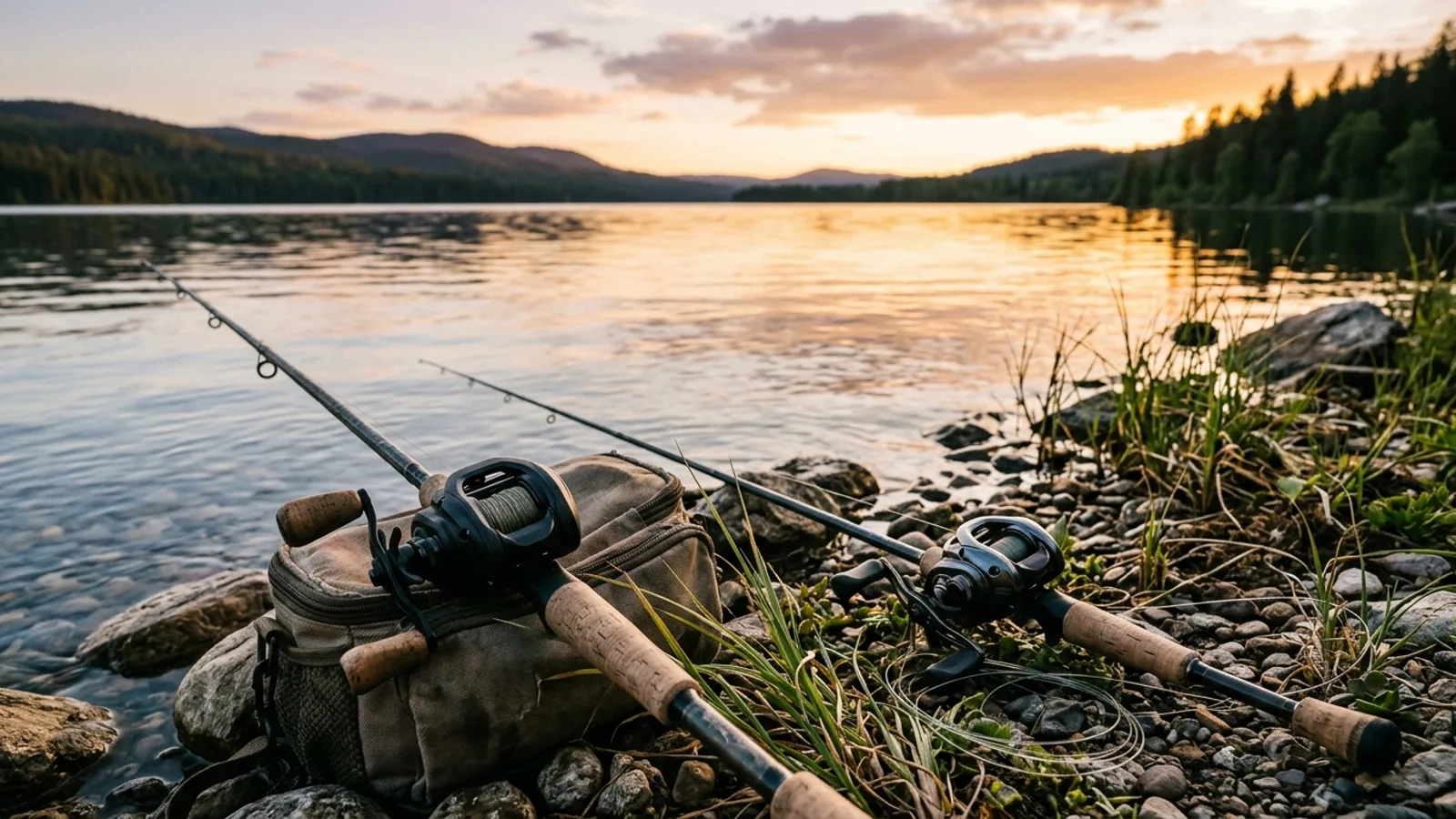
A good baitcasting reel is the difference between fishing a jig all day and fighting your equipment all day. The 2026 market is the strongest it has ever been: braking systems that practically eliminate backlash, sub-$100 reels with aluminum frames, and premium models that weigh less than your phone. The hard part is knowing which tier actually matches how you fish.
This guide covers eight reels across realistic price tiers from about $60 to $400, organized by use case rather than spec-sheet bragging rights. In a hurry? Jump to quick picks.
At a Glance
 TATULA 100 BAITCAST Reel, 7BB, 6.3 : 1
 SLX
SLX
 KastKing Royale Legend II Baitcasting Reels, New...
 SHIMANO SLX 150 DC Baitcasting Reels
 SHIMANO Tranx 200 Baitcasting Reels
Product images and titles from Amazon. As an Amazon Associate we earn from qualifying purchases.
Quick Picks by Use Case
| Use case | Best Pick | Why | Price |
|---|---|---|---|
| Best overall | Shimano Curado 150M | Do-everything size, tank-grade durability | $200-230 |
| Runner-up overall | Daiwa Tatula 100 | T-Wing casting distance, proven workhorse | $160-190 |
| Best under $100 | Shimano SLX 150 | Tournament-grade guts at a budget price | $90-110 |
| Ultra budget | KastKing Royale Legend II | Shockingly capable at $60 | $55-70 |
| Best for beginners | Shimano SLX DC | Digital braking nearly eliminates backlash | $160-190 |
| Beginner budget | Abu Garcia Max Pro (I own this one; it has earned its spot.) | Forgiving MagTrax brake under $80 | $60-80 |
| Premium | Shimano Metanium | The reel tour pros actually buy | $380-420 |
| Saltwater capable | Shimano Tranx 200 | Corrosion-protected, 13 lb drag | $220-250 |
Best Overall Baitcasting Reels
The best overall reel is not the most expensive one. It is the one you can throw jigs, spinnerbaits, chatterbaits, and plastics with, hand to a buddy, drop in the bottom of the boat, and still trust three seasons later.
Shimano Curado 150M
The Curado has been the default answer to "what baitcaster should I buy" for two decades, and the current 150M is the best version yet. The 150 size is the sweet spot: bigger than the compact 70 so it handles larger-diameter fluorocarbon and bigger baits, smaller than the 200 so it still palms comfortably for a full day. Shimano’s HAGANE metal body keeps the gears aligned under load, and the SVS Infinity braking system is easy to dial for everything from a 1/4 oz finesse jig to a 1 oz swimbait.
It is not the lightest or the flashiest reel in this guide. It is the one most likely to still be on your deck in 2031.
Pros
- Perfect all-around size for bass techniques
- HAGANE body shrugs off years of abuse
- SVS Infinity brakes adjust easily on the water
- Holds resale value better than any competitor
Cons
- Heavier than premium reels at the same size
- Not the longest caster with lures under 1/4 oz
Daiwa Tatula 100
The Tatula is the other reel you will see on half the bass boats at any launch ramp, and the argument between Curado and Tatula loyalists will never end. Daiwa’s T-Wing System (the wide T-shaped line guide) reduces line friction on the cast, which translates into real extra distance, especially with lighter baits. The aluminum frame and carbon-aluminum drag stack run smooth from the first crank, with low startup inertia that helps stopping power feel progressive instead of grabby.
Anglers routinely put three or more seasons on a Tatula throwing frogs, vibrating jigs, and big plastics without a service. If you throw lighter lures more often than heavy ones, pick the Tatula over the Curado.
Pros
- T-Wing guide adds genuine casting distance
- Excellent drag with smooth startup
- Wide range of gear ratios (6.3:1 to 8.1:1)
Cons
- Magnetic brake dial has fewer fine steps than Shimano’s system
- Side plate feels less solid than the Curado’s
Best Budget Baitcasting Reels (Under $100)
Ten years ago, sub-$100 baitcasters were backlash machines with drags that faded by August. That is no longer true. Two reels in this tier are good enough that plenty of experienced anglers fish them by choice.
Shimano SLX 150
The SLX is essentially a Curado with cheaper cosmetics and one fewer bearing. You still get the HAGANE metal body, the same SVS Infinity braking system as reels twice its price, and a drag that actually holds its setting. It casts a 3/8 oz jig as far as reels costing $180, and the compact 150 frame palms well for smaller hands.
If your budget stops at $100, buy this and do not look back. It is the reel we recommend most often to anglers building their first multi-rod setup, pair it with a 7’ medium-heavy casting rod and cover 80% of bass fishing.
Pros
- Same braking system as the Curado
- Metal body at a plastic-body price
- Smooth enough that upgrades feel optional
Cons
- Stock bearings are merely decent
- Handle knobs feel cheap (easily swapped)
KastKing Royale Legend II
At around $60, the Royale Legend II punches far above its weight: a compact frame, 17.6 lb carbon drag, dual braking (magnetic plus centrifugal), and a 7.2:1 ratio that covers most techniques. It will not survive the decade of abuse a Curado will, and the bearings get gritty faster, but as a second rig for a specific technique, a truck reel, or a kid’s first baitcaster, it is the best $60 in fishing.
Pros
- Strong drag for the price class
- Dual brakes make it beginner-tolerant
- Cheap enough to buy technique-specific copies
Cons
- Bearing smoothness fades after a hard season
- Quality control varies more than the big brands
Best Baitcasting Reels for Beginners
The thing that scares people off baitcasters is backlash: the spool keeps spinning after the lure slows down, and the line explodes into a bird’s nest. The fix is a forgiving braking system that manages spool speed for you while your thumb learns the job.
Shimano SLX DC
The DC stands for Digital Control: a tiny microcomputer monitors spool speed a thousand times per second during the cast and applies braking exactly when needed. In practice, this means you can cast into the wind, skip your timing, or throw a lure that is too light for your settings, and the reel bails you out. It is the closest thing to a backlash-proof baitcaster that exists, and you can hear the soft electronic whir on every cast.
Set the external dial to the most conservative mode on day one, then step down as your thumb gets educated. By the time you outgrow the training wheels, you still own a legitimately good reel built on the SLX platform. For a beginner willing to spend around $160, nothing else flattens the learning curve like this.
Pros
- DC braking prevents nearly all backlashes
- Four external modes, no side-plate fiddling
- Still a quality reel after you learn
Cons
- Costs about $70 more than the standard SLX
- Slight distance penalty vs. a well-tuned manual brake
Abu Garcia Max Pro
If $160 is too steep for a first baitcaster, the Max Pro’s MagTrax magnetic brake delivers smooth, consistent spool pressure that is hard to foul even with sloppy casts. The 6.4:1 gear ratio is forgiving across techniques, fast enough for spinnerbaits, slow enough for shallow crankbaits. It is lighter on features than the SLX DC, but at under $80 it is a low-risk way to find out whether baitcasting suits you.
Check current price →Best Premium Baitcasting Reel
Shimano Metanium
Survey the reels that touring pros buy with their own money and the Metanium shows up more than anything else. The magnesium CoreSolid body brings the weight down near 6 ounces, the MGL III spool starts spinning with almost no effort (which is why it casts 1/8 oz baits that stall on other baitcasters), and the gearing is so smooth that a Curado feels agricultural afterward.
Is it three times better than an SLX? No. Is the difference real when you make 800 casts in a day, throw light finesse baits on casting gear, or simply want the nicest tool in the category without going full boutique? Yes. This is where the price-performance curve ends for most anglers; beyond $400 you are collecting, not fishing.
Pros
- Casts lighter lures than any reel in this guide
- Roughly 6 oz, disappears in your hand all day
- Silky gears and refined drag
Cons
- $400 is real money for marginal on-paper gains
- Magnesium body is strictly freshwater only
Best Saltwater-Capable Baitcasting Reel
Shimano Tranx 200
Every other reel in this guide will corrode if you fish it in salt regularly. The Tranx 200 will not. It is the downsized, low-profile version of Shimano’s legendary Tranx series, with CoreProtect water-resistant construction, a HAGANE body, and a 13 lb cross-carbon drag. It is at home throwing swimbaits at redfish and snook, and it doubles beautifully as a heavy freshwater reel for musky bucktails, big-bait bass fishing, and flathead catfish.
If you split time between bass lakes and the coast, or you target big Great Lakes fish where spray and abuse are constant, this is the one reel that covers both worlds. Gear ratios run from 6.2:1 up to a line-burning 8.5:1.
Pros
- CoreProtect handles genuine saltwater use
- 13 lb drag stops inshore fish and big freshwater predators
- Doubles as a big-bait freshwater reel
Cons
- Overkill in size and weight for finesse bass work
- Still rinse it after salt trips; water resistant is not waterproof
How to Choose: The Decision Framework
- Match the gear ratio to your techniques. One reel: 7.1:1. Deep cranking: 6.2:1. Flipping, frogging, and picking up slack fast: 8.1:1 or higher. Ratios matter more than brand at this level.
- Pick the frame size by line, not ego. A 100/150-size reel holds plenty of 12-15 lb fluorocarbon for bass. Step up to a 200 size only for big swimbaits, musky baits, or heavy braid. Oversized reels add fatigue on every cast.
- Budget for line and a rod that matches. Quality fluorocarbon or 40 lb braid costs $15-25 a spool, and a mismatched rod wastes a good reel. See our rod and reel combo guide if you are starting from zero.
- Be honest about salt exposure. Even brackish water eats standard reels. Occasional trips: rinse religiously. Regular trips: buy the Tranx.
- Where you fish matters. Great Lakes anglers throwing heavy baits for smallmouth around structure (check our Lake Michigan depth chart for offshore humps) want more drag and capacity than a farm-pond angler. Browse our Michigan fishing pages for lake-by-lake intel.
Essential Accessories
- Reel oil and grease kit, one drop on the spool bearings twice a season keeps any reel in this guide casting like new.
- Neoprene reel covers, cheap insurance against rod-locker dings that knock spools out of true.
- Line spooling station, puts line on under even tension, which matters more on baitcasters than any other reel type.
- Digital scale with lip grip, for honest weights and quicker releases.
- Braid scissors, regular clippers fray braid; purpose-made scissors cut it clean.
- Practice casting plugs, ten minutes in the yard beats an hour of picking out backlashes on the water.
And if you are building out a full boat or kayak setup, a good sonar unit pairs naturally with a new reel; see our fish finder guide for picks at every budget.
Frequently Asked Questions
What gear ratio is best for a baitcasting reel?
7.1:1 is the most versatile single ratio for bass fishing. It covers jigs, plastics, spinnerbaits, and topwater. Go slower (6.2:1) for deep cranking so the reel does the work, and faster (8.1:1+) for flipping, pitching, and burning slack out of the line.
Are baitcasting reels hard to learn?
Less than they used to be. Modern magnetic and digital braking systems prevent most backlashes automatically. Start with the brakes high and the spool tension snug, practice in the yard with a 3/8 oz weight, and loosen settings as your thumb learns the spool. Most anglers are casting comfortably within two or three outings.
How much should I spend on a baitcasting reel?
The $100-200 range is the sweet spot. Under $60, drags and bearings degrade quickly. From $100-200 you get aluminum frames, quality braking, and drags that hold up for years. Above $250 you are paying for lighter weight and refinement, real but diminishing returns for most weekend anglers.
Can I use a freshwater baitcaster in saltwater?
Occasionally, if you rinse it with fresh water immediately after every trip. But standard freshwater reels lack sealed bearings and corrosion-resistant internals, and salt will destroy them over a season of regular use. If you fish inshore salt more than a few times a year, buy a saltwater-rated reel like the Tranx 200.
What line should I put on a baitcasting reel?
Fluorocarbon in 12-17 lb test is the default for most bass techniques. Use 30-50 lb braid for frogs, punching, and heavy vegetation, and 12-15 lb mono for topwater where you want the line to float. Avoid anything under 8 lb test on a baitcaster; that is spinning-reel territory.