Best Gulf of Mexico Fishing Spots: Complete 2026 Guide
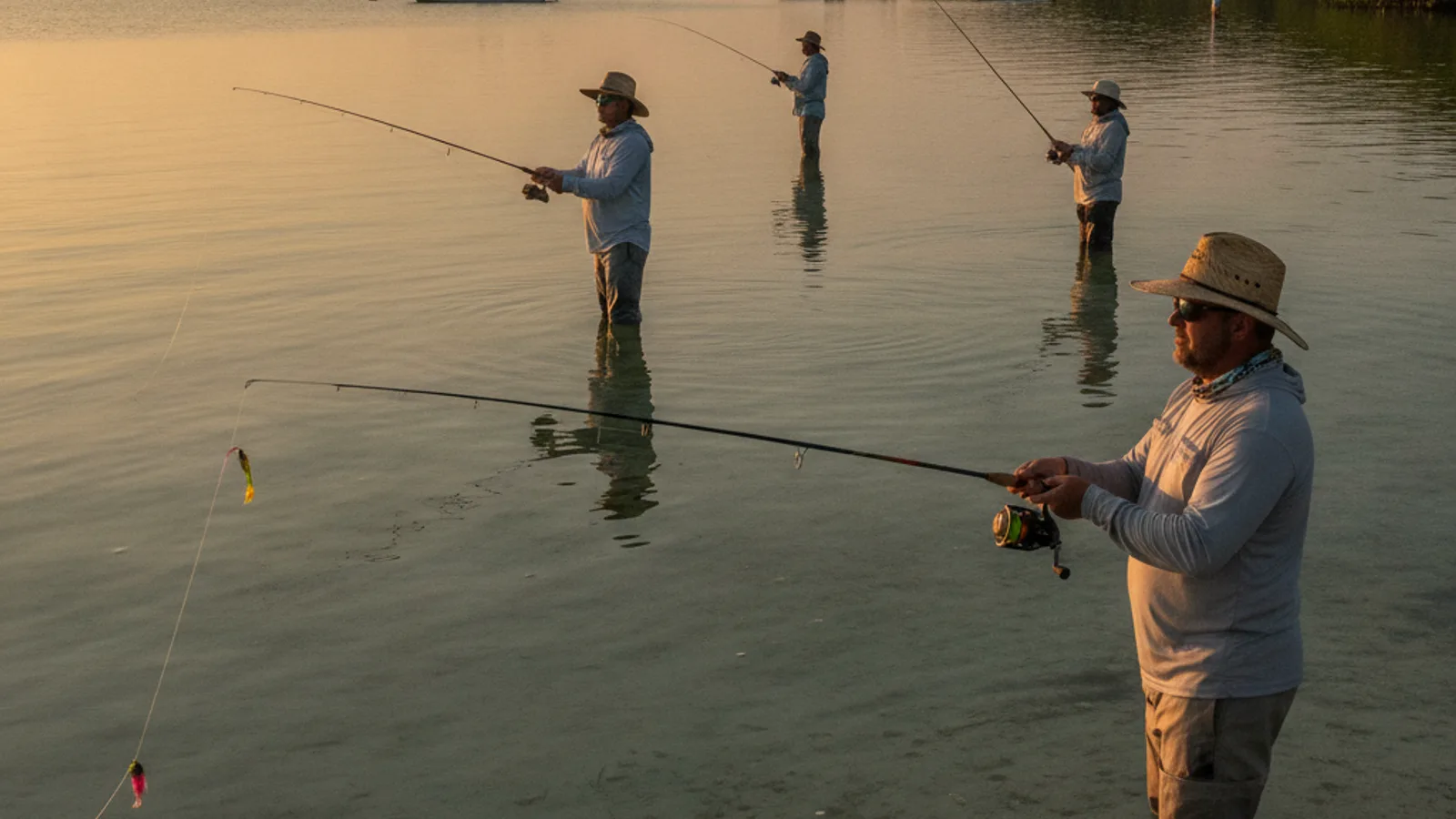
The Gulf of Mexico spans over 1,600 miles of coastline across five states and offers some of the most diverse inshore and offshore fishing in North America. From the shallow grass flats of Florida's Big Bend to the deep blue water canyons off Venice, Louisiana, the Gulf has something for every angler, regardless of whether you're fishing from a kayak, a pier, or a 40-foot offshore boat.
This guide breaks down the best fishing spots in the Gulf of Mexico by state, the top species to target by season, the techniques that work, and the regulations you need to know for 2026. For real-time tides, solunar forecasts, and current conditions at specific spots, check the Fishn Buddy location tool.
Florida
Pensacola Bay and the Panhandle
Pensacola offers a full range of Gulf fishing from protected bay waters to offshore reef fishing. The Pensacola Bay system holds excellent redfish and speckled trout year-round, with flounder especially strong in fall. Nearshore fishing around the many artificial reefs produces red snapper, grouper, and king mackerel. The Pensacola Pass and the bay's grass flats are prime inshore targets.
Check Pensacola ConditionsTampa Bay
Tampa Bay is one of the most productive inshore fisheries in Florida. The bay's extensive grass flats hold some of the best snook fishing in the state, particularly around structure in summer. Redfish and speckled trout are year-round targets. Tarpon arrive in late April and stay through September, concentrating around the bay's bridges and in the shallower flats off Apollo Beach and Cockroach Bay.
Check Tampa Bay ConditionsCharlotte Harbor
Charlotte Harbor consistently produces some of the largest redfish in Florida. The Peace River and Myakka River drain into the harbor, creating brackish water zones that hold bull redfish in the 30-inch-plus range. The harbor's extensive backcountry, hundreds of square miles of mangrove-lined creeks and shallow flats, offers exceptional snook, redfish, and snook fishing for anglers willing to explore by kayak or skiff.
Check Charlotte Harbor ConditionsAlabama
Mobile Bay and Delta
Mobile Bay is Alabama's primary inshore fishery, holding strong redfish and speckled trout populations throughout the year. The Mobile-Tensaw Delta, one of the largest river deltas in North America, creates a maze of channels and backwaters that hold speckled trout, redfish, flounder, and bass close to the freshwater transition. Spanish mackerel run heavy along the beaches from April through October.
Check Mobile Bay ConditionsOrange Beach and Gulf Shores Offshore
Alabama's short coastline punches above its weight offshore thanks to an extensive network of artificial reefs called the Alabama Artificial Reef Zone, over 13,000 permitted reef sites. These reefs attract massive populations of red snapper, amberjack, triggerfish, and grouper. Gulf Shores and Orange Beach are prime departure points for 30-60 mile offshore runs to the best reef concentrations.
Check Orange Beach ConditionsMississippi
Mississippi Sound and Barrier Islands
The Mississippi Sound, the shallow water body between the mainland and Mississippi's barrier islands, is a productive but underrated inshore fishery. The barrier islands (Horn Island, Petit Bois Island, Cat Island) create protected water on the north side while offering surf fishing on the Gulf side. Sheepshead are a specialty here, piling around any hard structure. Redfish and speckled trout round out the inshore catch.
Check MS Sound ConditionsLouisiana
Venice: Offshore Capital of the Gulf
Venice, Louisiana is widely considered the best offshore fishing location in the entire Gulf of Mexico. The Mississippi River dumps nutrients far into the Gulf, creating a productivity zone that supports extraordinary concentrations of yellowfin tuna, wahoo, and blue marlin at distances closer to shore than anywhere else. The 100-fathom line, where offshore species concentrate, sits just 25–40 miles from Venice's docks.
Check Venice ConditionsMarsh and Bayou Inshore Fishing
Louisiana's coastal marsh system is one of the most extensive in North America and holds world-class redfish populations. The Atchafalaya Basin, Barataria Bay, Lake Borgne, and countless unnamed bayous all hold fish year-round. Redfish, called red drum or "reds" locally, are the signature species, often caught on weedless gold spoons or soft plastic paddle tails worked through the marsh grass. Speckled trout are equally abundant in the open bays.
Check Louisiana Marsh ConditionsTexas
Rockport and the Laguna Madre
Rockport is home to some of the best year-round redfish and speckled trout fishing in Texas. The Laguna Madre, a hypersaline lagoon stretching south from Corpus Christi to the Mexican border, holds trophy speckled trout in water so shallow that fish can often be spotted from a distance. Sight-fishing for redfish on the flats here rivals anything in Florida. Winter brings large concentrations of redfish in the bays.
Check Rockport ConditionsGalveston Bay Complex
The Galveston Bay system, including Galveston Bay, Trinity Bay, East Bay, and West Bay, is the largest estuary on the Texas coast and one of the most heavily fished. Speckled trout and redfish are the primary targets, with flounder especially productive near the jetties in fall. The jetties at Galveston Pass and Bolivar Roads concentrate fish and are accessible without a boat. Offshore, the Flower Garden Banks National Marine Sanctuary offers reef fishing unlike anywhere else on the Gulf.
Check Galveston ConditionsBest Gulf Species by Season
| Season | Inshore Targets | Offshore Targets |
|---|---|---|
| Spring (Mar–May) | Redfish, Speckled Trout, Flounder, Cobia | Mahi-mahi, King Mackerel, Red Snapper, Amberjack |
| Summer (Jun–Aug) | Snook (FL), Tarpon, Sheepshead, Snapper | Yellowfin Tuna, Wahoo, Blue Marlin, Mahi |
| Fall (Sep–Nov) | Flounder Run, Redfish, Speckled Trout | King Mackerel, Cobia, Red Snapper, Grouper |
| Winter (Dec–Feb) | Redfish, Sheepshead, Black Drum | Grouper (best season), Amberjack |
Techniques That Work Gulf-Wide
Inshore Flats and Shallow Water
- Popping cork rigs with live shrimp or artificial shrimp imitations are the most consistent producers for speckled trout across all Gulf states
- Gold weedless spoons remain the definitive redfish lure for working marsh grass edges
- Soft plastic paddle tails (3–4 inch, on 1/8 to 1/4 oz jigheads) match the hatch for most inshore baitfish and work for every inshore species
- Live finger mullet or pinfish freelined under a float catches snook, redfish, and tarpon
Nearshore and Reef Fishing
- Bottom fishing with cut squid, cigar minnows, or live bait over structure produces snapper, grouper, and sheepshead
- Vertical jigging with 2–4 oz metal jigs works for amberjack and larger snapper species
- Trolling with diving plugs or rigged ballyhoo covers ground for king mackerel and cobia along the nearshore edge
Key Regulations for 2026
Gulf regulations change annually and vary by state and by whether you are in state waters (0–9 nautical miles) or federal waters (beyond 9 nm). Always verify current rules before fishing:
- Red snapper: Federal recreational season dates and bag limits (typically 2 fish per person) are set annually by NOAA. State-water seasons in Texas, Louisiana, Alabama, Mississippi, and Florida often differ from federal seasons.
- Grouper: Multiple grouper species with individual bag limits. Gag grouper minimum size is typically 24 inches. Seasonal closures apply January through April for most Gulf grouper species.
- Redfish: State-managed with slot limits (typically 18–27 inches in most states), one per day per angler over the slot allowed.
- Flounder: Regulations tightened significantly in recent years; verify current limits in each state as they change frequently.
Use the Fishn Buddy tide and forecast tool to check real-time conditions at your target location before heading out. For more regional fishing guides, see our articles on Gulf Coast hidden gems, surf fishing tips, and saltwater fishing for beginners.
What is the best fishing spot on the Gulf of Mexico?
For offshore fishing, Venice, Louisiana is the consensus top destination, the closest port to deep water and world-class tuna, marlin, and wahoo. For inshore fishing, the competition is closer between Charlotte Harbor (Florida), Rockport (Texas), and Louisiana's coastal marsh system, all of which offer exceptional redfish and speckled trout fishing year-round.
Can you fish the Gulf of Mexico from shore?
Yes. Pier fishing, surf fishing from beaches, and bank fishing in bays and estuaries are all productive options. Alabama's Gulf State Park Pier and Florida's various public piers provide access to both inshore and nearshore species. Surf fishing along Texas barrier islands and the Florida panhandle beaches produces redfish, whiting, and pompano without needing a boat.
Get Real-Time Gulf Conditions
Check tides, solunar forecasts, and weather conditions for any Gulf of Mexico location before you go.
Open Fishn BuddyFISH SMARTER ⚓
FIND YOUR SPOT →