Home › Blog › Best Crappie Rigs 2026
Best Crappie Rigs 2026: Slip Float, Jig Head, Spider and Drop Shot Setups by Season
Crappie are one of the most widely pursued panfish in North America, and they are also one of the most versatile in terms of the rigs that catch them. A crappie will take a live minnow under a bobber, a 1/16 oz jig tipped with a soft plastic, a slowly trolled presentation over brush, or a drop shot rig held motionless at 20 feet. The right rig depends on the season, the depth, and whether the crappie are holding near structure or scattered in open water.
The five rigs below cover the full range of crappie situations from early spring through late fall: bank fishing in ponds, fishing from docks and brush piles in warm weather, slow-trolling in spring when crappie stage before the spawn, and targeting deep structure during summer. Each rig is built around the same core principle: get a small bait in front of a crappie and keep it there long enough to trigger a strike.
Quick Picks: Crappie Rig by Situation
| Rig | Best Season | Best Depth | Top Bait |
|---|---|---|---|
| Slip Float + Minnow | Year-round | 2 to 10 ft | 1.5 to 2 in live minnow |
| Jig Head + Soft Plastic | Year-round | Any depth | Bobby Garland, tube, curly tail |
| Spider Rigging | Spring, fall | 6 to 15 ft | Minnow or jig on long rod |
| Drop Shot | Summer, winter | 12 to 25 ft | Small soft plastic or live minnow |
| Plain Hook + Minnow | Winter, cold water | 6 to 20 ft | 1 to 2 in shiner or fathead |
At a Glance
 Bobby Garland Crappie Baits
 Northland Fire-Ball Jig
 Ugly Stik GX2 Ultralight Combo
 Berkley Trilene XL 4 lb Mono
Product images and titles from Amazon. As an Amazon Associate we earn from qualifying purchases.
The 5 Best Crappie Rigs
Slip Float Rig
The slip float rig is the most productive crappie setup for bank anglers and dock fishermen because it suspends the bait at a precise depth and provides a clear visual bite indicator. Thread a 3/8 to 1/2 inch slip bobber onto the main line before tying a size 10 barrel swivel as the lower stop. Attach a 12 to 18 inch leader of 4 to 6 lb fluorocarbon, add a small split shot 6 inches above the hook, and finish with a size 4 to 6 Aberdeen hook. Set the bobber stop to suspend the minnow 6 to 12 inches above the depth where crappie are holding, either reading the structure on a fish finder or starting at half the visible water depth. When the bobber tips sideways or moves steadily in one direction, the crappie has the bait; reel down and lift to set the hook.
This rig works year-round but is especially productive in spring when crappie move shallow to stage around brush piles, dock posts, laydowns, and flooded timber before spawning. A small Bobby Garland soft plastic works as well as a live minnow in water above 55 degrees; in cold water below 50 degrees, a live 1.5 to 2 inch shiner or fathead minnow consistently outperforms artificials. The slip float rig is also the most comfortable setup for fishing with kids and for keeping live bait in the strike zone without constant recasting.
Pros
- Depth-adjustable without retying; works from 2 to 15 feet
- Clear visual bite indicator easy to see in low light
- Works with live minnow or soft plastic interchangeably
- Simple two-knot rig that casts well on ultralight gear
Cons
- Wind and current move the float, pulling the bait off structure
- Not ideal for depths below 15 feet (long leader tangles during cast)
Jig Head and Soft Plastic
A small jig head tipped with a soft plastic is the most versatile crappie presentation in any season. 1/16 oz round-ball jig heads are the standard starting point for most conditions; drop to 1/32 oz in water shallower than 6 feet or when crappie are finicky, and bump to 1/8 oz in depths over 12 feet or in current. The jig head is fished under a slip float for precise depth control, cast and retrieved with a slow pump-and-fall action, or jigged vertically over structure from a boat.
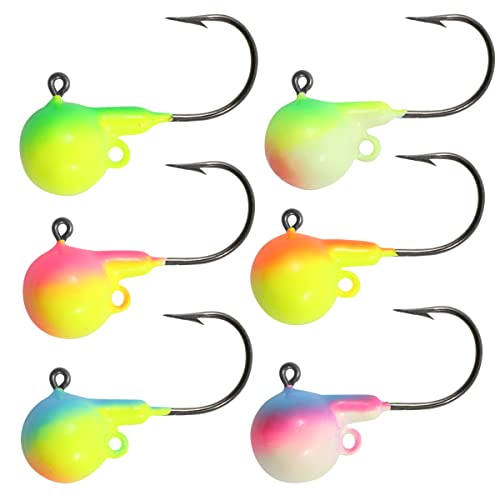
For the soft plastic body, Bobby Garland Crappie Baits in the 2 inch Stinger or Baby Shad profiles are the industry standard: the paddle tail creates a tight wobble on the fall that triggers neutral crappie. 2 inch tube jigs and curly tail grubs are close seconds and are widely available in natural and chartreuse-white color combinations that work in both clear and stained water. In muddy water, chartreuse and lime green outperform natural colors; in clear water, pearl white and smoke with silver flake are more consistent. The Northland Fire-Ball Jig with a short-shank hook is a reliable jig head that exposes the hook point just outside the soft plastic body, which is the correct hook position for maximizing hook-up ratio on short-striking crappie.
Pros
- Works at any depth from surface to 30 feet
- Covers water faster than a stationary float rig
- Color and profile can be changed in seconds
- Effective for both casting to visible structure and vertical jigging
Cons
- Less consistent than live bait in cold water below 48 degrees
- Soft plastics need to be re-rigged after several fish
Spider Rigging
Spider rigging is a slow-trolling technique that deploys multiple long rods off the bow of the boat simultaneously, covering a wide swath of water at a consistent depth. The standard setup uses four to eight 10 to 14 foot crappie rods fanned out in front of the boat like the legs of a spider, each rigged with a jig head and soft plastic or a slip float with a live minnow. The boat is moved at 0.3 to 0.8 mph using the trolling motor, and each rod tip is watched for the characteristic tap-tap pull of a crappie strike. Set the hook by lifting the rod; no sharp swing is needed because the hook is a small Aberdeen or light wire hook that penetrates easily in a crappie's soft mouth.
Spider rigging is most effective in spring when crappie stage along creek channel edges, channel swings, and submerged road beds before the spawn. It allows an angler to dial in the exact productive depth quickly and to cover a half-mile of contour in the time it would take to work the same water with a casting rod. In fall, spider rigging over main lake points and around brush piles at the base of creek channel drops produces some of the heaviest crappie bags of the year. Use 6 to 8 lb monofilament on each reel; the stretch in mono absorbs the shock of a crappie hitting a moving bait without pulling the hook.
Pros
- Covers large amounts of water quickly in spring and fall
- Multiple rods allow depth and color comparisons simultaneously
- Keeps bait consistently in the productive zone without casting
- Highly effective over long channel swings and submerged structure
Cons
- Requires a boat and a trolling motor with precise speed control
- Managing 4 to 8 rods at once is difficult for solo anglers
- Less effective in dense timber where long rods tangle
Drop Shot Rig
The drop shot rig places the bait at a fixed height above the bottom regardless of depth, which makes it the most precise presentation for crappie holding on deep brush piles, bridge pilings, and channel ledges in summer and winter. Tie a size 4 to 6 Octopus or Aberdeen hook using a Palomar knot, leaving a 10 to 18 inch tag end below the hook. Tie a 3/16 to 1/4 oz cylindrical drop shot weight to the tag end. Nose-hook a 2 inch Bobby Garland soft plastic or a small live minnow on the hook, lower the weight to the bottom, and shake the rod tip in place. The weight holds the bottom, the hook floats 10 to 18 inches up in the water column, and the action of the rod tip keeps the bait moving without the rig moving out of position.
This rig is most effective when crappie are confirmed on structure with a fish finder but are reluctant to chase a moving jig. In mid-July through September on most lakes, crappie push to depths of 18 to 28 feet to stay near the thermocline, and they will often ignore a traditional jig retrieve while picking off the drop shot on a near-stationary presentation. In winter, the same principle applies: drop the rig straight down into the deepest available brush pile and work it with minimal movement. Use a light spinning rod with a sensitive tip to detect the subtle bite crappie give in cold water.
Pros
- Most precise presentation for deep structure fishing
- Keeps bait at a fixed height off bottom in any depth
- Effective for neutral crappie that ignore moving presentations
- Works from a boat directly over suspended crappie
Cons
- Requires a boat positioned directly over the structure
- Cylindrical weights snag in heavy timber
- Not practical from the bank or in shallow water under 8 feet
Plain Hook and Live Minnow
In cold water below 48 degrees, nothing consistently outperforms a live minnow on a plain size 4 to 6 Aberdeen or light wire hook. The Aberdeen hook is the standard choice for live crappie bait because its long shank provides a clean hookset and its light wire does not kill the minnow as quickly as a heavier hook. Hook a 1 to 2 inch shiner or fathead minnow through the back behind the dorsal fin, add a single small split shot 6 inches above the hook, and suspend the setup under a small slip float. This is the slowest presentation in the crappie rig lineup, but in cold water the smaller and slower the bait moves, the better.
This rig is also the top choice for ice fishing through the ice in states that allow it. For open-water winter crappie from a boat, drift over deep brush piles with the rig set to the depth shown on the fish finder, and hold position. Winter crappie move very little and will often take a still-presented minnow after ignoring five passes with a jig. A live bait well or aerated minnow bucket is essential for keeping minnows lively through a full winter day. See our ice fishing safety gear guide if you plan to fish crappie through the ice.
Pros
- Most consistent producer in cold water below 50 degrees
- Simple setup with fewest components
- Works for ice fishing through the ice as well as open water
- Very effective for large winter crappie in deep brush piles
Cons
- Live minnows require bait shop access or a trap
- Minnows die quickly without an aerated container
- Slower overall fish count than jig fishing in warm water
Crappie Rig Setup: Line and Gear
All five rigs above work best on an ultralight or light spinning outfit with a sensitive rod tip. A 5.5 to 7 foot ultralight or light-power rod matched to a size 1000 to 2500 spinning reel is the standard crappie setup; the lighter the rod, the better you will detect soft bites in cold water. For line, 4 lb Berkley Trilene XL monofilament is the go-to on most reels because it casts smoothly through small guides and provides just enough stretch to prevent tearing the hook out of crappie's paper-thin mouth. For vertical jigging and fishing in clear water, tie a 6 to 10 inch fluorocarbon leader to reduce visibility near the bait.
Crappie Rig by Season
- Winter (December through February): Plain hook and live minnow in 15 to 28 feet over brush piles and channel ledges. Crappie school tightly in winter; find one and find many. See our solunar forecast guide for peak feeding windows.
- Pre-spawn spring (March through April): Spider rigging along creek channel edges and channel swings at 8 to 15 feet. Crappie stage in large numbers before moving shallow to spawn. This is the most consistent window for catching high numbers of large fish.
- Spawn (late April through May, water temperature 58 to 68 degrees): Slip float with a jig or minnow in 2 to 6 feet near brush, laydowns, dock pilings, and flooded timber. Males guard beds and strike out of aggression. See our crappie fishing tips guide for spawn timing by region.
- Post-spawn summer (June through September): Jig head and soft plastic fished vertically over brush piles at 12 to 20 feet, or drop shot rig on main lake structure. Crappie scatter and go deep; a fish finder makes finding them much faster. See our fish finders guide for portable options.
- Fall (October through November): Spider rigging and slip float over creek arms and back-of-pocket brush. Crappie chase shad into the shallows as water temperatures fall. Fall is a close second to spring for numbers of fish, and fall crappie are often larger.
For line selection and the improved clinch knot used to tie jig heads and Aberdeen hooks, see our fishing knots guide. For gear that covers the full range of crappie rigs, an ultralight rod in the best fishing rods guide handles both slip float and jig fishing effectively.
Frequently Asked Questions
What is the best crappie rig for beginners?
The slip float rig with a live minnow is the best crappie rig for beginners. Attach a slip bobber to your main line with a bobber stop set 1 to 3 feet above the hook, add a small split shot 6 inches above a size 4 to 6 Aberdeen hook, and hook a 1.5 to 2 inch minnow through the back. When the bobber goes under, reel down and lift to set the hook. The rig is easy to cast, provides a visible bite indicator, and works year-round wherever crappie hold near structure.
What jig weight is best for crappie?
For most crappie situations, 1/16 oz jig heads are the standard starting point. They sink slowly enough to stay in the strike zone during a slip float presentation or a vertical jigging retrieve, and they carry enough weight for a short cast on light spinning tackle. In shallow water under 6 feet, drop to 1/32 oz. In deeper water over 12 feet or in wind, bump up to 1/8 oz. The rule is to use the lightest jig head that still gets to the depth where crappie are holding.
What is spider rigging for crappie?
Spider rigging is a slow-trolling technique where multiple long rods are fanned out off the bow of the boat, each tipped with a jig or minnow rig. The boat moves at 0.3 to 0.8 mph over crappie-holding structure, covering a wide path with 4 to 8 presentations at once. It is most effective in spring when crappie stage along creek channels before the spawn, and it lets anglers quickly find the exact depth and color that is producing without retying between casts.
What line is best for crappie fishing?
For most crappie fishing, 4 to 6 lb monofilament or fluorocarbon is the standard. Mono in 4 lb test is the go-to for open-water slip float fishing because it casts smoothly on ultralight reels and the stretch helps prevent tearing the hook out of crappie's thin mouth. Fluorocarbon is preferred for vertical jigging and clear-water situations. Many experienced crappie anglers run 8 to 10 lb braid as the main line and tie a 6 to 10 inch fluorocarbon leader for sensitivity without spooking fish.
What is the best crappie rig for deep structure in summer?
The drop shot rig is the most precise crappie setup for deep summer structure. Tie a drop shot hook 10 to 18 inches above a 3/16 to 1/4 oz cylindrical weight. Nose-hook a small soft plastic or live minnow on the hook. Lower the rig to bottom, reel up until the weight touches bottom, and shake the rod tip to work the bait in place. This is the most effective crappie technique from mid-July through September when crappie push to thermocline depths on main lake points and bridge pilings.
As an Amazon Associate, Fishn Buddy earns from qualifying purchases. Product availability and prices may vary.